

💹 Sei serio riguardo a investire nel 2026? Sblocca decisioni più intelligenti con il 50% di sconto su InteractiveCryptoPro.
×

{[{item.pair.split("_")[0]}]}

${[{item.price.toLocaleString(undefined, {maximumFractionDigits: 4})}]}

{[{item.change24}]}% Vol {[{ item.volume.toLocaleString(undefined, {maximumFractionDigits: 2}) }]} USDT

+{[{item.change24}]}% Vol {[{ item.volume.toLocaleString(undefined, {maximumFractionDigits: 2}) }]} USDT

Interactivecrypto does not accept users from your country (Israel)

Cotton Technical Analysis

news_img

May 26, 2026 | 

45 Views | 

Joanna Newman | 

Cotton Technical Analysis Chart
Cotton Chart | TradingView

Cotton Trading: A Comprehensive Guide to Strategies and Analysis

Cotton, a globally traded commodity, presents unique opportunities for traders. Understanding the dynamics of the cotton market, employing effective strategies, and utilizing robust analysis tools are crucial for success. This guide provides a comprehensive overview of cotton trading, covering key aspects from market fundamentals to advanced trading techniques.

Understanding the Cotton Market

The cotton market is influenced by a variety of factors, including weather patterns, global demand, government policies, and currency fluctuations. Major cotton-producing countries include India, China, the United States, and Brazil. Monitoring these factors is essential for making informed trading decisions.

"Successful cotton trading requires a deep understanding of supply and demand dynamics, as well as the ability to interpret technical indicators."

Technical Analysis for Cotton Trading

Technical analysis involves studying historical price charts and using indicators to identify potential trading opportunities. Common technical indicators used in cotton trading include:

  • Moving Averages
  • Relative Strength Index (RSI)
  • MACD (Moving Average Convergence Divergence)
  • Fibonacci Retracement Levels

By analyzing these indicators, traders can identify trends, support and resistance levels, and potential entry and exit points. Many traders use an AI-powered platform to automate this process.

Cotton Trading Strategies

Several trading strategies can be employed in the cotton market, depending on your risk tolerance and trading style. Some popular strategies include:

  • Trend Following: Identifying and trading in the direction of the prevailing trend.
  • Range Trading: Buying at support levels and selling at resistance levels within a defined price range.
  • Breakout Trading: Entering a trade when the price breaks through a significant support or resistance level.
  • News Trading: Capitalizing on price movements following major news releases related to cotton supply and demand.

Choosing the right strategy depends on market conditions and your individual trading goals. Consider using InteractiveCrypto Pro to backtest your strategies before implementing them in live trading.

Risk Management in Cotton Trading

Risk management is crucial for protecting your capital and ensuring long-term profitability. Key risk management techniques include:

  • Setting Stop-Loss Orders: Limiting potential losses by automatically exiting a trade when the price reaches a predetermined level.
  • Position Sizing: Determining the appropriate amount of capital to allocate to each trade based on your risk tolerance.
  • Diversification: Spreading your capital across multiple trades to reduce the impact of any single trade on your overall portfolio.

Always use a trading platform with robust risk management features.

Choosing a Trading Platform

Selecting the right advanced trading platforms is essential for a smooth and efficient trading experience. Consider factors such as:

  • Reliability and Security: Ensuring the platform is stable and protects your funds and data.
  • Trading Tools and Features: Access to charting tools, technical indicators, and order types.
  • Fees and Commissions: Understanding the costs associated with trading on the platform.
  • Customer Support: Availability of responsive and helpful customer support.

Key Takeaways

  • Understand the fundamentals of the cotton market.
  • Utilize technical analysis to identify trading opportunities.
  • Implement effective risk management techniques.
  • Choose a reliable InteractiveCrypto Pro.
Frequently Asked Questions (FAQ)

What are the main factors affecting cotton prices?
Weather patterns, global demand, government policies, and currency fluctuations are the main factors affecting cotton prices.
What are some common technical indicators used in cotton trading?
Common technical indicators include Moving Averages, RSI, MACD, and Fibonacci Retracement Levels.
How can I manage risk in cotton trading?
You can manage risk by setting stop-loss orders, using appropriate position sizing, and diversifying your trades.

Did you like this article?

NOTIZIE

COMMENTS (0)

Una classe magistrale di investimento:
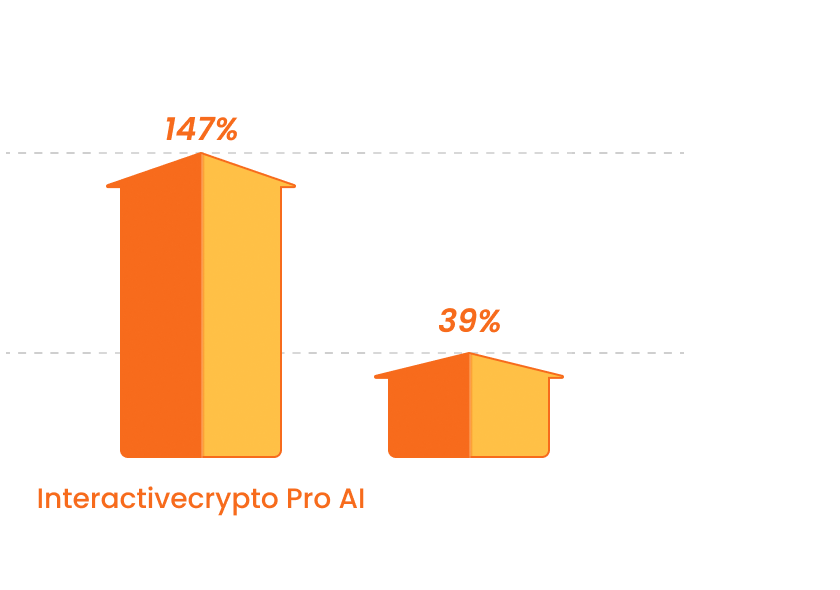
147% in meno di 2 anni

Il nostro selettore di azioni basato su IA Più di tre volte the S&P 500 over the past two years. How did your portfolio do?

Obtenez les actions
Investment performance chart
Crypto Market Analysis
Dati di mercato delle criptovalute senza rumore
Informazioni chiare progettate per supportare decisioni più intelligenti
Visualizza informazioni

LIVE RATES

ALL

TENDENZEClick to apply

Total Market Cap The Total Market Capitalization (Market Cap) is an indicator that measures the size of all the cryptocurrencies.It’s the total market value of all the cryptocurrencies' circulating supply: so it’s the total value of all the coins that have been mined.

{[{ marketcap }]} {[{ marketcapchange.toLocaleString(undefined, {maximumFractionDigits:2}) }]}% (24H) {[{ marketcapchange.toLocaleString(undefined, {maximumFractionDigits:2}) }]}% (24H)

Simbolo

Prezzo Cryptocurrency prices are volatile, and the prices change all the time. We are collecting all the data from several exchanges to provide the most accurate price available.

24H Cryptocurrency prices are volatile… The 24h % change is the difference between the current price and the price24 hours ago.

Commercio

{[{ item.name }]}
   {[{ index + $index}]}     {[{ item.pair.split('_')[0] }]}

Ƀ{[{item.price.toLocaleString(undefined, {maximumFractionDigits: 5}) }]} ${[{item.price.toLocaleString(undefined, {maximumFractionDigits: 5}) }]}

{[{ item.change24.toLocaleString(undefined, {maximumFractionDigits: 2}) }]}%

{[{ item.change24.toLocaleString(undefined, {maximumFractionDigits: 2}) }]}%

Commercio

Showing {[{ showing }]}

Simbolo

Prezzo Cryptocurrency prices are volatile, and the prices change all the time. We are collecting allthe data fromseveral exchanges to provide the most accurate price available.

24H Cryptocurrency prices are volatile… The 24h % change is the difference between the current priceand the price24 hours ago.

Commercio

{[{ item.name }]}
   {[{ index + $index}]}     {[{ item.pair.split('_')[0] }]}

Ƀ{[{item.price.toLocaleString(undefined, {maximumFractionDigits: 5}) }]} ${[{item.price.toLocaleString(undefined, {maximumFractionDigits: 5}) }]}

{[{ item.change24.toLocaleString(undefined, {maximumFractionDigits: 2}) }]}%

{[{ item.change24.toLocaleString(undefined, {maximumFractionDigits: 2}) }]}%

Commercio

Showing {[{ showing_trend }]}
Crypto investments are risky and may not suit retail investors; you could lose your entire investment. Understand the risk — click here
Crypto Market Analysis
Vedi il rischio prima che i prezzi si muovano
Indicatori di volatilità e forza per la consapevolezza del mercato
Analizzare il rischio
Crypto Market Analysis
Dati di mercato delle criptovalute senza rumore
Informazioni chiare progettate per supportare decisioni più intelligenti
Visualizza informazioni

VISTI DI RECENTE

ULTIMO VISTO

I PIÙ VISTI

Crypto Market Analysis
Dati di mercato delle criptovalute senza rumore
Informazioni chiare progettate per supportare decisioni più intelligenti
Visualizza informazioni

RECENSIONE DEL PORTAFOGLIO