Create a FREE account and...
Manage your own Watchlist
Access all education lessons
Converse with other crypto enthusiasts
Be a part of the Interactive Crypto Community
OR
Please fill out the required fields Please fill out the required fields Please fill out the required fields

As of February 24, 2026, the cryptocurrency world is reeling from a seismic event: a Satoshi-era Bitcoin wallet, dormant for 15 years, has sprung to life. This mysterious reactivation has sent shockwaves through the market, with Bitcoin’s price dipping to $63,561—a 2.07% drop in just 24 hours, according to CoinGecko data. For investors and enthusiasts alike, this isn’t just a curious footnote in Bitcoin’s history; it’s a stark reminder of the fragility of sentiment in a market driven by psychology as much as fundamentals. What could this mean for the future of the world’s leading cryptocurrency, and more importantly, how might it impact your financial decisions in the weeks ahead?
The sudden activity from a wallet potentially tied to Bitcoin’s enigmatic creator, Satoshi Nakamoto, has sparked intense speculation. Is this a sign of an impending sell-off, or merely a historical artifact resurfacing at an inopportune moment? For everyday investors, the stakes are real: market volatility could either present a buying opportunity or signal deeper troubles. Stick with us as we unravel this unfolding drama, dive into expert insights, and explore what this ancient awakening could mean for the crypto giant’s trajectory.
The cryptocurrency market is no stranger to volatility, but the reactivation of a Satoshi-era wallet has introduced a unique layer of uncertainty. As Bitcoin’s price stumbles to $63,561, down over 2% in a single day, the broader market feels the tremors. Ethereum, often a bellwether for altcoin sentiment, isn’t immune either, slipping 1.67% to $1,831.14. Meanwhile, the Fear & Greed Index, a key measure of investor sentiment, has plummeted to a chilling 8, signaling “Extreme Fear” across the board, as reported by Alternative.me.
This isn’t just about numbers on a screen. The wallet in question, untouched since Bitcoin’s infancy, could hold a substantial stash of coins—potentially worth millions at today’s prices. While there’s no immediate evidence of coins flooding exchanges, the psychological impact is undeniable. Investors are on edge, haunted by the specter of an unknown entity wielding significant market influence.
Beyond Bitcoin, the total crypto market capitalization hovers at $2.27 trillion, with Bitcoin still commanding a dominant 55.98% share. Yet, this dominance feels less reassuring when whispers of ancient wallets stir fears of instability. Could this event be the catalyst for a broader shift in market dynamics? Let’s dig deeper.
If you’re holding Bitcoin or eyeing an entry point, the reactivation of this ancient wallet is more than a curiosity—it’s a wake-up call. The immediate price dip to $63,561 may tempt some to buy the dip, but caution is warranted. The “Extreme Fear” reading on the Fear & Greed Index suggests that panic could drive further sell-offs, amplifying short-term volatility. For risk-averse investors, this might be a moment to sit tight and observe.
On the flip side, seasoned traders might see opportunity amid the chaos. Historically, fear-driven dips have preceded significant rebounds, especially when no fundamental flaws in Bitcoin’s network are evident. Curious about where Bitcoin might head next? Get AI analysis for Bitcoin to uncover data-driven insights and predictions that could guide your next move.
Diversification also becomes a critical strategy now. With altcoins like Binance Coin showing relative resilience—up 0.63% to $593.03—shifting focus to other assets could mitigate risk. The key takeaway? Stay informed, avoid knee-jerk reactions, and consider the broader market sentiment before acting.
To grasp why a single wallet’s reactivation can unsettle a trillion-dollar market, we need to rewind to Bitcoin’s origins. Satoshi Nakamoto, the pseudonymous creator of Bitcoin, mined a substantial number of coins in the network’s early days between 2009 and 2011. Many of these coins, often held in what are now called “Satoshi-era wallets,” have remained untouched for over a decade. Estimates suggest that over 1 million BTC—worth billions today—could be linked to these early addresses.
When one of these wallets moves, it’s akin to a ghost from Bitcoin’s past reappearing. The market doesn’t just react to the potential for a sell-off; it reacts to the mystery. Who controls these coins? Are they preparing to dump, or is this a benign transfer? The lack of answers fuels speculation and fear.
This isn’t the first time dormant wallets have rattled investors. In 2020, similar activity from early Bitcoin addresses triggered temporary price dips, only for the market to recover swiftly when no major sell-offs materialized. However, today’s context is different. With Bitcoin already navigating macroeconomic headwinds like inflation concerns and regulatory scrutiny, investor nerves are raw. The Fear & Greed Index at 8 underscores a market primed for overreaction.

ETH Crypto Chart
Moreover, Bitcoin’s dominance, while still robust at 55.98%, faces challenges from innovative altcoins and layer-2 solutions. This ancient wallet’s awakening could tip the balance, pushing skittish investors toward perceived safer havens. Understanding this backdrop is crucial to interpreting current price movements and planning ahead.
Industry voices are divided on the implications of this wallet reactivation. According to a recent CoinDesk report, some analysts view this as a non-event in the long term. “The market’s response to dormant wallet activity underscores pervasive uncertainty, but it’s unlikely to alter Bitcoin’s fundamental value,” the report notes. Others, however, caution against complacency, pointing to the psychological weight of Satoshi-linked coins.
JPMorgan analyst Nikolaos Panigirtzoglou recently commented on Bloomberg, suggesting that such events highlight Bitcoin’s vulnerability to sentiment-driven swings. “Until transparency around these early wallets improves, expect periodic jolts to investor confidence,” he warned. This perspective resonates with institutional players who prioritize stability over speculative hype.
For the broader industry, this event could accelerate calls for transparency in blockchain analytics. Companies like Chainalysis, which track wallet movements, may see increased demand for their services as investors seek clarity. Meanwhile, exchanges brace for potential volatility, with trading volumes likely to spike if more ancient coins move. Want to stay ahead of the curve? Check the AI analysis for real-time insights into Bitcoin’s market signals.
The immediate financial implication of this wallet reactivation is heightened volatility. Bitcoin’s 2.07% price drop to $63,561 is a clear signal that fear can override fundamentals in the short term. For leveraged traders, this environment is a minefield—margin calls could loom if panic selling intensifies. Retail investors, meanwhile, face the dilemma of whether to hold through the storm or cut losses.
Looking beyond the noise, this event could be a litmus test for Bitcoin’s resilience. If no significant sell-off follows, it might reinforce Bitcoin’s status as a store of value, akin to digital gold. Institutional investors, who’ve increasingly embraced Bitcoin as a hedge against inflation, may view dips as entry points. According to a Bloomberg report, several hedge funds are already increasing allocations despite the current turbulence.
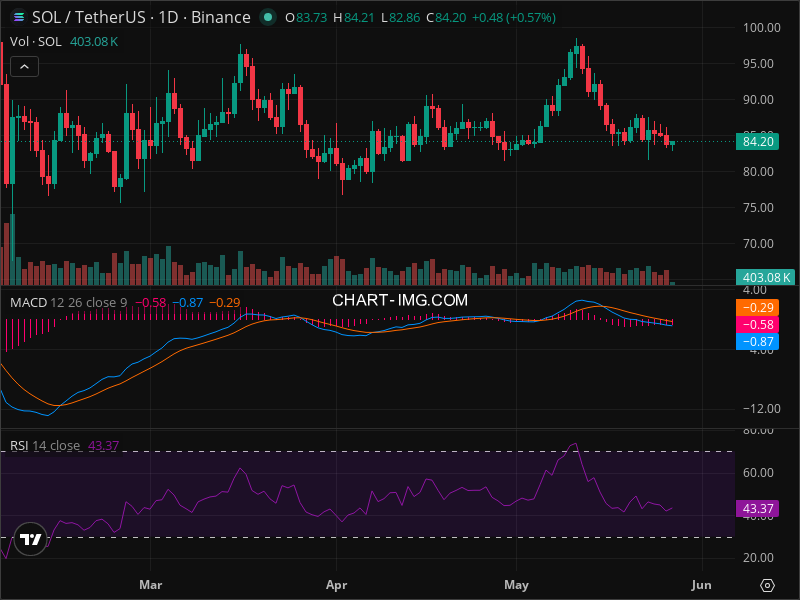
For opportunistic investors, altcoins present an intriguing play. With Ethereum down 1.67% to $1,831.14, and Solana slipping 1.15% to $76.77, undervalued assets could rebound faster than Bitcoin if sentiment shifts. Curious about potential price targets? See AI price prediction for Bitcoin and other major cryptocurrencies to inform your strategy.
This market shake-up underscores the importance of diversification. Relying solely on Bitcoin exposes portfolios to idiosyncratic risks like ancient wallet movements. Spreading investments across altcoins, stablecoins, or even DeFi protocols could buffer against such shocks. The data speaks for itself: Binance Coin’s 0.63% gain amid broader declines suggests not all cryptos move in lockstep with Bitcoin.
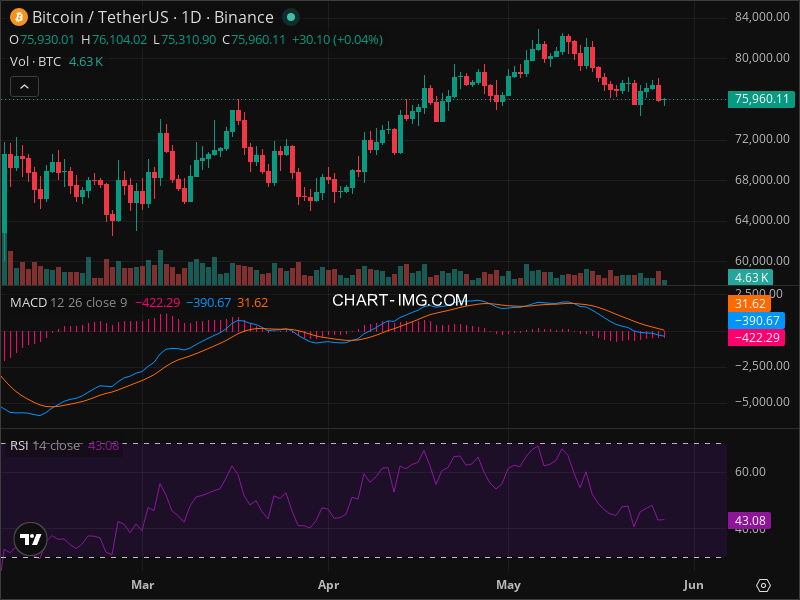
Let’s break down the numbers driving Bitcoin’s current trajectory. At $63,561, Bitcoin is testing key support levels near $62,000, a threshold that has held during previous corrections. If this level breaks, technical analysts warn of a potential slide to $58,000, based on Fibonacci retracement patterns. On the upside, resistance looms at $65,000—a psychological barrier that could signal a recovery if breached.
Key indicators paint a mixed picture. The Relative Strength Index (RSI) sits at 38, indicating oversold conditions that could attract bargain hunters. However, the Moving Average Convergence Divergence (MACD) shows bearish momentum, with the signal line trending below the MACD line. On-chain metrics, meanwhile, reveal a spike in exchange inflows, suggesting some holders are preparing to sell, per Glassnode data.
For a deeper dive into these metrics, View AI signals for Bitcoin to access fair value estimates and risk assessments. Hash rate remains robust, signaling miner confidence in Bitcoin’s long-term viability. Yet, transaction fees are climbing as network activity surges—another sign of heightened uncertainty.
Here’s a snapshot of critical market data:

SOL Crypto Chart
| Metric | Current Value | Change (24h) |
|---|---|---|
| Bitcoin Price | $63,561 | -2.07% |
| Ethereum Price | $1,831.14 | -1.67% |
| Fear & Greed Index | 8 (Extreme Fear) | N/A |
| Bitcoin Dominance | 55.98% | Stable |
What lies ahead for Bitcoin in the wake of this ancient wallet drama? In the short term, expect continued volatility as the market digests the psychological impact of this event. If no major sell-off occurs from the reactivated wallet, Bitcoin could stabilize near current levels, with $62,000 as a critical support to watch. A break below this could signal a deeper correction, potentially dragging prices to $58,000, according to technical patterns.
Longer term, the outlook hinges on broader factors. Regulatory clarity—or lack thereof—remains a wildcard, with potential crackdowns in major markets like the U.S. or China capable of derailing momentum. Conversely, technological advancements like the Lightning Network could bolster Bitcoin’s utility, driving adoption. Analyst forecasts vary widely: some see Bitcoin reclaiming $70,000 by mid-2026 if institutional buying persists, while bearish voices warn of a prolonged slump if sentiment doesn’t recover.
For a data-driven perspective on where prices might head, See what the AI predicts for Bitcoin’s trajectory. Ultimately, this event serves as a reminder that Bitcoin’s journey is far from linear—investors must brace for bumps while keeping an eye on the bigger picture.
A Satoshi-era wallet refers to a Bitcoin address created and used during the cryptocurrency’s early years, roughly between 2009 and 2011, when Satoshi Nakamoto was active. These wallets often hold significant amounts of Bitcoin mined when the network was young. Their reactivation matters because it raises fears of large sell-offs that could depress prices, and the mystery surrounding their owners fuels market uncertainty.
Deciding whether to sell depends on your risk tolerance and investment horizon. The current price dip to $63,561 reflects heightened fear, but there’s no guarantee of further declines. If you’re a long-term holder, historical patterns suggest holding through volatility often pays off. For tailored insights, consider Get AI-powered insights to assess Bitcoin’s current risk profile.
While it’s possible, there’s no definitive proof linking any specific wallet to Satoshi Nakamoto. The Bitcoin creator’s identity remains unknown, and many early wallets could belong to other early adopters or miners. Speculation abounds, but without concrete evidence, it’s impossible to say.
Diversification is key. Spread investments across different cryptocurrencies, stablecoins, or even non-crypto assets to reduce exposure to Bitcoin-specific risks. Setting stop-loss orders can also limit downside risk. Staying informed with tools like Check AI fair value estimate can help you make data-driven decisions.
Recovery depends on multiple factors, including whether the reactivated wallet leads to a sell-off, broader market sentiment, and macroeconomic conditions. Historically, Bitcoin has bounced back from sentiment-driven dips, but there are no guarantees. Monitoring technical indicators and news developments is crucial for gauging the likelihood of a rebound.
The Fear & Greed Index measures investor sentiment, ranging from 0 (extreme fear) to 100 (extreme greed). At its current reading of 8, it indicates widespread panic, which often correlates with price bottoms but can also precede further declines if fear persists. It’s a useful tool for understanding market psychology.
Sources
TITLE: Corporate Bitcoin Dips As Satoshi-Era Wallet Exits After 15 Years
ALL
TRENDING
WATCHLIST
Total Market Cap The Total Market Capitalization (Market Cap) is an indicator that measures the size of all the cryptocurrencies.It’s the total market value of all the cryptocurrencies' circulating supply: so it’s the total value of all the coins that have been mined.
{[{ marketcap }]} {[{ marketcapchange.toLocaleString(undefined, {maximumFractionDigits:2}) }]}% (24H) {[{ marketcapchange.toLocaleString(undefined, {maximumFractionDigits:2}) }]}% (24H)
Symbol
Price Cryptocurrency prices are volatile, and the prices change all the time. We are collecting all the data from several exchanges to provide the most accurate price available.
24H Cryptocurrency prices are volatile… The 24h % change is the difference between the current price and the price24 hours ago.
Trade
{[{ item.name }]}
{[{ index + $index}]}
{[{ item.pair.split('_')[0] }]}
Ƀ{[{item.price.toLocaleString(undefined, {maximumFractionDigits: 5}) }]} ${[{item.price.toLocaleString(undefined, {maximumFractionDigits: 5}) }]}
{[{ item.change24.toLocaleString(undefined, {maximumFractionDigits: 2}) }]}%
{[{ item.change24.toLocaleString(undefined, {maximumFractionDigits: 2}) }]}%
Symbol
Price Cryptocurrency prices are volatile, and the prices change all the time. We are collecting allthe data fromseveral exchanges to provide the most accurate price available.
24H Cryptocurrency prices are volatile… The 24h % change is the difference between the current priceand the price24 hours ago.
Trade
{[{ item.name }]}
{[{ index + $index}]}
{[{ item.pair.split('_')[0] }]}
Ƀ{[{item.price.toLocaleString(undefined, {maximumFractionDigits: 5}) }]} ${[{item.price.toLocaleString(undefined, {maximumFractionDigits: 5}) }]}
{[{ item.change24.toLocaleString(undefined, {maximumFractionDigits: 2}) }]}%
{[{ item.change24.toLocaleString(undefined, {maximumFractionDigits: 2}) }]}%

BTC Technical Analysis
May 27, 2026 | Joanna Newman

Soybeans Technical Analysis
May 27, 2026 | Joanna Newman
Live Cattle Technical Analysis
May 27, 2026 | Joanna Newman
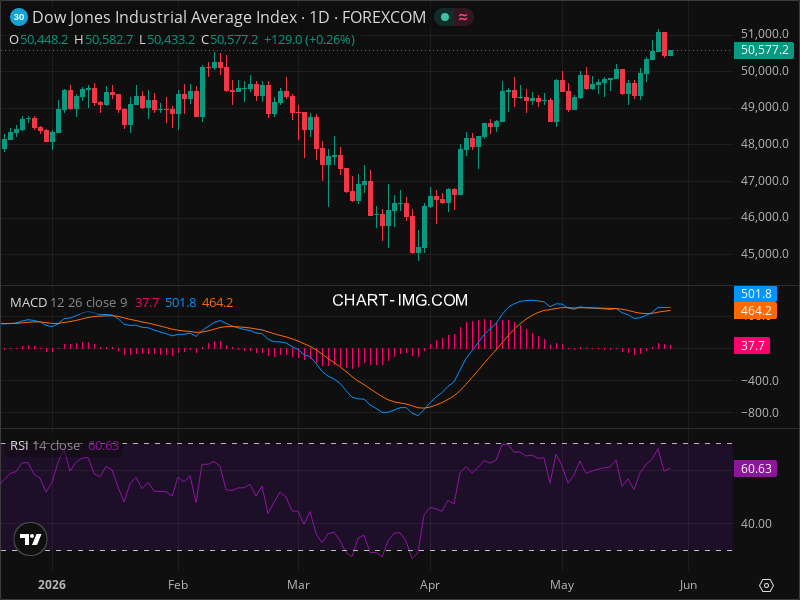
DJI Technical Analysis
May 27, 2026 | Joanna Newman
Tezos (XTZ) Review 2024: Everything You Need to Know Before Buying Tezos
.article-container { font-family: Arial, sans-serif; line-height: 1.6; color: #333; backgrou...
Chromia (CHR) Review 2024: Everything You Need to Know Before Buying Chromia
Illuvium (ILV) Review 2024: Everything You Need to Know Before Buying Illuvium
My Neighbor Alice (ALICE) Review 2024: Everything You Need to Know Before Buying My Neighbor Alice
Star Atlas (ATLAS) Review 2024: Everything You Need to Know Before Buying Star Atlas
TabTrade
What Is TabTrade? A Complete IntroductionTabTrade is a globally oriented multi-asset CFD and forex b...
Funded7
In the fast-moving world of proprietary trading, 2026 has marked a significant shift in what traders...
Bullwaves
Bullwaves Review 2026: A Premium MT5 Brokerage for Multi-Asset TradersBullwaves has quickly carved o...
BlackBull Markets
...
OQtima
Oqtima is an emerging online trading platform that offers a wide range of financial instruments, inc...
(adsbygoogle = window.adsbygoogle || []).push({}); Introduction In t...
(adsbygoogle = window.adsbygoogle || []).push({}); Einführung Wenn es um Er...
Mobi
Are you someone who makes international payments regularly using Bitcoin? Or do you travel a lot and...
Bitcoin.com
Bitcoin.com is a free downloadable Bitcoin wallet that allows users to trade and receive Bitcoins. T...
BTC.com
Created by Bitmain in 2016, BTC.com is a leading open-source Bitcoin and Bitcoin Cash storage platfo...
Bitcoin Price Analysis: Why Ancient Wallets Are Shaking the Market and What It Means for Your Portfolio
/* Modern SEO & AI-Optimized Article Styles */ /* Fonts loaded via link tags in head for b
Ethereum's Valuation Soars, Challenging Global Giants: A Deep Dive into Its $2,600 Milestone and Major Institutional Investments
.article-container { font-family: Arial, sans-serif; line-height: 1.6; color: #333; background-color
Shiba Inu Could Hit $2.5 Billion by 2050—Is This Your Chance to Build Wealth?
/* Modern SEO & AI-Optimized Article Styles */ @import url('https://fonts.googleap
XRP’s 2025 Breakout: Can Ripple Surpass $5 in the Next Bull Run?
.article-container { font-family: Arial, sans-serif; line-height: 1.6; color: #333; background-color
Bitcoin Explosion: Why Businesses Are Buying BTC 4x Faster Than It’s Mined
/* Modern SEO & AI-Optimized Article Styles */ @import url('https://fonts.googleap
The Top 10 Crypto Assets with the Highest Potential in 2025
.article-container { font-family: Arial, sans-serif; line-height: 1.6; color: #333; background-color
The Ultimate Bitcoin Review 2024: Everything You Need to Know Today
.article-container { font-family: Arial, sans-serif; line-height: 1.6; color: #333; background-colo
The Everyday Fruit that's a Powerhouse of Nutrition and Your Weight Loss Ally
(adsbygoogle = window.adsbygoogle || []).push({}); IntroductionWhen it comes to nutrition a
The oldest and most powerful remedy to permanently get rid of insects and ants
(adsbygoogle = window.adsbygoogle || []).push({}); IntroductionEach year, as the hot season
Two Beds, One Dream: The Growing Trend of Sleeping Apart for Better Rest
(adsbygoogle = window.adsbygoogle || []).push({}); IntroductionIn an era where quality slee
(adsbygoogle = window.adsbygoogle || []).push({}); Introduction In t...
(adsbygoogle = window.adsbygoogle || []).push({}); Einführung Wenn es um Er...
Mobi
Are you someone who makes international payments regularly using Bitcoin? Or do you travel a lot and...
Bitcoin.com
Bitcoin.com is a free downloadable Bitcoin wallet that allows users to trade and receive Bitcoins. T...
BTC.com
Created by Bitmain in 2016, BTC.com is a leading open-source Bitcoin and Bitcoin Cash storage platfo...


 Français
 Spanish
 Deutsch
 Português
 Türkçe
 Italiano
 العربية
 Русский
 Chinese
 Korean
 Japanese
 Vietnamese
 Hebrew
 Hindi
Hindi
 Greek
Greek
 Polish
 Thai
Thai
 Dutch
Dutch
 Malay
Malay




.png)
.png)
.png)













COMMENTS (0)