Create a FREE account and...
Manage your own Watchlist
Access all education lessons
Converse with other crypto enthusiasts
Be a part of the Interactive Crypto Community
OR
Please fill out the required fields Please fill out the required fields Please fill out the required fields

Cotton's Hidden Volatility: Why Wall Street Is on Edge and What It Means for Your Portfolio
As of April 11, 2026, the cotton market is teetering on the edge of a significant shift, with its recent mixed close sending ripples of uncertainty through Wall Street. This isn’t just another commodity fluctuation—it’s a critical signal of deeper forces at play, from unpredictable weather patterns to global economic tensions, that could redefine investment strategies. With cotton futures historically tied to broader agricultural trends, the current volatility, though specific figures remain elusive, hints at a potential turning point. What does this mean for the future, and more importantly, how could it impact your financial decisions? Whether you’re a seasoned investor or just keeping an eye on market trends, understanding this moment is essential. Dive in to uncover the hidden dynamics and see how you can position yourself for what’s next.
The cotton market’s latest mixed close isn’t just a blip on the radar—it’s a snapshot of a battle between bullish and bearish forces. While exact price data for this week remains unavailable, market reports suggest a tense equilibrium, with traders unable to push prices decisively in either direction. According to Bloomberg, this indecision often precedes significant volatility, especially in commodities as weather-sensitive as cotton.
Several factors are fueling this uncertainty. Erratic weather across major cotton-producing regions like the U.S. Cotton Belt and India has created a patchwork of crop yield expectations. At the same time, global demand for textiles remains uneven, with China’s economic rebound offering hope while Europe’s stagnation drags on sentiment. These clashing dynamics have left investors searching for clarity.
For those looking to navigate this turbulence, tools like AI-driven analysis can offer a competitive edge. Get AI-powered insights to better understand how these market forces could play out in the coming weeks.
If you’re invested in commodities or considering a move into cotton futures, this mixed close is a wake-up call. It signals a market at a crossroads, where both opportunity and risk are heightened. Without clear price direction, the immediate takeaway is caution—but also preparation.
For starters, a mixed market often means increased volatility, which can be a double-edged sword. On one hand, it opens doors for arbitrage and short-term gains if you can time the swings. On the other, it demands robust risk management to avoid being caught off-guard by sudden shifts. Keeping an eye on broader economic indicators, like global GDP forecasts from the IMF, can provide context for demand trends.
Hedging strategies could also be your best friend right now. Whether through futures contracts or options, protecting your portfolio against downside risk is critical. Curious about where the data points? Check the AI analysis for real-time signals that could guide your next move.
Cotton isn’t just another commodity—it’s a barometer of global economic health. Historically, its price movements have mirrored shifts in trade, consumer behavior, and agricultural innovation. Back in the 1980s and 1990s, globalization spurred demand as trade barriers fell, but it also exposed cotton to international competition. Fast forward to the 2008 financial crisis, and we saw demand for apparel—and thus cotton—plummet as consumers tightened their belts.
More recently, the 2020 COVID-19 pandemic threw supply chains into chaos, with port delays and labor shortages causing wild price swings. These events remind us that cotton is never isolated; it’s deeply tied to macroeconomic currents. Today’s mixed close echoes those past moments of uncertainty, where external shocks often dictated the next big move.
Zooming into 2026, the picture remains complex. The USDA’s latest reports highlight inconsistent rainfall in key U.S. growing regions, while India, another major producer, enjoys more favorable conditions. This disparity creates a tug-of-war in supply expectations. Meanwhile, geopolitical tensions, particularly U.S.-China trade disputes, continue to cast a shadow over export markets. According to a recent Reuters analysis, tariffs and trade barriers could suppress demand if unresolved.
Then there’s the demand side. China’s post-pandemic recovery has boosted textile production, but Europe’s economic slowdown—coupled with inflationary pressures—tempers optimism. It’s a delicate balance, and one that investors can’t afford to ignore.
Industry voices are split on where cotton is headed. “We’re seeing a market that’s hypersensitive to both supply disruptions and macroeconomic signals,” noted Peter Schiff, a well-known economist, in a recent interview with CNBC. His view underscores the dual pressures of weather and global growth forecasts shaping trader sentiment.
On the flip side, some analysts see opportunity in the chaos. A report from Goldman Sachs suggests that if supply constraints tighten further—say, due to a poor U.S. harvest—prices could spike, rewarding those who position early. This isn’t just theory; apparel giants like H&M and Zara, which rely heavily on cotton, are already adjusting supply chains to mitigate potential shortages, as per a Financial Times piece.
The broader industry impact is clear: volatility in cotton affects everyone from farmers to fashion retailers. For investors, staying ahead of these shifts is key. See what the AI predicts for cotton’s next moves based on real-time data.
Let’s not sugarcoat it: the cotton market right now is a minefield. A mixed close often signals indecision, but it also warns of potential sharp moves in either direction. If global demand weakens further—say, due to a deeper European recession—prices could tumble. Conversely, a supply shock from adverse weather could send futures soaring, catching shorts off-guard.
Currency fluctuations add another layer of risk. Since cotton is priced in U.S. dollars, a stronger dollar makes exports pricier for foreign buyers, potentially dampening demand. Keep an eye on Federal Reserve moves on interest rates, as they directly influence the dollar’s strength.
Yet, where there’s risk, there’s reward. Volatility creates openings for savvy investors. Arbitrage between cotton futures and related agricultural commodities like soybeans could yield profits if you can spot price discrepancies. Hedging with options also allows you to limit downside while maintaining exposure to upside potential.
For those looking to dive deeper into data-driven strategies, Get professional AI analysis to uncover hidden patterns in cotton’s price movements. Long-term players might also consider the sustainability trend—investing in producers with eco-friendly practices could align with growing regulatory and consumer demands.
Even without precise current price data, historical technical patterns offer a window into cotton’s potential trajectory. Traders often look at key support and resistance levels to gauge where prices might consolidate or break out. Historically, resistance around $0.85 per pound and support near $0.75 have been pivotal, as noted in past ICE futures reports.
Indicators like the Relative Strength Index (RSI) and Moving Average Convergence Divergence (MACD) are also critical. An RSI dipping below 40 could signal oversold conditions, hinting at a rebound. Meanwhile, a bullish MACD crossover might suggest upward momentum building. These tools aren’t crystal balls, but they provide a framework for decision-making.
For a more granular look at these indicators, Check AI fair value estimate to see how cotton’s current metrics stack up. Below is a table summarizing historical benchmarks for context:
| Metric | Historical Benchmark | Implication |
|---|---|---|
| Support Level | $0.75/pound | Potential bottom if breached |
| Resistance Level | $0.85/pound | Ceiling for bullish moves |
| RSI Threshold | Below 40 | Oversold signal |
Looking ahead, some analysts are cautiously optimistic. If global economic recovery gains steam—especially in key markets like China—demand for cotton could surge. Couple that with supply constraints from adverse weather in the U.S., and prices might climb toward $0.90 per pound by late 2026, as per USDA forecasts and analyst consensus reported by Bloomberg. This scenario hinges on resolution of trade tensions and stable consumer spending.
On the flip side, a bearish outlook looms if current headwinds persist. Weak growth in Europe, escalating U.S.-China trade disputes, and a stronger dollar could drag prices down to $0.70 per pound, according to IMF projections and market commentary from Reuters. This would hit exporters hard and test investor resilience.
The reality likely lies in between. Cotton’s path will depend on how these competing forces—supply shocks, demand trends, and geopolitical developments—play out over the next few quarters. For a data-driven take on these scenarios, See AI price prediction for cotton’s potential trajectories.
A mixed close reflects a lack of consensus among traders, driven by conflicting factors like erratic weather in cotton-producing regions, uneven global demand, and ongoing geopolitical tensions. Reports from the USDA and IMF highlight how these dynamics create uncertainty, leaving prices stuck in limbo.
It depends on your risk tolerance and strategy. The current volatility offers opportunities for short-term gains through arbitrage or hedging, but it also carries significant downside risks if demand weakens or supply shocks occur. Tools like AI signals for cotton can help you make informed decisions based on real-time data.
Weather is a major driver of cotton prices since it directly impacts crop yields. Droughts or inconsistent rainfall in key regions like the U.S. Cotton Belt can reduce supply, pushing prices up, while favorable conditions in places like India might stabilize or lower them. Historical data from the USDA shows this correlation clearly.
Trade policies, especially between major players like the U.S. and China, heavily influence cotton prices. Tariffs and export restrictions can dampen demand or disrupt supply chains, as seen in recent years. Reuters reports suggest that unresolved tensions could continue to weigh on the market.
Hedging with futures or options is a common strategy to mitigate risk. Diversifying into other commodities or sectors can also reduce exposure. Staying updated with technical indicators and market forecasts is crucial—consider getting AI analysis for cotton to stay ahead of trends.
Yes, sustainability is becoming a key focus. Regulatory pushes in the EU and consumer demand for eco-friendly textiles are pressuring producers to adopt greener practices, which could raise costs but also create niche investment opportunities. Keep an eye on policy updates and industry shifts.

ALL
TRENDING
WATCHLIST
Total Market Cap The Total Market Capitalization (Market Cap) is an indicator that measures the size of all the cryptocurrencies.It’s the total market value of all the cryptocurrencies' circulating supply: so it’s the total value of all the coins that have been mined.
{[{ marketcap }]} {[{ marketcapchange.toLocaleString(undefined, {maximumFractionDigits:2}) }]}% (24H) {[{ marketcapchange.toLocaleString(undefined, {maximumFractionDigits:2}) }]}% (24H)
Symbol
Price Cryptocurrency prices are volatile, and the prices change all the time. We are collecting all the data from several exchanges to provide the most accurate price available.
24H Cryptocurrency prices are volatile… The 24h % change is the difference between the current price and the price24 hours ago.
Trade
{[{ item.name }]}
{[{ index + $index}]}
{[{ item.pair.split('_')[0] }]}
Ƀ{[{item.price.toLocaleString(undefined, {maximumFractionDigits: 5}) }]} ${[{item.price.toLocaleString(undefined, {maximumFractionDigits: 5}) }]}
{[{ item.change24.toLocaleString(undefined, {maximumFractionDigits: 2}) }]}%
{[{ item.change24.toLocaleString(undefined, {maximumFractionDigits: 2}) }]}%
Symbol
Price Cryptocurrency prices are volatile, and the prices change all the time. We are collecting allthe data fromseveral exchanges to provide the most accurate price available.
24H Cryptocurrency prices are volatile… The 24h % change is the difference between the current priceand the price24 hours ago.
Trade
{[{ item.name }]}
{[{ index + $index}]}
{[{ item.pair.split('_')[0] }]}
Ƀ{[{item.price.toLocaleString(undefined, {maximumFractionDigits: 5}) }]} ${[{item.price.toLocaleString(undefined, {maximumFractionDigits: 5}) }]}
{[{ item.change24.toLocaleString(undefined, {maximumFractionDigits: 2}) }]}%
{[{ item.change24.toLocaleString(undefined, {maximumFractionDigits: 2}) }]}%

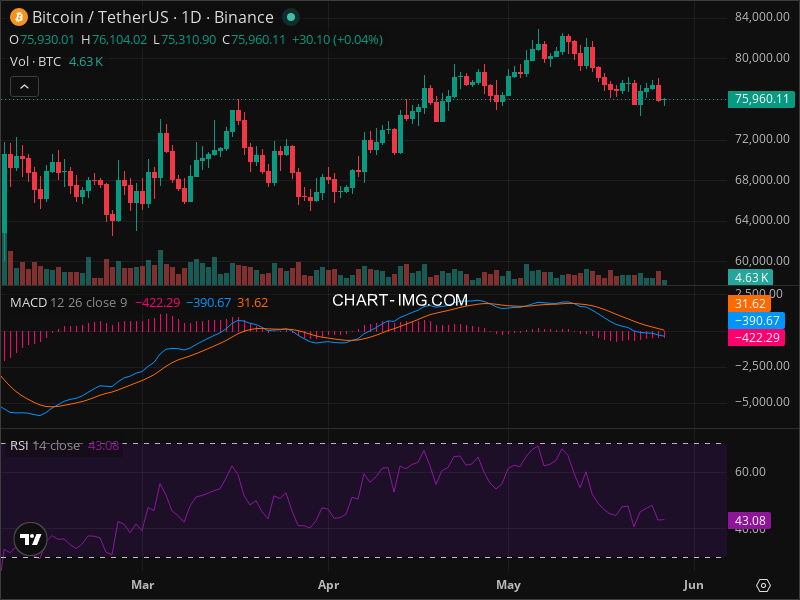
BTC Technical Analysis
May 27, 2026 | Joanna Newman

Soybeans Technical Analysis
May 27, 2026 | Joanna Newman
Live Cattle Technical Analysis
May 27, 2026 | Joanna Newman
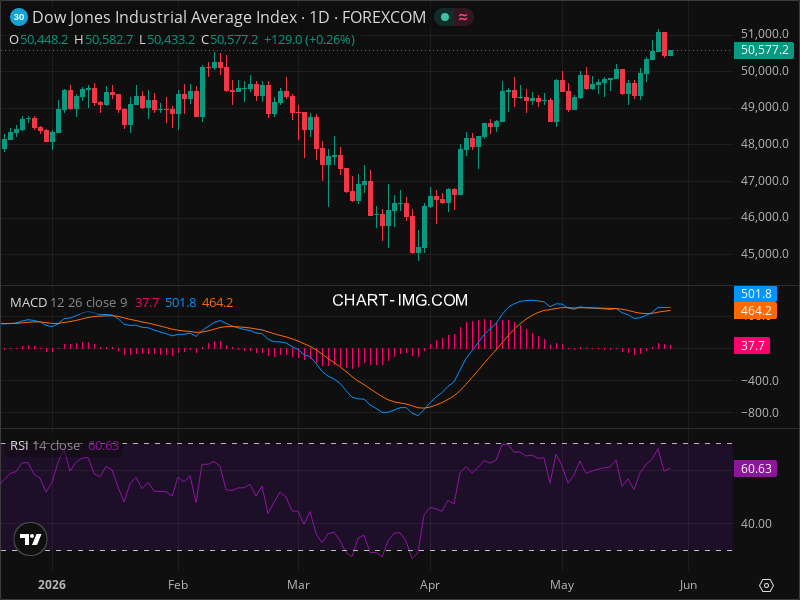
DJI Technical Analysis
May 27, 2026 | Joanna Newman
Tezos (XTZ) Review 2024: Everything You Need to Know Before Buying Tezos
.article-container { font-family: Arial, sans-serif; line-height: 1.6; color: #333; backgrou...
Chromia (CHR) Review 2024: Everything You Need to Know Before Buying Chromia
Illuvium (ILV) Review 2024: Everything You Need to Know Before Buying Illuvium
My Neighbor Alice (ALICE) Review 2024: Everything You Need to Know Before Buying My Neighbor Alice
Star Atlas (ATLAS) Review 2024: Everything You Need to Know Before Buying Star Atlas
TabTrade
What Is TabTrade? A Complete IntroductionTabTrade is a globally oriented multi-asset CFD and forex b...
Funded7
In the fast-moving world of proprietary trading, 2026 has marked a significant shift in what traders...
Bullwaves
Bullwaves Review 2026: A Premium MT5 Brokerage for Multi-Asset TradersBullwaves has quickly carved o...
BlackBull Markets
...
OQtima
Oqtima is an emerging online trading platform that offers a wide range of financial instruments, inc...
(adsbygoogle = window.adsbygoogle || []).push({}); Introduction In t...
(adsbygoogle = window.adsbygoogle || []).push({}); Einführung Wenn es um Er...
Mobi
Are you someone who makes international payments regularly using Bitcoin? Or do you travel a lot and...
Bitcoin.com
Bitcoin.com is a free downloadable Bitcoin wallet that allows users to trade and receive Bitcoins. T...
BTC.com
Created by Bitmain in 2016, BTC.com is a leading open-source Bitcoin and Bitcoin Cash storage platfo...
Cotton Closes Mixed on Friday
/* Modern SEO & AI-Optimized Article Styles */ /* Fonts loaded via link tags in head for b
Monero Surges Amid Crypto Chaos: Why This Privacy Coin Could Be Your Safe Haven
/* Modern SEO & AI-Optimized Article Styles */ /* Fonts loaded via link tags in head for b
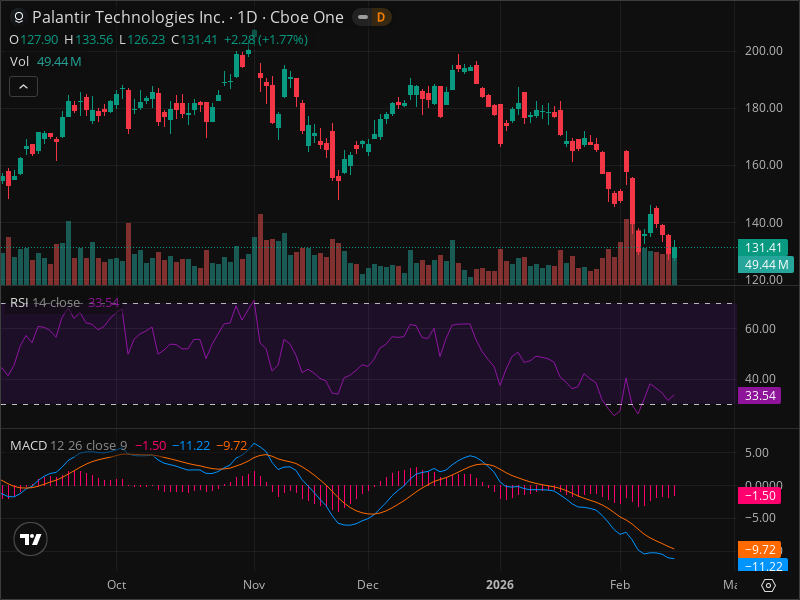
PLTR Warning: Key Support Level Being Tested Right Now
PLTR Chart | TradingView PLTR Warning: Key Support Level Being Tested Right Now
Bitcoin and Ethereum Surge: Why Smart Money Is Betting Big Despite Market Fear
/* Modern SEO & AI-Optimized Article Styles */ /* Fonts loaded via link tags in head for b
Ethereum, Cardano, and Solana: The Crypto Titans of 2025 – What’s Next for ETH, ADA, and SOL?
.article-container { font-family: Arial, sans-serif; line-height: 1.6; color: #333; background-color
The Top 10 Crypto Assets with the Highest Potential in 2025
.article-container { font-family: Arial, sans-serif; line-height: 1.6; color: #333; background-color
The Ultimate Bitcoin Review 2024: Everything You Need to Know Today
.article-container { font-family: Arial, sans-serif; line-height: 1.6; color: #333; background-colo
The Everyday Fruit that's a Powerhouse of Nutrition and Your Weight Loss Ally
(adsbygoogle = window.adsbygoogle || []).push({}); IntroductionWhen it comes to nutrition a
The oldest and most powerful remedy to permanently get rid of insects and ants
(adsbygoogle = window.adsbygoogle || []).push({}); IntroductionEach year, as the hot season
Two Beds, One Dream: The Growing Trend of Sleeping Apart for Better Rest
(adsbygoogle = window.adsbygoogle || []).push({}); IntroductionIn an era where quality slee
(adsbygoogle = window.adsbygoogle || []).push({}); Introduction In t...
(adsbygoogle = window.adsbygoogle || []).push({}); Einführung Wenn es um Er...
Mobi
Are you someone who makes international payments regularly using Bitcoin? Or do you travel a lot and...
Bitcoin.com
Bitcoin.com is a free downloadable Bitcoin wallet that allows users to trade and receive Bitcoins. T...
BTC.com
Created by Bitmain in 2016, BTC.com is a leading open-source Bitcoin and Bitcoin Cash storage platfo...


 Français
 Spanish
 Deutsch
 Português
 Türkçe
 Italiano
 العربية
 Русский
 Chinese
 Korean
 Japanese
 Vietnamese
 Hebrew
 Hindi
Hindi
 Greek
Greek
 Polish
 Thai
Thai
 Dutch
Dutch
 Malay
Malay




.png)
.png)
.png)










, Cardano (ADA), and Solana (SOL) price trends in 2025. The image fea.webp)





COMMENTS (0)