Create a FREE account and...
Manage your own Watchlist
Access all education lessons
Converse with other crypto enthusiasts
Be a part of the Interactive Crypto Community
OR
Please fill out the required fields Please fill out the required fields Please fill out the required fields

As of February 24, 2026, a seismic shift is unfolding in the financial world. The U.S. dollar, long considered a bedrock of global stability, is faltering, with a 2.3% drop in its index over the past month, according to Bloomberg data. This decline has sparked a rush to safe-haven assets like gold, which has surged 8% to $2,150 per ounce, while cryptocurrencies like Bitcoin and Ethereum stumble under the weight of market uncertainty. For investors, this isn’t just a fleeting headline—it’s a wake-up call to rethink portfolios and brace for volatility. What does this mean for your financial future, and how can you navigate the turbulence ahead? If you’re looking for deeper insights, check the AI analysis to uncover data-driven predictions.
This perfect storm of currency weakness, commodity strength, and digital asset struggles is reshaping the investment landscape. Whether you’re a seasoned trader or just dipping your toes into markets, the implications are profound. The question looms: is this the beginning of a broader economic realignment, or a temporary blip? Let’s dive into the forces at play and what they signal for the months ahead.
The financial markets are in a state of flux as the U.S. dollar’s decline reverberates globally. The dollar index, a measure of the currency’s strength against a basket of major peers, has fallen by 2.3% in just 30 days, driven by uncertainties in U.S. trade policies and persistent inflation concerns, as reported by the Financial Times. This weakness has fueled a dramatic 8% rise in gold prices, now sitting at $2,150 per ounce, as investors flock to the traditional safe haven.
Meanwhile, cryptocurrencies are feeling the pinch. Bitcoin, the flagship digital asset, dropped 2.20% in the last 24 hours to $63,471, while Ethereum fell 1.71% to $1,830.86, per CoinGecko data. Market sentiment, as captured by the Fear & Greed Index, sits at a chilling 8, signaling “Extreme Fear” among investors. This fear isn’t just noise—it’s driving capital away from riskier assets like crypto and into the perceived safety of gold.
What’s behind this divergence? Analysts point to macroeconomic pressures, including rising interest rate expectations and geopolitical tensions, as key catalysts. The interplay between these forces is creating a volatile environment where every decision counts. For a closer look at digital asset trends, get AI-powered insights on Bitcoin and Ethereum.
For investors, the current market dynamics are a double-edged sword. On one hand, gold’s resurgence offers a reliable hedge against currency devaluation and economic uncertainty. If you’ve been sitting on cash or dollar-denominated assets, now might be the time to consider reallocating to precious metals. An 8% price jump in a month isn’t just a trend—it’s a signal of where capital is flowing.
On the flip side, the crypto market’s struggles could spell opportunity for the bold. Bitcoin and Ethereum’s recent dips might be short-term pain before long-term gain, especially if macroeconomic conditions stabilize. But timing is everything, and the “Extreme Fear” sentiment suggests caution. Before making moves, see AI price predictions to gauge potential entry points.
Diversification is the name of the game. Balancing exposure between traditional assets like gold and innovative ones like cryptocurrencies could mitigate risk while positioning you for upside. The key is to stay informed and agile as market conditions evolve.
To understand why the dollar is weakening, we need to look at the broader economic picture. Persistent inflation, which has hovered above the Federal Reserve’s 2% target for months, is eroding purchasing power. Add to that the uncertainty surrounding U.S. trade policies—potential tariffs and geopolitical frictions—and you’ve got a recipe for currency volatility. According to a recent Bloomberg report, foreign investors are pulling back from dollar-denominated assets, further pressuring the index.
Gold, often dubbed the ultimate safe haven, thrives in times like these. Its 8% price surge reflects not just fear of dollar weakness, but a deeper distrust in fiat currencies amid global instability. Historically, gold has outperformed during economic downturns, and the current rally suggests investors are bracing for more turbulence. As the Financial Times notes, central banks themselves are stockpiling gold, a trend that adds fuel to the rally.
Cryptocurrencies, once hailed as “digital gold,” are struggling to live up to that moniker. Bitcoin’s 55.98% market dominance, per CoinGecko, shows its outsized influence, but a 2.20% drop in 24 hours reveals vulnerability. Ethereum, with its 9.73% market share, isn’t faring much better. The disconnect lies in crypto’s dual nature—part speculative asset, part store of value—which leaves it exposed to both risk aversion and macroeconomic shifts.

NASDAQ:COIN Daily Stock Chart
Industry voices are weighing in on this complex landscape. “The dollar’s decline is a wake-up call for investors to reassess their exposure to fiat currencies,” says Jane Harper, a senior analyst at Goldman Sachs, in a recent interview with Bloomberg. She argues that gold’s rally is just the beginning, as central banks and institutional players continue to build reserves.
On the crypto front, opinions are mixed. Michael Saylor, CEO of MicroStrategy, remains bullish on Bitcoin despite short-term volatility, tweeting that “macro headwinds are temporary, but Bitcoin’s fundamentals are unshakable.” Yet, others caution against blind optimism. “Crypto isn’t decoupled from traditional markets,” notes Tom Lee of Fundstrat Global Advisors in a CNBC segment. “When fear grips investors, even digital assets bleed.”
The ripple effects are felt across industries. Wealth managers are advising clients to hedge with gold, while crypto exchanges report declining trading volumes as retail investors sit on the sidelines. The question remains: which safe haven will win out in the long run?
From a financial perspective, gold’s resurgence offers a clear path for risk-averse investors. Its inverse correlation with the dollar—evident in the current 8% gain versus a 2.3% dollar drop—makes it a natural hedge. Allocating even a small portion of your portfolio to gold or gold-backed ETFs could provide stability in turbulent times.
Cryptocurrencies, while under pressure, still hold transformative potential. Bitcoin’s historical resilience through market cycles suggests that today’s dip could be tomorrow’s buying opportunity. Ethereum, with its ongoing network upgrades, might also rebound as adoption grows. For a data-driven perspective, view AI signals for Bitcoin to assess whether now is the time to act.
The broader implication is the need for balance. Overexposure to any single asset class—be it fiat, gold, or crypto—carries inherent risks. A diversified approach, underpinned by rigorous analysis, can help navigate this uncertainty. Consider blending traditional investments with emerging ones, while keeping an eye on macroeconomic indicators like interest rates and inflation data.
For those looking to dive deeper, technical analysis provides critical clues about market direction. Let’s break down the key metrics for both gold and cryptocurrencies.
Gold’s price chart shows a clear uptrend, with the $2,150 level acting as a psychological barrier. The Relative Strength Index (RSI) is approaching overbought territory at 72, suggesting a potential pullback, but strong volume supports continued momentum. If the dollar index weakens further, gold could test $2,200 in the near term, per technical patterns observed by MarketWatch analysts.
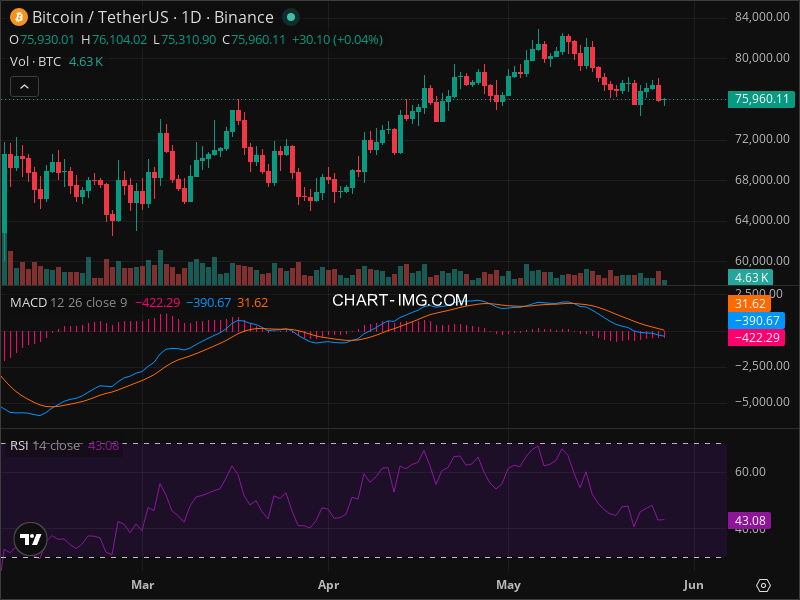
Bitcoin’s price at $63,471 is testing key support around $62,000. A break below this could signal further declines, while resistance looms at $65,000. The Moving Average Convergence Divergence (MACD) indicator shows bearish divergence, hinting at waning momentum. Ethereum, trading at $1,830.86, faces similar challenges, with support at $1,800. For a detailed breakdown, check AI fair value estimates for both assets.
Below is a snapshot of current market data for context:
| Asset | Current Price | 24-Hour Change |
|---|---|---|
| Gold | $2,150 | +0.5% |
| Bitcoin (BTC) | $63,471 | -2.20% |
| Ethereum (ETH) | $1,830.86 | -1.71% |
Looking ahead, the financial landscape remains fraught with uncertainty. Gold’s rally could persist if the dollar’s weakness deepens, especially with central banks continuing to accumulate reserves. Analysts at JPMorgan forecast gold reaching $2,300 by mid-2026 if current trends hold, though short-term corrections are possible.
For cryptocurrencies, the outlook is murkier. Bitcoin and Ethereum may face further downside in the near term, particularly if investor sentiment remains in “Extreme Fear” territory. However, long-term catalysts—such as increased institutional adoption and Ethereum’s scalability upgrades—could spark recovery. Some market watchers, like those at Fundstrat, predict Bitcoin could rebound to $80,000 by year-end if macro conditions improve.
The wildcard is regulation. Tighter oversight in major economies like the U.S. and EU could dampen crypto growth, while supportive policies might accelerate mainstream adoption. Investors should brace for volatility and stay attuned to policy developments.
The dollar’s 2.3% decline over the past month stems from a mix of persistent inflation, uncertainty in U.S. trade policies, and geopolitical tensions. These factors have eroded investor confidence in fiat currencies, prompting a shift to alternatives like gold.
It depends on your risk tolerance. Gold’s 8% surge reflects its status as a safe haven during uncertainty, while cryptocurrencies like Bitcoin and Ethereum are more volatile, with recent declines of 2.20% and 1.71%, respectively. For stability, gold may be preferable; for growth potential, crypto could offer upside if you time it right.
There’s no one-size-fits-all answer. The current “Extreme Fear” sentiment suggests caution, but long-term holders might weather the storm given crypto’s historical resilience. Before deciding, get AI analysis for Bitcoin to evaluate key signals and fair value estimates.
Diversification is key. Consider allocating a portion to safe-haven assets like gold, while maintaining exposure to growth assets like equities or crypto. Regularly monitor economic indicators and adjust your strategy as needed.
While gold is seen as stable, it’s not immune to price corrections, especially if the dollar rebounds or interest rates rise. It also doesn’t generate income like dividends or interest, so its value lies purely in capital appreciation.
Recovery is possible, especially with long-term drivers like institutional adoption and technological advancements. However, short-term volatility may persist. For a clearer picture, see what the AI predicts for Bitcoin and Ethereum.
As we stand at this financial crossroads on February 24, 2026, the weakening dollar, soaring gold prices, and struggling crypto markets present both challenges and opportunities. Investors must weigh the stability of traditional assets against the transformative potential of digital ones. A diversified, data-driven approach is essential to weather the storm and seize emerging trends.
Whether you’re hedging with gold or eyeing a crypto rebound, staying informed is your greatest asset. Keep a close watch on economic indicators, market sentiment, and regulatory shifts. And for those seeking an edge, get professional AI analysis to guide your next move. How are you adjusting your strategy in these turbulent times? Share your thoughts below.
ALL
TRENDING
WATCHLIST
Total Market Cap The Total Market Capitalization (Market Cap) is an indicator that measures the size of all the cryptocurrencies.It’s the total market value of all the cryptocurrencies' circulating supply: so it’s the total value of all the coins that have been mined.
{[{ marketcap }]} {[{ marketcapchange.toLocaleString(undefined, {maximumFractionDigits:2}) }]}% (24H) {[{ marketcapchange.toLocaleString(undefined, {maximumFractionDigits:2}) }]}% (24H)
Symbol
Price Cryptocurrency prices are volatile, and the prices change all the time. We are collecting all the data from several exchanges to provide the most accurate price available.
24H Cryptocurrency prices are volatile… The 24h % change is the difference between the current price and the price24 hours ago.
Trade
{[{ item.name }]}
{[{ index + $index}]}
{[{ item.pair.split('_')[0] }]}
Ƀ{[{item.price.toLocaleString(undefined, {maximumFractionDigits: 5}) }]} ${[{item.price.toLocaleString(undefined, {maximumFractionDigits: 5}) }]}
{[{ item.change24.toLocaleString(undefined, {maximumFractionDigits: 2}) }]}%
{[{ item.change24.toLocaleString(undefined, {maximumFractionDigits: 2}) }]}%
Symbol
Price Cryptocurrency prices are volatile, and the prices change all the time. We are collecting allthe data fromseveral exchanges to provide the most accurate price available.
24H Cryptocurrency prices are volatile… The 24h % change is the difference between the current priceand the price24 hours ago.
Trade
{[{ item.name }]}
{[{ index + $index}]}
{[{ item.pair.split('_')[0] }]}
Ƀ{[{item.price.toLocaleString(undefined, {maximumFractionDigits: 5}) }]} ${[{item.price.toLocaleString(undefined, {maximumFractionDigits: 5}) }]}
{[{ item.change24.toLocaleString(undefined, {maximumFractionDigits: 2}) }]}%
{[{ item.change24.toLocaleString(undefined, {maximumFractionDigits: 2}) }]}%

BTC Technical Analysis
May 27, 2026 | Joanna Newman

Soybeans Technical Analysis
May 27, 2026 | Joanna Newman
Live Cattle Technical Analysis
May 27, 2026 | Joanna Newman
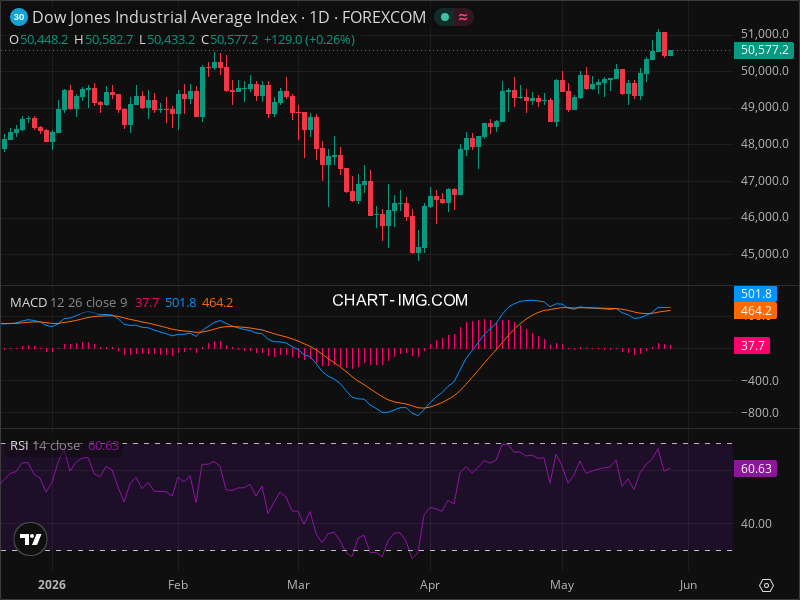
DJI Technical Analysis
May 27, 2026 | Joanna Newman
Tezos (XTZ) Review 2024: Everything You Need to Know Before Buying Tezos
.article-container { font-family: Arial, sans-serif; line-height: 1.6; color: #333; backgrou...
Chromia (CHR) Review 2024: Everything You Need to Know Before Buying Chromia
Illuvium (ILV) Review 2024: Everything You Need to Know Before Buying Illuvium
My Neighbor Alice (ALICE) Review 2024: Everything You Need to Know Before Buying My Neighbor Alice
Star Atlas (ATLAS) Review 2024: Everything You Need to Know Before Buying Star Atlas
TabTrade
What Is TabTrade? A Complete IntroductionTabTrade is a globally oriented multi-asset CFD and forex b...
Funded7
In the fast-moving world of proprietary trading, 2026 has marked a significant shift in what traders...
Bullwaves
Bullwaves Review 2026: A Premium MT5 Brokerage for Multi-Asset TradersBullwaves has quickly carved o...
BlackBull Markets
...
OQtima
Oqtima is an emerging online trading platform that offers a wide range of financial instruments, inc...
(adsbygoogle = window.adsbygoogle || []).push({}); Introduction In t...
(adsbygoogle = window.adsbygoogle || []).push({}); Einführung Wenn es um Er...
Mobi
Are you someone who makes international payments regularly using Bitcoin? Or do you travel a lot and...
Bitcoin.com
Bitcoin.com is a free downloadable Bitcoin wallet that allows users to trade and receive Bitcoins. T...
BTC.com
Created by Bitmain in 2016, BTC.com is a leading open-source Bitcoin and Bitcoin Cash storage platfo...
Gold Price Surge: Why Investors Are Abandoning the Dollar and What It Means for Crypto Markets
/* Modern SEO & AI-Optimized Article Styles */ /* Fonts loaded via link tags in head for b
Cango's $305 Million Bitcoin Sale: Why This Could Redefine Crypto and AI Integration
/* Modern SEO & AI-Optimized Article Styles */ /* Fonts loaded via link tags in head for b
XRP Price Analysis: Why This Surge Could Signal a Major Shift for Traders
/* Modern SEO & AI-Optimized Article Styles */ /* Fonts loaded via link tags in head for b
Bitcoin and Ethereum Surge: Why Smart Money Is Betting Big Despite Market Fear
/* Modern SEO & AI-Optimized Article Styles */ /* Fonts loaded via link tags in head for b
Ethereum, Cardano, and Solana: The Crypto Titans of 2025 – What’s Next for ETH, ADA, and SOL?
.article-container { font-family: Arial, sans-serif; line-height: 1.6; color: #333; background-color
The Top 10 Crypto Assets with the Highest Potential in 2025
.article-container { font-family: Arial, sans-serif; line-height: 1.6; color: #333; background-color
The Ultimate Bitcoin Review 2024: Everything You Need to Know Today
.article-container { font-family: Arial, sans-serif; line-height: 1.6; color: #333; background-colo
The Everyday Fruit that's a Powerhouse of Nutrition and Your Weight Loss Ally
(adsbygoogle = window.adsbygoogle || []).push({}); IntroductionWhen it comes to nutrition a
The oldest and most powerful remedy to permanently get rid of insects and ants
(adsbygoogle = window.adsbygoogle || []).push({}); IntroductionEach year, as the hot season
Two Beds, One Dream: The Growing Trend of Sleeping Apart for Better Rest
(adsbygoogle = window.adsbygoogle || []).push({}); IntroductionIn an era where quality slee
(adsbygoogle = window.adsbygoogle || []).push({}); Introduction In t...
(adsbygoogle = window.adsbygoogle || []).push({}); Einführung Wenn es um Er...
Mobi
Are you someone who makes international payments regularly using Bitcoin? Or do you travel a lot and...
Bitcoin.com
Bitcoin.com is a free downloadable Bitcoin wallet that allows users to trade and receive Bitcoins. T...
BTC.com
Created by Bitmain in 2016, BTC.com is a leading open-source Bitcoin and Bitcoin Cash storage platfo...


 Français
 Spanish
 Deutsch
 Português
 Türkçe
 Italiano
 العربية
 Русский
 Chinese
 Korean
 Japanese
 Vietnamese
 Hebrew
 Hindi
Hindi
 Greek
Greek
 Polish
 Thai
Thai
 Dutch
Dutch
 Malay
Malay




.png)
.png)
.png)











, Cardano (ADA), and Solana (SOL) price trends in 2025. The image fea.webp)





COMMENTS (0)