Create a FREE account and...
Manage your own Watchlist
Access all education lessons
Converse with other crypto enthusiasts
Be a part of the Interactive Crypto Community
OR
Please fill out the required fields Please fill out the required fields Please fill out the required fields

As of February 23, 2026, the cryptocurrency market is caught in a whirlwind of volatility, with a staggering $2.31 trillion market capitalization taking a hit amid a broad sell-off. Yet, beneath the surface of this downturn, a compelling narrative is emerging: savvy investors are eyeing digital assets as a powerful hedge against a weakening U.S. dollar, especially following the Supreme Court’s recent ruling against Trump’s tariffs. With Bitcoin trading at $65,147—down 4.25% in the last 24 hours—this moment feels like a crossroads. Could this be the dip that sets the stage for a historic rally, potentially pushing Bitcoin to $80,000 by year’s end? For anyone with skin in the game or curiosity about alternative investments, the implications of this shift could redefine your financial strategy.
The weakening dollar isn’t just a headline—it’s a signal of deeper economic currents that might reshape how we view wealth preservation. Cryptocurrencies, often dismissed as speculative, are increasingly seen as a counterweight to fiat currency erosion. Whether you’re a seasoned trader or just dipping your toes into the crypto waters, understanding this dynamic could be the key to navigating what’s next. Let’s dive into the data, the drivers, and the possibilities that lie ahead.
The cryptocurrency market is currently a battleground of fear and opportunity. As of today, the total market cap stands at $2.31 trillion, with a 24-hour trading volume of $65.69 billion reflecting intense activity despite the downturn. Bitcoin, holding a dominant 56.36% of the market, has slipped to $65,147, while Ethereum, with a 9.79% dominance, trades at $1,873.25 after a 5.21% drop. Other major players like Solana and Polkadot aren’t faring much better, with declines of 7.31% and 8.05%, respectively, over the past day.
What’s driving this sell-off? A mix of profit-taking after a volatile start to the year and lingering regulatory uncertainty are key culprits. But the bigger story is the macroeconomic backdrop. The U.S. dollar’s fragility, exacerbated by the Supreme Court’s February 20, 2026, decision to strike down tariffs on key imports, has sent shockwaves through traditional markets. According to a recent Bloomberg report, this ruling could have “long-term implications for U.S. trade policy,” pushing investors to seek alternatives like crypto.
Market sentiment, meanwhile, is in the gutter. The Fear & Greed Index sits at an abysmal 5, signaling “Extreme Fear.” Yet, history tells us that such moments often precede significant rebounds—think back to the 2022 crypto winter when Bitcoin bottomed out before surging again. Are we on the cusp of a similar turnaround?
For investors, the current crypto market slump is a double-edged sword. On one hand, the sharp declines—Bitcoin down 15.2% year-to-date, Ethereum down 18.5%—can feel like a punch to the gut. On the other, these dips could represent a rare buying opportunity, especially as the dollar’s weakness makes traditional safe havens less appealing.
The key takeaway? Diversification is more critical than ever. If the dollar continues to slide, cryptocurrencies could serve as a hedge against inflation and currency devaluation. But timing and due diligence are everything. Before making moves, consider leveraging tools to analyze market trends—get AI-powered insights to help navigate these choppy waters.
Risk management should also be top of mind. Allocate only what you can afford to lose, and keep an eye on macroeconomic indicators like U.S. interest rates and inflation data. For those with a long-term horizon, the potential for Bitcoin to hit $80,000 by Q4 2026, as some analysts predict, could justify weathering the current storm. The question is: are you positioned to capitalize if the tide turns?
To grasp why cryptocurrencies are gaining traction amid market turmoil, we need to zoom out. The U.S. dollar, long considered the world’s reserve currency, is under pressure. The Supreme Court’s recent ruling against tariffs has amplified concerns about trade deficits and fiscal policy, weakening the dollar’s global standing. According to data from the Federal Reserve, the dollar index has dropped 3.8% since the start of 2026—a trend that’s catching the attention of institutional investors.
Cryptocurrencies, by design, operate outside the control of central banks and governments. This decentralization makes them an attractive alternative when fiat currencies falter. As MicroStrategy CEO Michael Saylor famously put it in a recent interview, “Bitcoin is digital gold—a store of value for the 21st century.” His firm’s continued accumulation of Bitcoin, even during downturns, reflects a growing belief in crypto as a long-term bet against dollar depreciation.
We’ve seen this playbook before. During the 2020-2021 bull run, Bitcoin soared as governments printed trillions to combat pandemic fallout, stoking inflation fears. Similarly, in 2013, the Cyprus banking crisis drove a wave of crypto adoption as citizens sought to protect their wealth. Today’s dollar weakness, while different in origin, echoes these moments of systemic uncertainty. The difference now? Institutional players, from hedge funds to corporations, are far more involved, lending credibility and liquidity to the space.

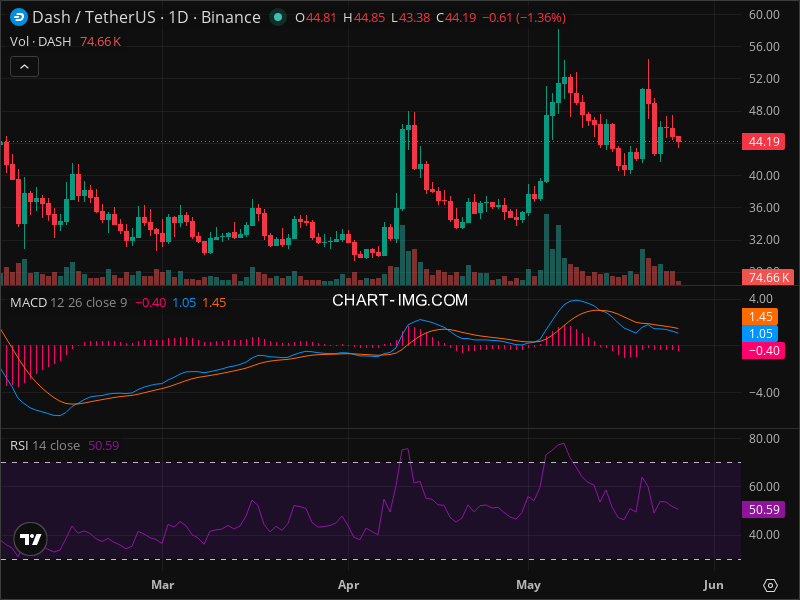
NASDAQ:COIN Daily Stock Chart
Yet, challenges remain. Regulatory uncertainty, a perennial thorn in crypto’s side, continues to spook retail investors. The SEC’s rumored plans for new guidelines on digital asset exchanges could either stabilize or stifle the market, depending on their tone. Understanding these historical and current forces is crucial for anyone looking to make informed decisions.
Industry voices are split on where the market heads next, but there’s consensus on one point: the weakening dollar is a game-changer. According to a CoinDesk analysis, “Institutional interest in cryptocurrencies could accelerate if fiat currencies continue to lose ground.” Major players like BlackRock and Fidelity have already dipped their toes into crypto ETFs, signaling a shift in how Wall Street views digital assets.
On the flip side, regulatory headwinds loom large. JPMorgan analyst Nikolaos Panigirtzoglou recently cautioned that “tighter regulations could dampen retail enthusiasm and slow adoption.” His concern isn’t unfounded—past crackdowns, like China’s 2021 ban on crypto mining, triggered massive sell-offs. Still, countries like the UK and Singapore are crafting crypto-friendly policies, which could offset U.S. hesitancy, as noted in a Financial Times report.
The broader impact? A potential reallocation of global capital. If the dollar’s slide persists, more wealth could flow into decentralized assets, reshaping financial markets. Curious about specific coins? Check the AI analysis for detailed breakdowns on Bitcoin and beyond.
The financial implications of a weakening dollar extend far beyond crypto prices. For one, inflation risks are rising—U.S. consumer price index data shows a 4.2% increase year-over-year as of January 2026. This erodes purchasing power, making fixed-income assets like bonds less attractive. Cryptocurrencies, with their capped supply (Bitcoin’s 21 million coin limit, for instance), offer a potential shield against this slow bleed.
But it’s not all rosy. Crypto’s volatility means it’s not a direct replacement for traditional hedges like gold. Investors must weigh the potential for outsized gains against the risk of steep losses. A balanced portfolio—perhaps 5-10% in digital assets—could strike the right chord for those looking to diversify.
Where are the opportunities? Current oversold conditions, as indicated by technical metrics, suggest that prices may not stay this low for long. Solana, down 22.3% year-to-date at $78.95, could be a dark horse if its ecosystem continues to grow. Ethereum, despite its drop, remains a cornerstone of DeFi and NFTs—sectors with long-term potential. For data-driven decisions, get AI analysis for Bitcoin and other major coins to pinpoint entry and exit points.
The bigger picture is about strategic patience. If dollar weakness drives institutional adoption, as some predict, today’s prices could look like bargains in hindsight. The challenge is navigating the noise to find signal—something every investor must master.
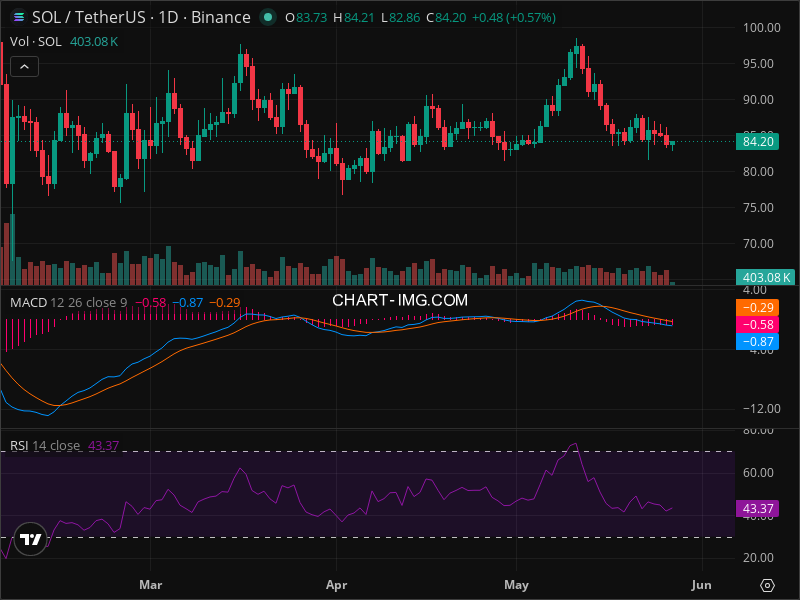
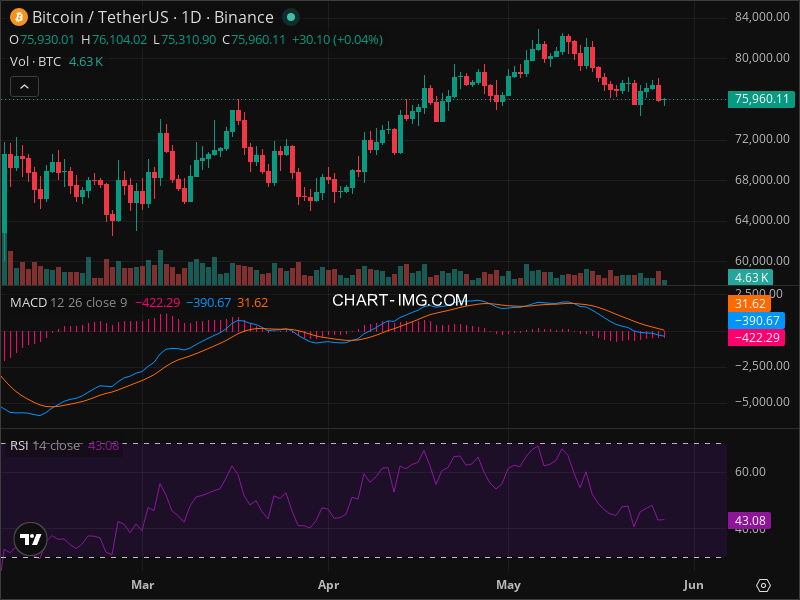
Let’s get into the numbers. Technical indicators are flashing mixed signals, but there’s a glimmer of hope for contrarian investors. Bitcoin’s Relative Strength Index (RSI) sits at 28, well into oversold territory—historically, readings below 30 often precede bounces. Ethereum and Solana follow suit with RSIs of 30 and 25, respectively, suggesting potential for short-term recovery.
The Moving Average Convergence Divergence (MACD) paints a gloomier picture, showing bearish momentum across the board. Bitcoin’s MACD line remains below the signal line, a sign that sellers still hold the upper hand. Yet, divergence between price and volume hints at weakening downward pressure—a classic setup for reversal.
Here’s a snapshot of the data:
| Cryptocurrency | RSI | MACD Status | 24-Hour Change |
|---|---|---|---|
| Bitcoin | 28 | Bearish | -4.25% |
| Ethereum | 30 | Bearish | -5.21% |
| Solana | 25 | Bearish | -7.31% |
For a deeper dive into these metrics, see AI price predictions that incorporate RSI, MACD, and on-chain data. The takeaway? While the short-term trend leans bearish, oversold conditions could signal a turning point for those with an eye for timing.
What does the future hold for crypto amid dollar weakness? Analysts are cautiously optimistic, outlining two primary scenarios. In the bullish case—rated at a 60% probability by some market watchers—Bitcoin could climb to $80,000 by Q4 2026. Key drivers include sustained dollar depreciation and growing institutional adoption, with firms like Tesla and Square potentially expanding their crypto holdings.
The bearish scenario, with a 40% likelihood, sees Bitcoin slipping to $55,000 if regulatory pressures intensify or global economic slowdowns sap risk appetite. The SEC’s upcoming guidelines, expected by mid-2026, could be a make-or-break moment. A CoinDesk report notes, “Regulatory clarity could spark a rally, but overly restrictive policies might trigger another crypto winter.”
Beyond Bitcoin, altcoins like Ethereum and Solana could see outsized gains if their ecosystems—think DeFi and scalable blockchains—continue to innovate. Want to explore specific forecasts? View AI signals for Ethereum to see what data-driven models predict.
Ultimately, the interplay of macro trends and crypto-specific developments will shape the path ahead. Investors who stay informed and adaptable will be best positioned to ride the wave—whether it crests at $80,000 or crashes lower.
The U.S. dollar is losing ground due to factors like the Supreme Court’s February 20, 2026, ruling against tariffs, which impacts trade policy and fiscal stability. A weaker dollar reduces purchasing power and makes fiat-based assets less attractive, driving interest in alternatives like cryptocurrencies. Digital assets, with their decentralized nature, are seen as hedges against inflation and currency devaluation.
It depends on your risk tolerance and investment horizon. Current oversold conditions (RSI at 28) suggest a potential rebound, but short-term volatility remains high. For data-driven insights, check AI fair value estimates to assess whether Bitcoin aligns with your strategy.
Regulatory uncertainty tops the list, with the SEC’s potential guidelines looming. Macroeconomic factors, like a global slowdown, could also dampen risk appetite. Additionally, crypto’s inherent volatility means sudden price swings are always a concern.
Diversification is key—don’t put all your eggs in one basket, whether it’s crypto or otherwise. Consider stablecoins for temporary shelter during volatility, and always use stop-loss orders to limit downside. Staying updated with market analysis tools can help; get professional AI analysis for tailored insights.
It’s possible under a bullish scenario where dollar weakness persists and institutional adoption grows. Analysts give this a 60% probability, though regulatory and economic hurdles could derail it. Keep an eye on key indicators and expert forecasts to gauge momentum.
Altcoins like Ethereum and Solana offer exposure to different blockchain use cases, such as DeFi and scalable networks. They can provide higher growth potential but often carry more risk than Bitcoin. Researching individual projects and their fundamentals is crucial before investing.

ALL
TRENDING
WATCHLIST
Total Market Cap The Total Market Capitalization (Market Cap) is an indicator that measures the size of all the cryptocurrencies.It’s the total market value of all the cryptocurrencies' circulating supply: so it’s the total value of all the coins that have been mined.
{[{ marketcap }]} {[{ marketcapchange.toLocaleString(undefined, {maximumFractionDigits:2}) }]}% (24H) {[{ marketcapchange.toLocaleString(undefined, {maximumFractionDigits:2}) }]}% (24H)
Symbol
Price Cryptocurrency prices are volatile, and the prices change all the time. We are collecting all the data from several exchanges to provide the most accurate price available.
24H Cryptocurrency prices are volatile… The 24h % change is the difference between the current price and the price24 hours ago.
Trade
{[{ item.name }]}
{[{ index + $index}]}
{[{ item.pair.split('_')[0] }]}
Ƀ{[{item.price.toLocaleString(undefined, {maximumFractionDigits: 5}) }]} ${[{item.price.toLocaleString(undefined, {maximumFractionDigits: 5}) }]}
{[{ item.change24.toLocaleString(undefined, {maximumFractionDigits: 2}) }]}%
{[{ item.change24.toLocaleString(undefined, {maximumFractionDigits: 2}) }]}%
Symbol
Price Cryptocurrency prices are volatile, and the prices change all the time. We are collecting allthe data fromseveral exchanges to provide the most accurate price available.
24H Cryptocurrency prices are volatile… The 24h % change is the difference between the current priceand the price24 hours ago.
Trade
{[{ item.name }]}
{[{ index + $index}]}
{[{ item.pair.split('_')[0] }]}
Ƀ{[{item.price.toLocaleString(undefined, {maximumFractionDigits: 5}) }]} ${[{item.price.toLocaleString(undefined, {maximumFractionDigits: 5}) }]}
{[{ item.change24.toLocaleString(undefined, {maximumFractionDigits: 2}) }]}%
{[{ item.change24.toLocaleString(undefined, {maximumFractionDigits: 2}) }]}%

BTC Technical Analysis
May 27, 2026 | Joanna Newman

Soybeans Technical Analysis
May 27, 2026 | Joanna Newman
Live Cattle Technical Analysis
May 27, 2026 | Joanna Newman
DJI Technical Analysis
May 27, 2026 | Joanna Newman
Tezos (XTZ) Review 2024: Everything You Need to Know Before Buying Tezos
.article-container { font-family: Arial, sans-serif; line-height: 1.6; color: #333; backgrou...
Chromia (CHR) Review 2024: Everything You Need to Know Before Buying Chromia
Illuvium (ILV) Review 2024: Everything You Need to Know Before Buying Illuvium
My Neighbor Alice (ALICE) Review 2024: Everything You Need to Know Before Buying My Neighbor Alice
Star Atlas (ATLAS) Review 2024: Everything You Need to Know Before Buying Star Atlas
TabTrade
What Is TabTrade? A Complete IntroductionTabTrade is a globally oriented multi-asset CFD and forex b...
Funded7
In the fast-moving world of proprietary trading, 2026 has marked a significant shift in what traders...
Bullwaves
Bullwaves Review 2026: A Premium MT5 Brokerage for Multi-Asset TradersBullwaves has quickly carved o...
BlackBull Markets
...
OQtima
Oqtima is an emerging online trading platform that offers a wide range of financial instruments, inc...
(adsbygoogle = window.adsbygoogle || []).push({}); Introduction In t...
(adsbygoogle = window.adsbygoogle || []).push({}); Einführung Wenn es um Er...
Mobi
Are you someone who makes international payments regularly using Bitcoin? Or do you travel a lot and...
Bitcoin.com
Bitcoin.com is a free downloadable Bitcoin wallet that allows users to trade and receive Bitcoins. T...
BTC.com
Created by Bitmain in 2016, BTC.com is a leading open-source Bitcoin and Bitcoin Cash storage platfo...
Crypto Market Update: Why Dollar Weakness Could Drive Bitcoin to $80K by 2026
/* Modern SEO & AI-Optimized Article Styles */ /* Fonts loaded via link tags in head for b
Soybeans Momentum Shift: The Signals Smart Money Is Watching
Soybeans Chart | TradingView Soybeans Momentum Shift: The Signals Smart Money Is W
Gemini Exchange Review 2024: Unveiling the Best in Crypto Trading
body { font-family: Arial, sans-serif; line-height: 1.6; padding: 20px; background-colo
Crypto Market Update: Why Transparency Could Be the Key to Bitcoin Hitting $150K
/* Modern SEO & AI-Optimized Article Styles */ /* Fonts loaded via link tags in head for b
Bitcoin's $100K Question: Here's Why BTC, XRP, SOL May Surge This Week
body { margin: 0; padding: 0; font-family: Georgia, "Times New Roman", serif;
The Top 10 Crypto Assets with the Highest Potential in 2025
.article-container { font-family: Arial, sans-serif; line-height: 1.6; color: #333; background-color
The Ultimate Bitcoin Review 2024: Everything You Need to Know Today
.article-container { font-family: Arial, sans-serif; line-height: 1.6; color: #333; background-colo
The Everyday Fruit that's a Powerhouse of Nutrition and Your Weight Loss Ally
(adsbygoogle = window.adsbygoogle || []).push({}); IntroductionWhen it comes to nutrition a
The oldest and most powerful remedy to permanently get rid of insects and ants
(adsbygoogle = window.adsbygoogle || []).push({}); IntroductionEach year, as the hot season
Two Beds, One Dream: The Growing Trend of Sleeping Apart for Better Rest
(adsbygoogle = window.adsbygoogle || []).push({}); IntroductionIn an era where quality slee
(adsbygoogle = window.adsbygoogle || []).push({}); Introduction In t...
(adsbygoogle = window.adsbygoogle || []).push({}); Einführung Wenn es um Er...
Mobi
Are you someone who makes international payments regularly using Bitcoin? Or do you travel a lot and...
Bitcoin.com
Bitcoin.com is a free downloadable Bitcoin wallet that allows users to trade and receive Bitcoins. T...
BTC.com
Created by Bitmain in 2016, BTC.com is a leading open-source Bitcoin and Bitcoin Cash storage platfo...


 Français
 Spanish
 Deutsch
 Português
 Türkçe
 Italiano
 العربية
 Русский
 Chinese
 Korean
 Japanese
 Vietnamese
 Hebrew
 Hindi
Hindi
 Greek
Greek
 Polish
 Thai
Thai
 Dutch
Dutch
 Malay
Malay




.png)
.png)
.png)













COMMENTS (0)