Create a FREE account and...
Manage your own Watchlist
Access all education lessons
Converse with other crypto enthusiasts
Be a part of the Interactive Crypto Community
OR
Please fill out the required fields Please fill out the required fields Please fill out the required fields

As of February 25, 2026, the cryptocurrency world is buzzing with anticipation over a groundbreaking proposal from the Federal Reserve that could redefine the market. The Fed’s plan to eliminate 'reputation risk' in crypto debanking—a long-standing barrier for banks engaging with crypto businesses—has the potential to unlock unprecedented institutional investment and liquidity. With Bitcoin trading at $64,976 and the total crypto market cap sitting at $2.31 trillion, this regulatory shift could be the catalyst for a historic rally. What does this mean for the future, and more importantly, for your portfolio? This development isn’t just a headline; it’s a signal of massive opportunity for investors willing to act now. Dive into our in-depth analysis and discover how to position yourself for what’s coming next—consider starting with a tool to get AI-powered insights on Bitcoin’s next move.
The cryptocurrency market is at a critical inflection point in early 2026. The Fed’s proposed rule to remove 'reputation risk' as a factor in crypto debanking could dismantle one of the biggest hurdles to mainstream adoption. Banks have historically shied away from servicing crypto-related businesses due to fears of regulatory scrutiny or public backlash. This new policy, if enacted, could open the floodgates for institutional capital, driving liquidity and stabilizing prices across the board.
Current market data paints a picture of caution but also opportunity. The Fear & Greed Index, a widely watched sentiment gauge, sits at an alarming 11, signaling Extreme Fear as reported by Alternative.me. Yet, Bitcoin and Ethereum have posted year-to-date gains of 3.02% and 3.54%, respectively, according to CoinGecko data. With Bitcoin dominating 56.11% of the market and Ethereum holding 9.85%, these assets remain the bellwethers of the industry. Could this climate of fear, paired with regulatory optimism, create the perfect storm for a rebound? Investors might want to check AI analysis to uncover hidden signals in today’s volatile market.
For investors, the Fed’s proposal is a double-edged sword of risk and reward. On one hand, the potential for banks to freely engage with crypto firms could drive massive capital inflows, pushing prices higher. Imagine Bitcoin breaking past $100K or even $150K as institutional players pile in. On the other hand, regulatory shifts often come with unforeseen consequences—could this lead to tighter oversight or unexpected compliance burdens?
The immediate takeaway is clear: liquidity matters. Increased banking access for crypto businesses could reduce the wild price swings that have scared off conservative investors. For those with a long-term horizon, this might be the moment to build positions in Bitcoin, Ethereum, or even promising altcoins like Solana. But timing is everything. Before making moves, consider using a resource to see AI price predictions for Bitcoin and other top assets.
Crypto debanking has been a thorn in the industry’s side for over a decade. Banks, wary of regulatory backlash and the perceived risks of associating with cryptocurrencies, have often refused to provide accounts to crypto exchanges or startups. This practice, driven by 'reputation risk' concerns, has forced many firms to operate in a financial gray zone, relying on offshore banking or alternative payment systems. The result? Stunted growth and limited access to traditional financial infrastructure.
So why is the Fed acting in 2026? Several factors are at play. First, the crypto market’s sheer size—$2.31 trillion as of today—makes it impossible to ignore. Second, pressure from industry leaders and policymakers has mounted, arguing that exclusion from banking services hampers innovation and economic growth. Reports from Bloomberg suggest that the Fed sees this as a way to integrate crypto into the broader financial system without compromising stability. Finally, global competition plays a role—nations like Switzerland and Singapore are already crypto-friendly, and the U.S. risks falling behind.
This isn’t just about banking access; it’s about legitimacy. If banks can confidently serve crypto businesses, it signals to the world that digital assets are here to stay. This could accelerate adoption among retail and institutional investors alike, creating a virtuous cycle of growth. But questions linger: Will smaller crypto firms benefit, or will this primarily favor large players with the resources to meet banking standards?

BTC Crypto Chart
Industry voices are largely optimistic about the Fed’s proposal. According to Bloomberg analyst Jane Harper, “This could be the tipping point for crypto. Banks have been waiting for a green light, and this might be it.” Her sentiment echoes a growing consensus that institutional involvement could propel the market to new heights.
On the corporate front, companies like MicroStrategy, led by CEO Michael Saylor, stand to gain significantly. Saylor, a vocal Bitcoin advocate, has long argued for greater financial integration of cryptocurrencies. With banks potentially entering the fray, firms holding large crypto reserves could see enhanced liquidity options. Meanwhile, exchanges like Coinbase and Kraken might experience a surge in trading volumes as new capital flows in. The ripple effects could reshape the competitive landscape, but only time will tell who the real winners are.
From a financial perspective, the Fed’s move could fundamentally alter market dynamics. Increased liquidity often leads to tighter bid-ask spreads, making trading more efficient and less costly. For Bitcoin, which often suffers from volatility during low-volume periods, this could be a game-changer. Ethereum, with its heavy reliance on decentralized finance (DeFi) protocols, might also benefit as banking access fuels more on-chain activity.
Where should investors focus? Bitcoin remains the safest bet for those seeking exposure to a potential rally. Its dominance and historical resilience make it a core holding. Ethereum offers a different kind of opportunity, tied to the growth of DeFi and Web3 applications. For the risk-tolerant, altcoins like Solana or Avalanche could deliver outsized returns if institutional interest trickles down. Before diving in, take a moment to view AI signals for Bitcoin to refine your strategy.
Of course, no opportunity comes without risk. Regulatory clarity is a double-edged sword—while it may encourage participation, it could also bring stricter rules down the line. There’s also the chance that banks remain cautious, even with the Fed’s blessing, due to lingering concerns about money laundering or fraud. Investors must weigh these factors against the potential upside and proceed with caution.
Let’s break down the numbers. Bitcoin’s current price of $64,976 reflects a consolidation phase, with key support at $60,000 and resistance near $70,000, based on CoinGecko data. The Relative Strength Index (RSI) hovers around 45, indicating neither overbought nor oversold conditions. Meanwhile, the Moving Average Convergence Divergence (MACD) shows a potential bullish crossover, hinting at upward momentum if buying pressure increases.
Ethereum, priced at $1,890.17, tells a similar story. Its RSI sits at 48, and trading volume has ticked up slightly in recent days, suggesting growing interest. On-chain metrics, such as staking activity post-Ethereum 2.0 upgrades, remain strong, reinforcing its long-term value proposition. For a deeper dive into these trends, you might want to check the AI fair value estimate for both assets.
| Asset | Current Price | 24-Hour Change | RSI |
|---|---|---|---|
| Bitcoin (BTC) | $64,976 | +1.5% | 45 |
| Ethereum (ETH) | $1,890.17 | +2.1% | 48 |
These indicators suggest a market poised for a breakout, especially if positive news around the Fed’s proposal gains traction. But technicals only tell part of the story—sentiment and macroeconomic factors will play a significant role.

ETH Crypto Chart
What does the future hold if the Fed’s plan comes to fruition? Analysts are cautiously bullish. A report from JPMorgan suggests Bitcoin could test $150,000 by the end of 2026 if institutional adoption accelerates. Ethereum, meanwhile, might see gains tied to DeFi growth, with some projecting a price of $5,000 within the same timeframe.
Several scenarios could unfold. In the best case, banks embrace crypto businesses, liquidity surges, and prices soar across the board. A more conservative outcome might see slow adoption, with banks taking a wait-and-see approach. Worst case, new regulatory hurdles emerge, dampening enthusiasm. Regardless, the data points to a transformative moment for the industry. Stay ahead of the curve by exploring tools to see what the AI predicts for Bitcoin and beyond.
Reputation risk refers to the potential damage to a bank’s public image or regulatory standing by associating with cryptocurrency businesses. Banks have historically avoided crypto clients due to fears of being linked to illicit activities or facing backlash, even if unfounded.
By removing barriers to banking services, the proposal could attract institutional investors, driving demand for Bitcoin and pushing prices higher. Some analysts predict a surge past $150,000 if adoption accelerates.
Yes, potential risks include overregulation, unforeseen compliance costs, or banks remaining hesitant despite the Fed’s guidance. Investors should monitor developments closely.
Bitcoin and Ethereum, as market leaders, are likely to see the most immediate gains. However, altcoins tied to DeFi or scalability solutions, like Solana, could also attract interest as liquidity increases.
Start by researching assets with strong fundamentals. Diversify your portfolio to manage risk, and keep an eye on regulatory news. Tools that offer AI-powered insights can help refine your strategy.
While no official timeline has been confirmed as of February 2026, Bloomberg reports suggest discussions could conclude within the year, with implementation potentially following in 2027.

ALL
TRENDING
WATCHLIST
Total Market Cap The Total Market Capitalization (Market Cap) is an indicator that measures the size of all the cryptocurrencies.It’s the total market value of all the cryptocurrencies' circulating supply: so it’s the total value of all the coins that have been mined.
{[{ marketcap }]} {[{ marketcapchange.toLocaleString(undefined, {maximumFractionDigits:2}) }]}% (24H) {[{ marketcapchange.toLocaleString(undefined, {maximumFractionDigits:2}) }]}% (24H)
Symbol
Price Cryptocurrency prices are volatile, and the prices change all the time. We are collecting all the data from several exchanges to provide the most accurate price available.
24H Cryptocurrency prices are volatile… The 24h % change is the difference between the current price and the price24 hours ago.
Trade
{[{ item.name }]}
{[{ index + $index}]}
{[{ item.pair.split('_')[0] }]}
Ƀ{[{item.price.toLocaleString(undefined, {maximumFractionDigits: 5}) }]} ${[{item.price.toLocaleString(undefined, {maximumFractionDigits: 5}) }]}
{[{ item.change24.toLocaleString(undefined, {maximumFractionDigits: 2}) }]}%
{[{ item.change24.toLocaleString(undefined, {maximumFractionDigits: 2}) }]}%
Symbol
Price Cryptocurrency prices are volatile, and the prices change all the time. We are collecting allthe data fromseveral exchanges to provide the most accurate price available.
24H Cryptocurrency prices are volatile… The 24h % change is the difference between the current priceand the price24 hours ago.
Trade
{[{ item.name }]}
{[{ index + $index}]}
{[{ item.pair.split('_')[0] }]}
Ƀ{[{item.price.toLocaleString(undefined, {maximumFractionDigits: 5}) }]} ${[{item.price.toLocaleString(undefined, {maximumFractionDigits: 5}) }]}
{[{ item.change24.toLocaleString(undefined, {maximumFractionDigits: 2}) }]}%
{[{ item.change24.toLocaleString(undefined, {maximumFractionDigits: 2}) }]}%

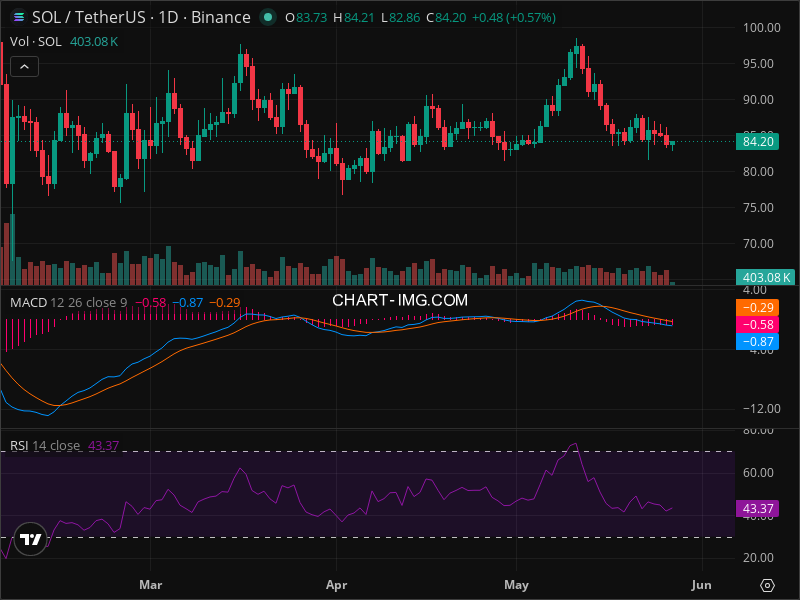
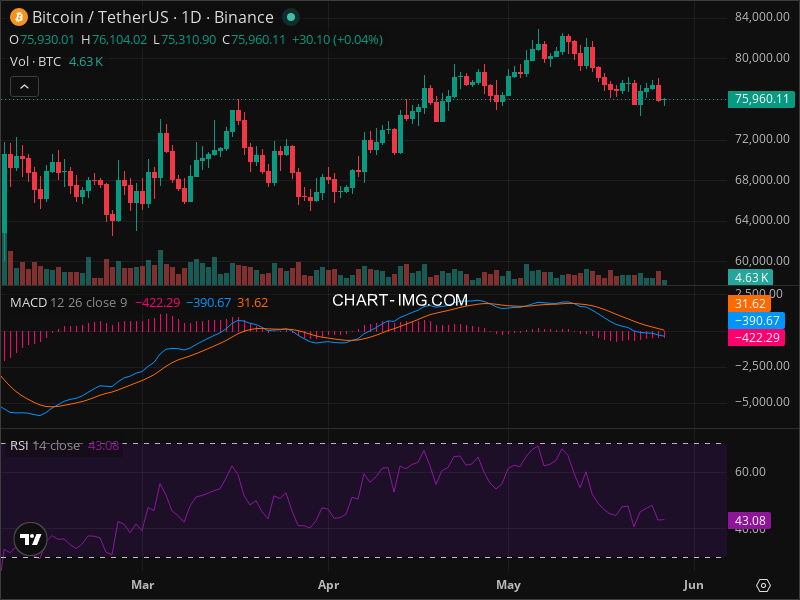
BTC Technical Analysis
May 27, 2026 | Joanna Newman

Soybeans Technical Analysis
May 27, 2026 | Joanna Newman
Live Cattle Technical Analysis
May 27, 2026 | Joanna Newman
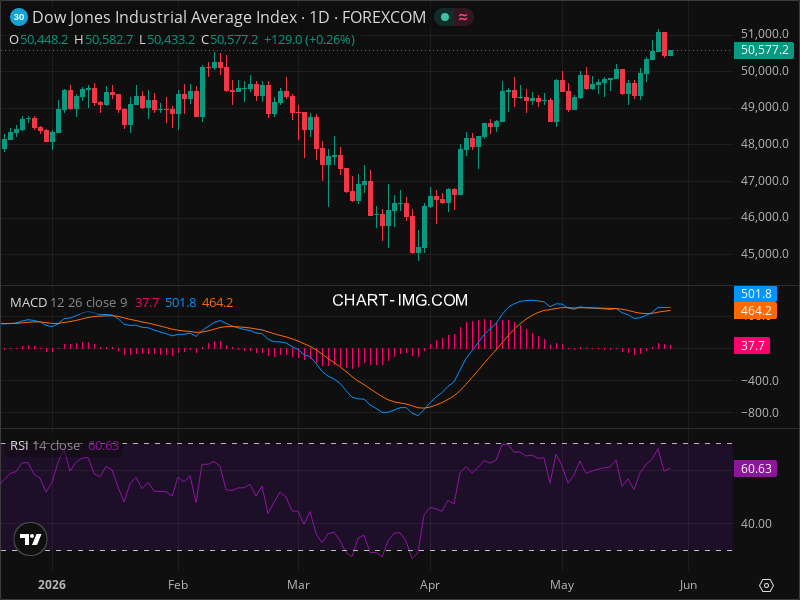
DJI Technical Analysis
May 27, 2026 | Joanna Newman
Tezos (XTZ) Review 2024: Everything You Need to Know Before Buying Tezos
.article-container { font-family: Arial, sans-serif; line-height: 1.6; color: #333; backgrou...
Chromia (CHR) Review 2024: Everything You Need to Know Before Buying Chromia
Illuvium (ILV) Review 2024: Everything You Need to Know Before Buying Illuvium
My Neighbor Alice (ALICE) Review 2024: Everything You Need to Know Before Buying My Neighbor Alice
Star Atlas (ATLAS) Review 2024: Everything You Need to Know Before Buying Star Atlas
TabTrade
What Is TabTrade? A Complete IntroductionTabTrade is a globally oriented multi-asset CFD and forex b...
Funded7
In the fast-moving world of proprietary trading, 2026 has marked a significant shift in what traders...
Bullwaves
Bullwaves Review 2026: A Premium MT5 Brokerage for Multi-Asset TradersBullwaves has quickly carved o...
BlackBull Markets
...
OQtima
Oqtima is an emerging online trading platform that offers a wide range of financial instruments, inc...
(adsbygoogle = window.adsbygoogle || []).push({}); Introduction In t...
(adsbygoogle = window.adsbygoogle || []).push({}); Einführung Wenn es um Er...
Mobi
Are you someone who makes international payments regularly using Bitcoin? Or do you travel a lot and...
Bitcoin.com
Bitcoin.com is a free downloadable Bitcoin wallet that allows users to trade and receive Bitcoins. T...
BTC.com
Created by Bitmain in 2016, BTC.com is a leading open-source Bitcoin and Bitcoin Cash storage platfo...
Fed's Bold Crypto Move: Why Bitcoin Could Surge Past $150K in 2026
/* Modern SEO & AI-Optimized Article Styles */ /* Fonts loaded via link tags in head for b
Crypto Market in Extreme Fear: Why Experts Predict a Turning Point for Bitcoin and a $50B Hedge Fund Strategy
/* Modern SEO & AI-Optimized Article Styles */ /* Fonts loaded via link tags in head for b
XRP Price Analysis: Why $1.39 Could Be the Bargain of 2026—What Data Reveals
/* Modern SEO & AI-Optimized Article Styles */ /* Fonts loaded via link tags in head for b
Crypto Market Update: Why $2.65 Trillion Industry Is in "Fear" Mode and What It Means for Investors
/* Modern SEO & AI-Optimized Article Styles */ /* Fonts loaded via link tags in head for b
The Top 10 Crypto Assets with the Highest Potential in 2025
.article-container { font-family: Arial, sans-serif; line-height: 1.6; color: #333; background-color
The Ultimate Bitcoin Review 2024: Everything You Need to Know Today
.article-container { font-family: Arial, sans-serif; line-height: 1.6; color: #333; background-colo
The Everyday Fruit that's a Powerhouse of Nutrition and Your Weight Loss Ally
(adsbygoogle = window.adsbygoogle || []).push({}); IntroductionWhen it comes to nutrition a
The oldest and most powerful remedy to permanently get rid of insects and ants
(adsbygoogle = window.adsbygoogle || []).push({}); IntroductionEach year, as the hot season
Two Beds, One Dream: The Growing Trend of Sleeping Apart for Better Rest
(adsbygoogle = window.adsbygoogle || []).push({}); IntroductionIn an era where quality slee
(adsbygoogle = window.adsbygoogle || []).push({}); Introduction In t...
(adsbygoogle = window.adsbygoogle || []).push({}); Einführung Wenn es um Er...
Mobi
Are you someone who makes international payments regularly using Bitcoin? Or do you travel a lot and...
Bitcoin.com
Bitcoin.com is a free downloadable Bitcoin wallet that allows users to trade and receive Bitcoins. T...
BTC.com
Created by Bitmain in 2016, BTC.com is a leading open-source Bitcoin and Bitcoin Cash storage platfo...


 Français
 Spanish
 Deutsch
 Português
 Türkçe
 Italiano
 العربية
 Русский
 Chinese
 Korean
 Japanese
 Vietnamese
 Hebrew
 Hindi
Hindi
 Greek
Greek
 Polish
 Thai
Thai
 Dutch
Dutch
 Malay
Malay




.png)
.png)
.png)













COMMENTS (0)