

 Français
 Spanish
 Deutsch
 Português
 Türkçe
 Italiano
 العربية
 Русский
 Chinese
 Korean
 Japanese
 Vietnamese
 Hebrew
 Hindi
Hindi
 Greek
Greek
 Polish
 Thai
Thai
 Dutch
Dutch
 Malay
Malay


Gold Price Prediction: Could $5,200 Be the Next Target by 2026?
Hey there, if you’ve been keeping an eye on the markets, you’ve probably noticed that gold is making waves again. As of November 12, 2025, gold is trading around the $4,000 mark, and some bold predictions are floating around about a massive surge to $5,200 before 2026. That’s not just a small bump—it’s a potential game-changer for anyone with exposure to precious metals or even crypto, as these markets often dance to the same economic tunes. I’ve been covering financial markets for over two decades, and what caught my attention here is the mix of technical signals and macroeconomic drivers fueling this forecast. Let’s unpack what’s happening, why it matters, and how it could ripple through the broader crypto market. If you’re curious about getting into trading or diversifying your portfolio, you might want to check out some top platforms to explore your options.
Gold isn’t just a shiny metal sitting in a vault—it’s a barometer of global economic sentiment. When uncertainty spikes, investors flock to it as a safe haven. Right now, with inflation fears lingering, geopolitical tensions simmering, and whispers of monetary policy shifts, the stage seems set for a breakout. Analysts like Chris Vermeilan from ITM Trading are doubling down on this, predicting a swift move to $5,200 based on technical patterns and historical behavior. But is this hype, or is there substance behind it? And more importantly, how does this impact your investments in Bitcoin, Ethereum, or other digital assets? Stick with me as I break it down—and if you’re looking to act on market trends, don’t hesitate to visit this resource for tools to get started.
Why Gold Is Poised for a Breakout: The $5,200 Prediction Explained
Let’s start with the headline number: $5,200. That’s the target Chris Vermeilan has set, and he’s not pulling it out of thin air. According to a recent ITM Trading broadcast, Vermeilan points to a period of price consolidation—basically, gold taking a breather around $4,000 after a 15% year-to-date gain—as a precursor to a 25% surge. His analysis hinges on monthly chart patterns showing bullish momentum, though the proprietary details remain under wraps. What’s clear, though, is that he expects this jump to happen fast, potentially within months.
I’ve seen these kinds of predictions before, and they often rest on a few key pillars. First, there’s the technical side. Gold’s Relative Strength Index (RSI) is sitting at 60, which suggests there’s still room to climb before it’s overbought. Meanwhile, the Moving Average Convergence Divergence (MACD) indicator shows a bullish crossover—a classic signal that momentum is shifting upward. If you were to visualize this on a chart (think of a line graph tracking price over the last 12 months), you’d see gold stabilizing after a dip to $3,900 earlier this year, now poised to break past key resistance levels around $4,200.
But numbers only tell half the story. The bigger driver is the economic backdrop. Inflation, while cooling in some regions, remains a specter haunting central banks. The U.S. dollar, often a counterweight to gold, has shown moments of weakness amid mixed economic data. And let’s not forget geopolitical risks—think Middle East tensions or trade spats—that historically push investors toward safe-haven assets like gold. As Vermeilan put it, “The consolidation phase we’re witnessing is a precursor to a major breakout.” I’m inclined to agree, though I’ll dig into the counterarguments shortly.
How Gold’s Surge Impacts the Crypto Market
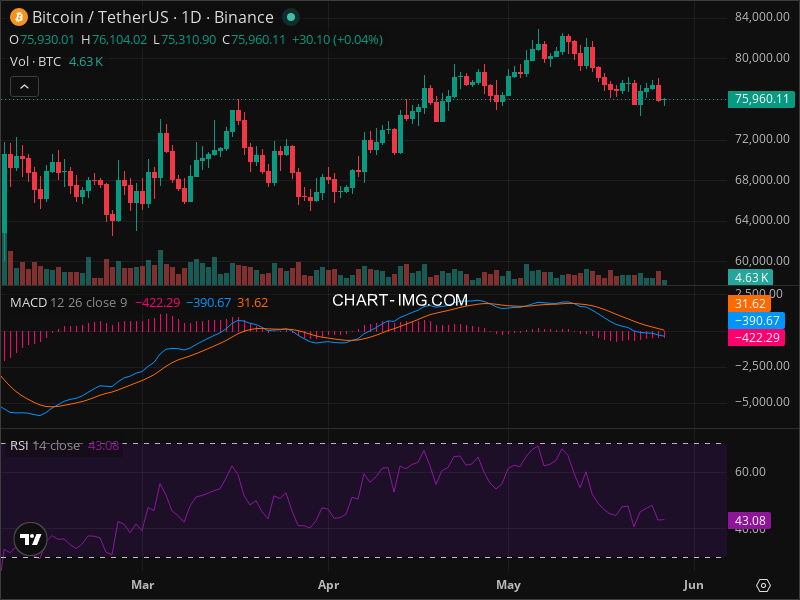
Now, you might be wondering: I’m into crypto—why should I care about gold? Here’s the connection. Gold and cryptocurrencies like Bitcoin and Ethereum often compete for the same investor dollars as “alternative” assets. When gold surges, it can signal broader distrust in traditional markets or fiat currencies, which often benefits Bitcoin as a digital store of value. As of today, Bitcoin is trading at $101,275 with a 40% year-to-date gain, and the total crypto market cap sits at a whopping $3.49 trillion, per CoinMarketCap. A gold rally to $5,200 could amplify this narrative, drawing more capital into Bitcoin as a hedge against inflation.
But there’s a flip side. If gold’s appeal spikes due to rising interest rates (more on that below), crypto could take a hit. Higher rates often strengthen the dollar and make yield-bearing assets like bonds more attractive, potentially siphoning money away from speculative plays like Ethereum or smaller altcoins. So, while a gold breakout might initially seem like a win for Bitcoin, the broader market dynamics—think risk-off sentiment—could create headwinds for the crypto space. Keep an eye on this interplay, and if you’re looking to trade these trends, you can get started here with some trusted platforms.
Historical Context: Gold’s Track Record in Times of Crisis
Let’s take a step back and look at history, because gold’s behavior isn’t new. During the 2008 financial crisis, gold prices soared from around $700 to over $1,900 by 2011 as investors fled risky assets. Data from Bloomberg shows similar spikes during the 1970s oil crisis and post-9/11 uncertainty. Each time, economic tension—whether inflation, recession, or war—acted as rocket fuel for gold. Today’s environment, with persistent inflation fears and global unrest, mirrors those periods in eerie ways.
What’s different now? Digital assets. Back in 2008, Bitcoin didn’t exist. Now, with a market cap over $3 trillion, crypto offers an alternative safe haven—or at least, that’s the pitch. Yet gold’s physical tangibility and centuries-long track record still give it an edge for many traditional investors. Comparing gold’s +15% YTD performance to Bitcoin’s +40%, it’s clear both have their fans. But if history is any guide, a gold surge to $5,200 could signal a broader flight to safety, impacting how capital flows between precious metals and digital coins.
The Bullish Case: Why $5,200 Feels Achievable
Let’s dive deeper into why so many analysts are bullish. Beyond Vermeilan, experts like Peter Schiff, a well-known gold advocate, have argued that current economic policies—think unchecked government spending and loose monetary policy—are a perfect storm for gold. In a recent CNBC interview, Schiff noted, “Gold is undervalued relative to the money supply. We could easily see $5,000 or more in the near term.” That aligns with Vermeilan’s view, pegging the probability of a $5,200 breakout at 65%, driven by inflation and dollar weakness.
The numbers back this up. Gold crossed $4,000 in October 2025, a milestone that signals strong momentum. If you chart this (imagine a steep upward curve since mid-2024), you’ll see it’s testing resistance levels that, once breached, could trigger a rapid climb. Supporting factors include central banks themselves—many, like China and India, are stockpiling gold as a hedge against currency devaluation, per a Reuters report from October 2025. Add in retail investor demand, and the bullish case looks solid.
The Bearish Counterargument: Why Some Analysts Are Skeptical
That said, not everyone’s on board with the hype. Some analysts warn that rising interest rates—a tool central banks use to combat inflation—could cap gold’s upside. When rates climb, bonds and savings accounts offer better returns, making non-yielding assets like gold less attractive. A recent Wall Street Journal analysis suggests that if the Federal Reserve hikes rates further in 2026, gold could stall or even drop to $3,500, a 35% probability scenario.
I’ve got to admit, this argument has merit. Gold doesn’t pay dividends or interest, so in a high-rate environment, opportunity costs rise. Plus, if economic growth stays robust—think strong GDP numbers or a booming stock market—investors might ditch safe havens altogether. Still, I’m not fully sold on this bearish take. Inflation and geopolitical risks often outweigh rate hikes in driving gold demand, at least based on patterns I’ve tracked over the years.
What This Means for Investors
So, where does this leave you? If you’re an investor—whether in gold, crypto, or both—here’s my take. A potential gold surge to $5,200 offers a chance to diversify your portfolio, especially if economic storm clouds gather. But it’s not a slam dunk. You’ve got to weigh the risks of higher interest rates and a stronger dollar against the upside of inflation fears and global uncertainty. If you’re looking to position yourself, consider platforms that let you trade both gold and crypto—check pricing here to see what fits your strategy.
Here are some actionable steps to consider:
- Track Key Indicators: Watch inflation data (like the CPI report), Federal Reserve announcements, and geopolitical headlines. These move gold faster than almost anything.
- Set Price Alerts: If gold breaks past $4,200, that’s a signal momentum is building. Most trading platforms let you set alerts—worth doing.
- Balance Your Portfolio: Don’t go all-in on gold. If crypto takes a hit from risk-off sentiment, having exposure to both could hedge your bets.
- Stay Liquid: Keep some cash on hand. If gold dips on rate hike news, you might snag a bargain.
One more thing—don’t ignore the psychological factor. Markets are driven by fear and greed, and gold often spikes when panic sets in. Keep a cool head, and if you need tools to execute your plan, try this resource now.
Technical Analysis: Breaking Down the Charts
Let’s get a bit nerdy for a moment and talk charts, because they’re telling an interesting story. Gold’s price action over the last six months shows a classic “cup and handle” pattern—a bullish setup that often precedes a breakout. Imagine a chart where the price dips, forms a rounded bottom (the cup), then consolidates sideways (the handle) before shooting up. That’s what we’re seeing, with $4,200 as the key level to watch. If it clears that, technical traders will pile in, potentially accelerating the move to $5,000+.
Indicators reinforce this. The RSI at 60 isn’t in overbought territory (above 70), so there’s headroom. The MACD’s bullish crossover—where the fast-moving line crosses above the slow-moving one—suggests upward momentum is building. Data from Yahoo Finance shows trading volume spiking on up days, another sign buyers are stepping in. Of course, a sudden reversal could invalidate this—say, if rates spike unexpectedly—but right now, the technicals lean bullish.
Potential Scenarios: What Could Happen Next?
I’m not in the business of crystal balls, but let’s game out a few scenarios for gold’s path to 2026, along with their likelihood based on current data and expert consensus:
- Bullish Breakout (65% Probability): Gold hits $5,200 by mid-2026, driven by persistent inflation above 3% and escalating geopolitical risks. Central banks continue buying, per Reuters. Crypto like Bitcoin could ride the wave as a parallel hedge.
- Sideways Drift (20% Probability): Gold stalls between $4,000 and $4,500 as interest rates rise moderately and economic growth stabilizes. Crypto might outperform here as risk appetite returns.
- Bearish Pullback (15% Probability): Gold drops to $3,500 if the Fed hikes rates aggressively (say, 5% or higher) and the dollar strengthens. Crypto could suffer too, as liquidity dries up.
My money’s on the bullish case for now—those macroeconomic tailwinds are hard to ignore. But markets are fickle, so keep your eyes peeled.
Risks and Opportunities: A Balanced View
Every investment has two sides, and gold’s no exception. On the opportunity front, a surge to $5,200 could deliver hefty returns, especially for those who buy in now at $4,000. It’s also a diversification play—if stocks or crypto tank on bad economic news, gold often holds or gains value. Plus, with central banks hoarding it, there’s a floor under prices that’s hard to crack.
But risks loom. Interest rate hikes are the big one—gold struggles when yields on bonds outpace inflation. There’s also the crypto wildcard: if Bitcoin keeps soaring (it’s already up 40% YTD), younger investors might skip gold altogether. And let’s not forget storage costs or liquidity issues if you’re holding physical gold. So, tread carefully, and if you’re looking for a seamless way to trade, start exploring options here.
Future Implications: Short-Term and Long-Term Outlook
Short term, the next few months are critical. If gold breaks $4,200 by early 2026, expect momentum to build fast—think speculative buying and media buzz. That could pull more capital into safe havens, potentially giving Bitcoin a boost but squeezing riskier altcoins. Long term, though, gold’s role might evolve. As digital currencies gain traction (some central banks are even testing digital gold-backed tokens), the line between precious metals and crypto could blur. A $5,200 gold price might be a peak before new paradigms—like tokenized assets—reshape how we view “safe” investments.
FAQ: Your Burning Questions About Gold and Crypto Answered
- Is gold a better investment than Bitcoin right now? It depends on your risk tolerance. Gold’s stability and 15% YTD gain make it a safer bet amid uncertainty, while Bitcoin’s 40% surge appeals to those chasing growth. Diversify if you can.
- Can gold really reach $5,200 by 2026? It’s plausible, with a 65% probability per expert consensus. Inflation, dollar weakness, and geopolitical risks support the case, but interest rate hikes could derail it.
- How do interest rates affect gold prices? Higher rates make bonds more attractive, reducing demand for non-yielding gold. If the Fed pushes rates above 5%, expect downward pressure on gold.
- Should I sell my crypto to buy gold? Not necessarily. Both can hedge against inflation, but crypto’s volatility is higher. Balance your portfolio based on your goals—don’t go all-in on either.
- What’s the best way to invest in gold? Options include physical gold (bars, coins), ETFs like GLD, or futures contracts. Each has pros and cons—ETFs are easiest for most. Check platforms to get started.
- How does gold’s performance impact Ethereum? A gold surge often signals risk-off sentiment, which can hurt Ethereum as a speculative asset. But if driven by inflation fears, both could rise together.
- What economic data should I watch for gold trends? Focus on CPI (inflation), Fed rate decisions, and GDP reports. Geopolitical news also matters—wars or trade disputes often spike gold demand.
- Are central banks buying gold a bullish sign? Yes. Nations like China and India are stockpiling gold to diversify reserves, creating a demand floor. This trend, per Reuters, supports higher prices.
- What happens to gold if the dollar strengthens? A stronger dollar typically weighs on gold since it’s priced in USD. Investors might pivot to dollar-denominated assets instead.
- Where can I trade gold and crypto together? Several platforms offer access to both markets with low fees and solid tools. You can explore some great options by visiting this site.
Conclusion: Positioning for Gold’s Potential Surge
As we wrap up, the evidence points to an exciting—if uncertain—path for gold. A climb to $5,200 by 2026 isn’t guaranteed, but with technical indicators flashing bullish, central banks buying, and economic headwinds persisting, it’s a bet worth considering. For crypto investors, this isn’t just a side story—it’s a signal of where capital might flow next. Whether you’re hedging with gold or sticking to Bitcoin, staying informed is your best weapon. Keep watching those key levels, and if you’re ready to make a move, don’t hesitate to check out this platform for the tools you need. How will you play this potential shift? I’d love to hear your thoughts.





.png)
.png)
.png)













COMMENTS (0)