Create a FREE account and...
Manage your own Watchlist
Access all education lessons
Converse with other crypto enthusiasts
Be a part of the Interactive Crypto Community
OR
Please fill out the required fields Please fill out the required fields Please fill out the required fields

As the cryptocurrency landscape continues to evolve at a breakneck pace, a new and formidable challenge has emerged on the horizon—quantum computing. This technological leap threatens to upend the very foundations of blockchain security, and Solana, one of the fastest blockchains in the game, finds itself at a critical juncture. As of April 5, 2026, Solana is trading at $80.53, a modest 0.38% uptick in the last 24 hours, within a jittery market gripped by "Extreme Fear" and boasting a capitalization of $2.39 trillion (according to CoinGecko data). But beyond these numbers lies a deeper question: can Solana maintain its lightning-fast transaction speeds while fortifying itself against quantum threats? For investors and enthusiasts alike, this isn’t just a technical debate—it’s a make-or-break moment that could redefine Solana’s future and your portfolio’s potential.
The crypto market in April 2026 is a cauldron of anxiety, with the Fear & Greed Index plummeting to a chilling 12, signaling "Extreme Fear" among investors (per Alternative.me API). Despite this, the total market cap holds strong at $2.39 trillion, with a 24-hour trading volume of $48.52 billion. Bitcoin, the perennial heavyweight, dominates with a 56.18% share, trading at $67,118 after a 0.42% gain. Ethereum trails with a 10.38% slice of the pie, priced at $2,055.66, up 0.27%. Amidst this backdrop, Solana’s $80.53 price tag and 0.38% daily increase might seem like a footnote, yet it remains a trending coin, capturing attention for both its performance and its vulnerabilities.
What’s driving the buzz around Solana isn’t just its price action but a growing concern over quantum computing’s potential to crack blockchain cryptography. Experts warn that quantum advancements could render current security protocols obsolete, exposing networks to unprecedented risks. For a blockchain like Solana, celebrated for processing up to 65,000 transactions per second (TPS), the stakes couldn’t be higher. Will speed remain its superpower, or could it become its Achilles’ heel? If you’re invested in Solana, now’s the time to check the AI analysis for deeper insights into its risk profile.
For anyone with skin in the crypto game, the quantum threat isn’t some distant sci-fi scenario—it’s a looming risk that could impact your holdings. Solana’s current resilience, reflected in its trending status and steady price of $80.53, suggests short-term stability. But the long-term picture is murkier. If quantum computing advances faster than anticipated, blockchains that fail to adapt could see their security compromised, potentially leading to massive losses for investors.
The immediate takeaway? Stay vigilant. Monitor Solana’s roadmap for signs of quantum-resistant upgrades. Institutional investors, in particular, are watching closely, as any hint of vulnerability could dampen confidence. While Solana’s ecosystem continues to grow, driven by its speed and low transaction costs, the quantum question looms large. Curious about how this might play out for your investments? Get AI-powered insights to navigate these uncertain waters.
Solana burst onto the scene with a promise of unparalleled speed and scalability, thanks to its unique Proof of History (PoH) consensus mechanism. Unlike traditional blockchains that struggle with bottlenecks, Solana can process thousands of transactions per second, making it a darling of decentralized finance (DeFi) and non-fungible token (NFT) ecosystems. This speed has positioned it as a top contender, ranking seventh by market cap as of April 2026, with a price of $80.53.
Enter quantum computing—a technological frontier that could shatter the cryptographic underpinnings of blockchain technology. Current encryption methods, like elliptic curve cryptography (ECC), rely on the computational difficulty of certain mathematical problems. Quantum computers, leveraging algorithms like Shor’s, could solve these problems exponentially faster, potentially cracking private keys and forging digital signatures. According to a 2025 report by the Financial Times, experts estimate that sufficiently powerful quantum computers could emerge within the next decade, putting unprepared networks at risk.
For Solana, the challenge is stark. Quantum-resistant cryptography, often referred to as post-quantum cryptography (PQC), typically requires heavier computational resources and larger data footprints. This means slower transaction processing and reduced throughput—antithetical to Solana’s core value proposition. Balancing these competing priorities will test the ingenuity of Solana’s developers and could redefine its place in the market. For a detailed breakdown of Solana’s risk metrics, consider getting AI analysis for Solana.

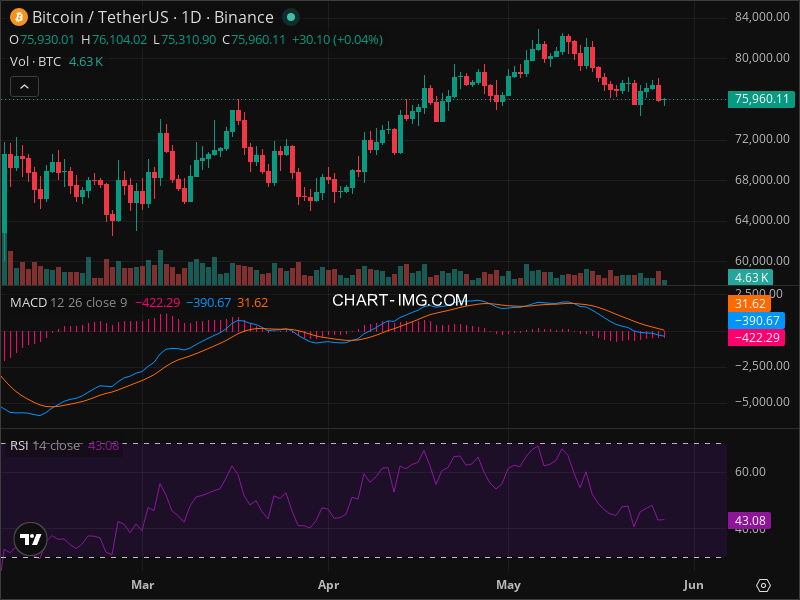
BTC Crypto Chart
The quantum threat isn’t just a theoretical concern—it’s a topic of heated debate among industry leaders. “Quantum computing’s potential to disrupt blockchain security is real, and projects ignoring it do so at their peril,” warned a blockchain security analyst in a recent Bloomberg interview. Meanwhile, Anatoly Yakovenko, Solana’s co-founder, has acknowledged the need for innovation, hinting at ongoing research into hybrid cryptographic solutions during a 2025 CoinDesk webinar.
Across the industry, the impact could be seismic. If Solana or other major blockchains falter in addressing quantum vulnerabilities, investor trust could erode, redirecting capital to more secure alternatives. Conversely, early adopters of quantum-resistant tech could gain a competitive edge, attracting institutional backing. The race is on, and the outcome will shape the crypto landscape for years to come.
In the near term, Solana’s price stability at $80.53 and its status as a trending coin suggest that the market hasn’t fully priced in the quantum risk. However, in a climate of "Extreme Fear," any negative news could trigger volatility. Investors should brace for potential dips if Solana’s quantum readiness updates disappoint, but also watch for upside if the project unveils robust solutions.
Looking further out, Solana’s ability to integrate quantum-resistant measures without sacrificing speed could be a game-changer. Success here might cement its position as a leader in the $2.39 trillion crypto market, drawing in more developers and capital. Failure, on the other hand, could see competitors like Ethereum or newer quantum-ready blockchains steal market share. For those weighing their next move, see what the AI predicts about Solana’s long-term trajectory.
Uncertainty often breeds opportunity. Savvy investors might find value in diversifying across blockchains that are proactively addressing quantum threats. Additionally, companies developing quantum-resistant tech could become attractive investment targets. The key is staying informed and agile as this narrative unfolds.
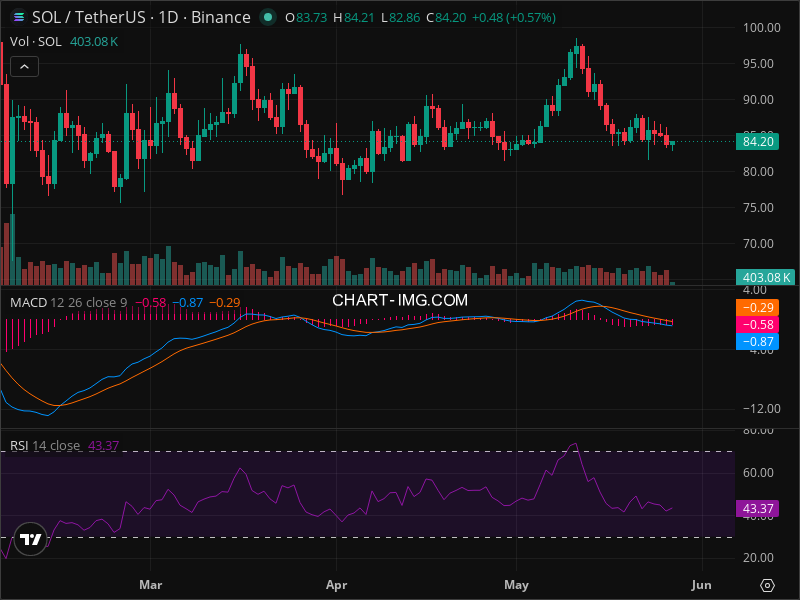
Let’s break down Solana’s current technical outlook. The Relative Strength Index (RSI) is hovering near overbought territory, suggesting caution for short-term traders. Meanwhile, the Moving Average Convergence Divergence (MACD) indicates a bullish trend, aligning with Solana’s recent 0.38% price gain to $80.53 (per CoinGecko data). These indicators point to sustained momentum, but external risks like quantum concerns could disrupt this trajectory.
On the quantum readiness front, Solana’s architecture—optimized for speed—faces inherent challenges. Post-quantum algorithms often demand more computational power, which could slow transaction speeds from 65,000 TPS to a fraction of that capacity. Potential solutions like hardware acceleration or Layer 2 offloading are on the table, but implementation remains complex. Below is a comparison of Solana’s current metrics against a hypothetical quantum-resistant framework.
| Metric | Solana (Current) | Quantum-Resistant (Projected) |
|---|---|---|
| Transaction Speed | ~65,000 TPS | Reduced (TBD) |
| Security Protocol | Standard ECC | Post-Quantum Cryptography |
| Computational Overhead | Low | High |
For a more granular look at Solana’s technical indicators, view AI signals for Solana.

ETH Crypto Chart
What does the future hold for Solana in a quantum era? In the best-case scenario, Solana’s team could pioneer optimized PQC algorithms, integrating them seamlessly without compromising speed. This would bolster investor confidence and potentially drive its price well beyond $80.53, reinforcing its market position. Bloomberg analysts suggest that blockchains addressing quantum threats early could see a 20-30% uptick in institutional investment over the next five years.
On the flip side, delays or inefficiencies in adopting quantum-resistant measures could spell trouble. Competitors might leapfrog Solana, siphoning off market share and developer talent. A 2025 Financial Times analysis warns that unprepared blockchains could face “catastrophic devaluation” if quantum breakthroughs occur sooner than expected. The path forward is fraught with uncertainty, but one thing is clear: Solana’s response will be pivotal.
Quantum computing threatens blockchain by potentially breaking current cryptographic methods like elliptic curve cryptography. Using algorithms such as Shor’s, quantum computers could derive private keys from public ones, allowing attackers to access funds or forge transactions. While powerful quantum computers aren’t widely available yet, their development is accelerating, making this a pressing concern.
Solana’s architecture is built for speed, processing up to 65,000 transactions per second. However, adopting quantum-resistant cryptography could slow down its network due to increased computational demands and larger transaction sizes. This creates a trade-off between maintaining its hallmark performance and ensuring long-term security.
While specific details are scarce, Solana’s leadership, including co-founder Anatoly Yakovenko, has publicly acknowledged the need for quantum readiness. Research into hybrid cryptographic solutions and optimized algorithms is reportedly underway, though no definitive timeline for implementation has been shared as of April 2026.
The decision to sell depends on your risk tolerance and investment horizon. Solana’s current price of $80.53 and trending status suggest market confidence, but quantum concerns introduce long-term uncertainty. Staying informed about Solana’s progress on security upgrades is crucial. For tailored insights, consider getting professional AI analysis.
Diversification is key—spread investments across multiple blockchains, especially those prioritizing quantum resistance. Keep an eye on industry developments and regulatory shifts that could influence security standards. Regularly updating your knowledge and using tools like AI-driven analysis platforms can also help. See AI price prediction for Solana to stay ahead of the curve.
Estimates vary, but some experts, as cited in a 2025 Financial Times report, suggest that quantum computers capable of breaking blockchain encryption could emerge within 10-15 years. Others argue it could happen sooner given the rapid pace of technological advancement. Preparation now is seen as a prudent strategy by most analysts.
ALL
TRENDING
WATCHLIST
Total Market Cap The Total Market Capitalization (Market Cap) is an indicator that measures the size of all the cryptocurrencies.It’s the total market value of all the cryptocurrencies' circulating supply: so it’s the total value of all the coins that have been mined.
{[{ marketcap }]} {[{ marketcapchange.toLocaleString(undefined, {maximumFractionDigits:2}) }]}% (24H) {[{ marketcapchange.toLocaleString(undefined, {maximumFractionDigits:2}) }]}% (24H)
Symbol
Price Cryptocurrency prices are volatile, and the prices change all the time. We are collecting all the data from several exchanges to provide the most accurate price available.
24H Cryptocurrency prices are volatile… The 24h % change is the difference between the current price and the price24 hours ago.
Trade
{[{ item.name }]}
{[{ index + $index}]}
{[{ item.pair.split('_')[0] }]}
Ƀ{[{item.price.toLocaleString(undefined, {maximumFractionDigits: 5}) }]} ${[{item.price.toLocaleString(undefined, {maximumFractionDigits: 5}) }]}
{[{ item.change24.toLocaleString(undefined, {maximumFractionDigits: 2}) }]}%
{[{ item.change24.toLocaleString(undefined, {maximumFractionDigits: 2}) }]}%
Symbol
Price Cryptocurrency prices are volatile, and the prices change all the time. We are collecting allthe data fromseveral exchanges to provide the most accurate price available.
24H Cryptocurrency prices are volatile… The 24h % change is the difference between the current priceand the price24 hours ago.
Trade
{[{ item.name }]}
{[{ index + $index}]}
{[{ item.pair.split('_')[0] }]}
Ƀ{[{item.price.toLocaleString(undefined, {maximumFractionDigits: 5}) }]} ${[{item.price.toLocaleString(undefined, {maximumFractionDigits: 5}) }]}
{[{ item.change24.toLocaleString(undefined, {maximumFractionDigits: 2}) }]}%
{[{ item.change24.toLocaleString(undefined, {maximumFractionDigits: 2}) }]}%

BTC Technical Analysis
May 27, 2026 | Joanna Newman

Soybeans Technical Analysis
May 27, 2026 | Joanna Newman
Live Cattle Technical Analysis
May 27, 2026 | Joanna Newman
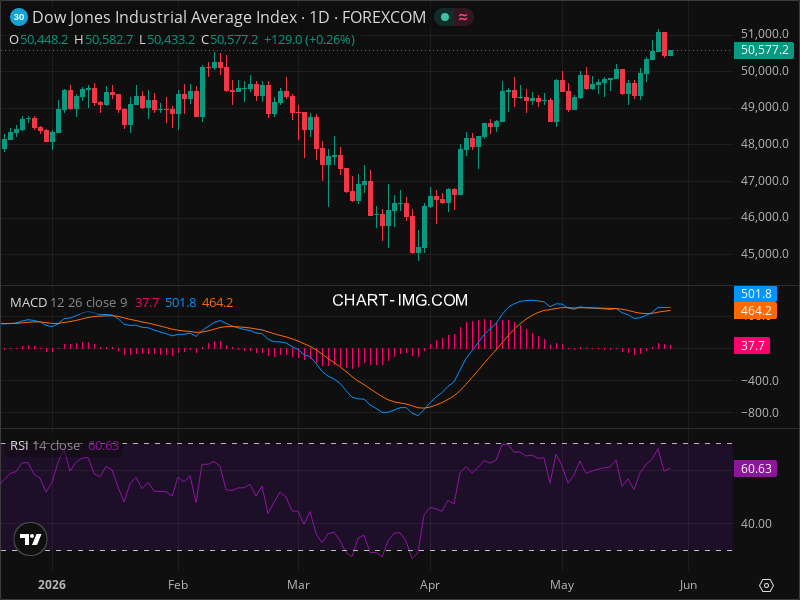
DJI Technical Analysis
May 27, 2026 | Joanna Newman
Tezos (XTZ) Review 2024: Everything You Need to Know Before Buying Tezos
.article-container { font-family: Arial, sans-serif; line-height: 1.6; color: #333; backgrou...
Chromia (CHR) Review 2024: Everything You Need to Know Before Buying Chromia
Illuvium (ILV) Review 2024: Everything You Need to Know Before Buying Illuvium
My Neighbor Alice (ALICE) Review 2024: Everything You Need to Know Before Buying My Neighbor Alice
Star Atlas (ATLAS) Review 2024: Everything You Need to Know Before Buying Star Atlas
TabTrade
What Is TabTrade? A Complete IntroductionTabTrade is a globally oriented multi-asset CFD and forex b...
Funded7
In the fast-moving world of proprietary trading, 2026 has marked a significant shift in what traders...
Bullwaves
Bullwaves Review 2026: A Premium MT5 Brokerage for Multi-Asset TradersBullwaves has quickly carved o...
BlackBull Markets
...
OQtima
Oqtima is an emerging online trading platform that offers a wide range of financial instruments, inc...
(adsbygoogle = window.adsbygoogle || []).push({}); Introduction In t...
(adsbygoogle = window.adsbygoogle || []).push({}); Einführung Wenn es um Er...
Mobi
Are you someone who makes international payments regularly using Bitcoin? Or do you travel a lot and...
Bitcoin.com
Bitcoin.com is a free downloadable Bitcoin wallet that allows users to trade and receive Bitcoins. T...
BTC.com
Created by Bitmain in 2016, BTC.com is a leading open-source Bitcoin and Bitcoin Cash storage platfo...
Solana's quantum-threat readiness reveals harsh tradeoff: security vs speed
/* Modern SEO & AI-Optimized Article Styles */ /* Fonts loaded via link tags in head for b
Bitcoin at $103,839: Could Satoshi Nakamoto’s $133.5B Wealth Signal a $250K Surge?
/* Modern SEO & AI-Optimized Article Styles */ @import url('https://fonts.googleap
Ethereum Whales Are Stockpiling: What This Signals for the Crypto Market’s Next Big Move
/* Modern SEO & AI-Optimized Article Styles */ @import url('https://fonts.googleapis.c
Alibaba, Blockchain Anti-Food Fraud Platform Test Is Launched
In its beginnings, the blockchain was mainly associated with Bitcoin cryptocurrency. Qualified as a
The Top 10 Crypto Assets with the Highest Potential in 2025
.article-container { font-family: Arial, sans-serif; line-height: 1.6; color: #333; background-color
The Ultimate Bitcoin Review 2024: Everything You Need to Know Today
.article-container { font-family: Arial, sans-serif; line-height: 1.6; color: #333; background-colo
The Everyday Fruit that's a Powerhouse of Nutrition and Your Weight Loss Ally
(adsbygoogle = window.adsbygoogle || []).push({}); IntroductionWhen it comes to nutrition a
The oldest and most powerful remedy to permanently get rid of insects and ants
(adsbygoogle = window.adsbygoogle || []).push({}); IntroductionEach year, as the hot season
Two Beds, One Dream: The Growing Trend of Sleeping Apart for Better Rest
(adsbygoogle = window.adsbygoogle || []).push({}); IntroductionIn an era where quality slee
(adsbygoogle = window.adsbygoogle || []).push({}); Introduction In t...
(adsbygoogle = window.adsbygoogle || []).push({}); Einführung Wenn es um Er...
Mobi
Are you someone who makes international payments regularly using Bitcoin? Or do you travel a lot and...
Bitcoin.com
Bitcoin.com is a free downloadable Bitcoin wallet that allows users to trade and receive Bitcoins. T...
BTC.com
Created by Bitmain in 2016, BTC.com is a leading open-source Bitcoin and Bitcoin Cash storage platfo...


 Français
 Spanish
 Deutsch
 Português
 Türkçe
 Italiano
 العربية
 Русский
 Chinese
 Korean
 Japanese
 Vietnamese
 Hebrew
 Hindi
Hindi
 Greek
Greek
 Polish
 Thai
Thai
 Dutch
Dutch
 Malay
Malay



.png)
.png)
.png)
















COMMENTS (0)