Create a FREE account and...
Manage your own Watchlist
Access all education lessons
Converse with other crypto enthusiasts
Be a part of the Interactive Crypto Community
OR
Please fill out the required fields Please fill out the required fields Please fill out the required fields

Imagine a world where the U.S. government, one of the most powerful economic forces on the planet, throws its weight behind Bitcoin. The crypto market would erupt, prices could skyrocket, and digital assets might finally gain the mainstream legitimacy many investors dream of. As of February 10, 2026, Bitcoin is trading at $69,345, down 2.24% in the last 24 hours, amid swirling rumors of such a seismic shift. Yet, despite the buzz and speculation amplified by voices like Jim Cramer, the hard data and insider insights paint a starkly different picture—one where the U.S. government is far from ready to embrace Bitcoin as an asset. For investors, this isn’t just a headline; it’s a critical signal about where the market is headed and how to position yourself in a landscape gripped by volatility and uncertainty. Curious about what’s really driving this story? Let’s dive deeper and uncover the reality behind the rumors—plus, check the AI analysis to see what data-driven insights reveal about Bitcoin’s next move.
The cryptocurrency market in February 2026 is a cauldron of speculation and anxiety. Bitcoin, commanding a dominant 56.86% of the total $2.44 trillion market cap, remains the bellwether for digital assets. However, its recent 2.24% price drop to $69,345 in just 24 hours reflects a jittery investor base reacting to unverified rumors of U.S. government involvement. Meanwhile, Ethereum, holding a 10.15% market share at $2,051.04, mirrors this downward trend with a 2.00% decline, signaling broader market unease.
What’s fueling this tension? The Fear & Greed Index, a key sentiment gauge, sits at an alarming 9—indicating “Extreme Fear.” According to data from Alternative.me, this level of panic often precedes sharp price corrections or, conversely, buying opportunities for the bold. Daily trading volumes, reaching $124.59 billion as reported by CoinGecko, underscore the market’s frenetic pace, where rumors can ignite rapid swings. The whisper of government Bitcoin purchases, though enticing, has been met with skepticism by analysts who point to regulatory priorities over asset acquisition.
For now, the market is a chessboard of caution and opportunity. Investors are left parsing fact from fiction, with many turning to tools like AI-powered insights to navigate these choppy waters.
So, what does the debunking of the U.S. government Bitcoin purchase rumor mean for your portfolio? First, expect continued short-term volatility. The market’s reaction—seen in Bitcoin’s recent dip and the pervasive fear sentiment—suggests that speculative noise will keep prices unpredictable. If you’re a day trader, these fluctuations could offer quick entry and exit points, but timing is everything.
For long-term holders, the picture is more nuanced. Bitcoin’s fundamentals, like its capped supply of 21 million coins, remain a compelling case for value retention, even if government backing isn’t on the horizon. The absence of such a move might dampen hopes for immediate price surges, but it also means the market isn’t artificially inflated by speculative government-driven demand. This could be a chance to accumulate at lower prices, especially if sentiment-driven sell-offs persist.
Risk management is key in this environment. Diversifying across assets like Ethereum or Solana, which show resilience despite market dips, could mitigate exposure. And for those seeking clarity amidst the chaos, tools like AI signals for Bitcoin can provide data-driven guidance on whether to buy, hold, or sell.
The idea of the U.S. government buying Bitcoin didn’t emerge from thin air. It gained traction through speculative commentary on financial news platforms, with figures like Jim Cramer floating the possibility as a way to stabilize crypto volatility. The notion seemed plausible to some, given precedents like El Salvador’s adoption of Bitcoin as legal tender in 2021. Could a superpower like the U.S. follow suit to hedge against inflation or diversify reserves?
However, a closer look at U.S. fiscal and regulatory priorities reveals why this remains a long shot. The federal government is grappling with a national debt exceeding $34 trillion, as per recent Treasury data. Allocating funds to a speculative asset like Bitcoin, which lacks the stability of traditional reserves like gold or bonds, is a political and economic non-starter. Moreover, the U.S. has historically viewed cryptocurrencies through a lens of caution, focusing on their potential for illicit use and market manipulation.
Instead of buying Bitcoin, the government’s energy is directed toward regulation. The Securities and Exchange Commission (SEC) and the Commodity Futures Trading Commission (CFTC) are intensifying efforts to classify and oversee digital assets. A 2024 Bloomberg report highlighted that policymakers are more concerned with protecting investors than endorsing crypto through direct purchases. This regulatory push, while frustrating for some, aims to create a safer market environment—potentially benefiting long-term adoption.

BTC Crypto Chart
Contrast this with other nations’ approaches. Countries like Singapore and Switzerland have embraced crypto-friendly policies to attract innovation, while China has doubled down on bans. The U.S. sits in a cautious middle ground, unlikely to make bold moves like purchasing Bitcoin without a clear strategic or economic imperative. For investors, this means the market will continue to be shaped by private sector adoption and institutional investment, not government intervention.
Industry voices are nearly unanimous in dismissing the likelihood of U.S. government Bitcoin purchases. “The focus is on regulation, not accumulation,” said a senior analyst at JPMorgan during a recent CNBC segment. This sentiment is echoed by thought leaders across the financial spectrum, who argue that the government’s role is to set guardrails, not to act as a market participant.
The impact on the crypto industry is twofold. On one hand, the absence of government buying keeps Bitcoin’s price dynamics tied to organic demand—think retail investors, hedge funds, and corporations like MicroStrategy, which has amassed over 200,000 BTC as of late 2025 per public filings. On the other hand, it reinforces the narrative of Bitcoin as a decentralized asset, free from state control, which could appeal to its core libertarian base.
For businesses in the crypto space, this clarity is a mixed bag. Exchanges and wallet providers may face stricter compliance costs due to regulatory focus, but they’re also spared the market distortions a government buy-in could trigger. Curious about how these dynamics affect specific coins? Get AI analysis for Bitcoin to see what data suggests for the near term.
Financially, the immediate fallout from this rumor’s debunking is evident in Bitcoin’s price dip and the broader market’s fearful sentiment. A government purchase would likely have driven a price surge—some analysts speculated a potential jump to $100,000 per BTC on such news. Without it, we’re seeing a correction, with Bitcoin hovering near $69,000 and altcoins like Solana ($85.79, down 1.55%) following suit.
Yet, this environment isn’t all doom and gloom. Extreme fear often signals undervaluation, as panic selling drives prices below intrinsic value. For investors with a contrarian streak, accumulating Bitcoin or Ethereum during these dips could yield significant returns if sentiment shifts. Historical data from CoinGecko shows that periods of extreme fear in 2022 and 2023 often preceded 20-30% rebounds within months.
Strategically, balance is essential. Allocate a portion of your portfolio to blue-chip cryptos like Bitcoin for stability, while exploring high-growth altcoins for upside potential. And don’t overlook the power of data—tools offering AI fair value estimates can help identify whether current prices are a steal or a trap.
Institutionally, the lack of government involvement might slow the pace of mainstream adoption. However, firms like BlackRock and Fidelity continue to expand crypto offerings, with Bitcoin ETFs seeing record inflows in 2025 per Bloomberg data. This suggests that private capital, not public policy, will remain the primary driver of crypto’s financial integration.
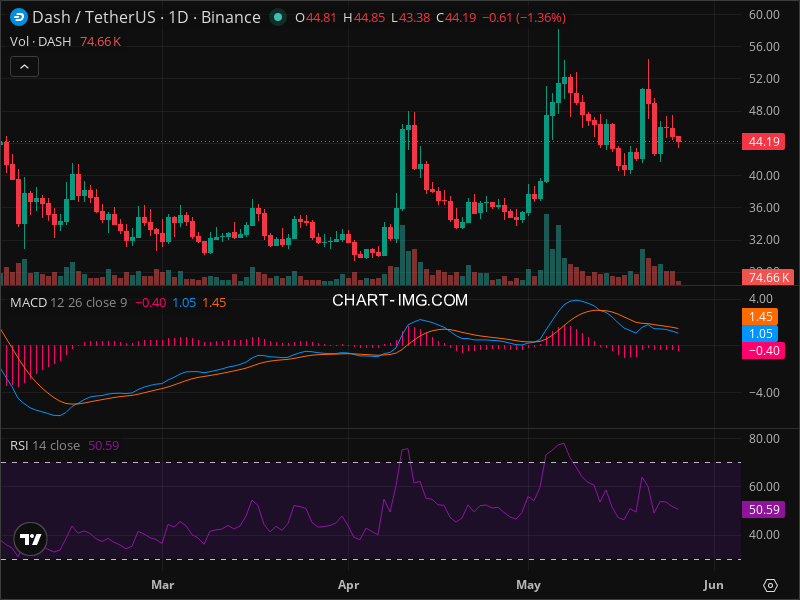
Let’s zoom in on the charts. Bitcoin’s Relative Strength Index (RSI) currently sits at 40, per CoinGecko data, signaling a neutral-to-oversold condition. This suggests the asset may be poised for a rebound if buying pressure returns. The Moving Average Convergence Divergence (MACD) indicator also shows a potential bullish crossover, hinting at upward momentum in the coming days.
Support levels are critical here. Bitcoin has held above $68,000, a psychological threshold, despite recent selling. If it breaks below, the next support lies near $65,000—a level tested multiple times in late 2025. Resistance, meanwhile, looms at $72,000, a barrier that could cap short-term gains unless significant volume kicks in.

ETH Crypto Chart
Ethereum’s technicals tell a similar story. Its RSI of 42 indicates room for growth, while on-chain metrics show increased staking activity post-Ethereum 2.0 upgrades, boosting network security and investor confidence. For a deeper dive into these trends, see what the AI predicts for both Bitcoin and Ethereum.
| Cryptocurrency | Current Price | 24-Hour Change | RSI |
|---|---|---|---|
| Bitcoin (BTC) | $69,345 | -2.24% | 40 |
| Ethereum (ETH) | $2,051.04 | -2.00% | 42 |
| Solana (SOL) | $85.79 | -1.55% | 39 |
Looking ahead, what can we expect for Bitcoin and the broader crypto market? Without U.S. government purchases, price growth will likely depend on organic factors—retail adoption, institutional inflows, and technological advancements like the Lightning Network for faster transactions. Analysts at JPMorgan predict Bitcoin could test $80,000 by mid-2026 if regulatory clarity emerges, though a lack of policy progress might cap gains at $75,000.
Ethereum’s outlook is tied to its ongoing upgrades. Full implementation of proof-of-stake could reduce energy concerns, potentially pushing ETH toward $3,000 if developer activity sustains. Meanwhile, altcoins like Solana and Binance Coin ($636.47, down 0.67%) may carve out niche gains in DeFi and smart contract spaces.
Risks remain, notably regulatory crackdowns or macroeconomic shocks like interest rate hikes. Yet, the crypto market’s resilience—evident in its recovery from past bear cycles—suggests long-term optimism. For a detailed forecast, see AI price predictions to gauge potential targets and risk scores.
The U.S. government is prioritizing regulation over direct investment in cryptocurrencies. With a national debt exceeding $34 trillion and concerns about Bitcoin’s volatility, allocating funds to digital assets is seen as risky and politically unfeasible. Instead, agencies like the SEC are focused on creating frameworks to protect investors and ensure market stability, as noted in recent Bloomberg reports.
The absence of government purchases means Bitcoin’s price won’t see a speculative boost from such a catalyst. Short-term, this contributes to volatility and downward pressure, as seen in the recent 2.24% drop to $69,345. Long-term, however, Bitcoin’s value remains tied to organic demand and fundamentals like scarcity.
Investing now depends on your risk tolerance and strategy. The current Fear & Greed Index of 9 suggests potential undervaluation, but volatility is high. Consider technical indicators like RSI (currently 40) and diversify your portfolio to manage risk. For data-driven guidance, get professional AI analysis.
Regulation could impose stricter compliance on exchanges, increase taxes on crypto gains, or limit certain activities like ICOs. While this might stabilize the market, it could also stifle innovation or drive activity to less-regulated regions. Monitoring directives from the SEC and global bodies like the EU’s MiCA is crucial for investors.
Unlike El Salvador, which adopted Bitcoin as legal tender, most major economies are not directly purchasing it for reserves. Nations like Singapore focus on fostering crypto-friendly environments, while China maintains bans. The U.S. aligns more with a regulatory-first approach, not acquisition.
Stay updated with real-time data from platforms like CoinGecko and sentiment trackers like Alternative.me. Following regulatory news via Bloomberg or CNBC also helps. Additionally, leveraging tools for AI-powered insights can provide actionable signals and predictions to guide your decisions.

ALL
TRENDING
WATCHLIST
Total Market Cap The Total Market Capitalization (Market Cap) is an indicator that measures the size of all the cryptocurrencies.It’s the total market value of all the cryptocurrencies' circulating supply: so it’s the total value of all the coins that have been mined.
{[{ marketcap }]} {[{ marketcapchange.toLocaleString(undefined, {maximumFractionDigits:2}) }]}% (24H) {[{ marketcapchange.toLocaleString(undefined, {maximumFractionDigits:2}) }]}% (24H)
Symbol
Price Cryptocurrency prices are volatile, and the prices change all the time. We are collecting all the data from several exchanges to provide the most accurate price available.
24H Cryptocurrency prices are volatile… The 24h % change is the difference between the current price and the price24 hours ago.
Trade
{[{ item.name }]}
{[{ index + $index}]}
{[{ item.pair.split('_')[0] }]}
Ƀ{[{item.price.toLocaleString(undefined, {maximumFractionDigits: 5}) }]} ${[{item.price.toLocaleString(undefined, {maximumFractionDigits: 5}) }]}
{[{ item.change24.toLocaleString(undefined, {maximumFractionDigits: 2}) }]}%
{[{ item.change24.toLocaleString(undefined, {maximumFractionDigits: 2}) }]}%
Symbol
Price Cryptocurrency prices are volatile, and the prices change all the time. We are collecting allthe data fromseveral exchanges to provide the most accurate price available.
24H Cryptocurrency prices are volatile… The 24h % change is the difference between the current priceand the price24 hours ago.
Trade
{[{ item.name }]}
{[{ index + $index}]}
{[{ item.pair.split('_')[0] }]}
Ƀ{[{item.price.toLocaleString(undefined, {maximumFractionDigits: 5}) }]} ${[{item.price.toLocaleString(undefined, {maximumFractionDigits: 5}) }]}
{[{ item.change24.toLocaleString(undefined, {maximumFractionDigits: 2}) }]}%
{[{ item.change24.toLocaleString(undefined, {maximumFractionDigits: 2}) }]}%

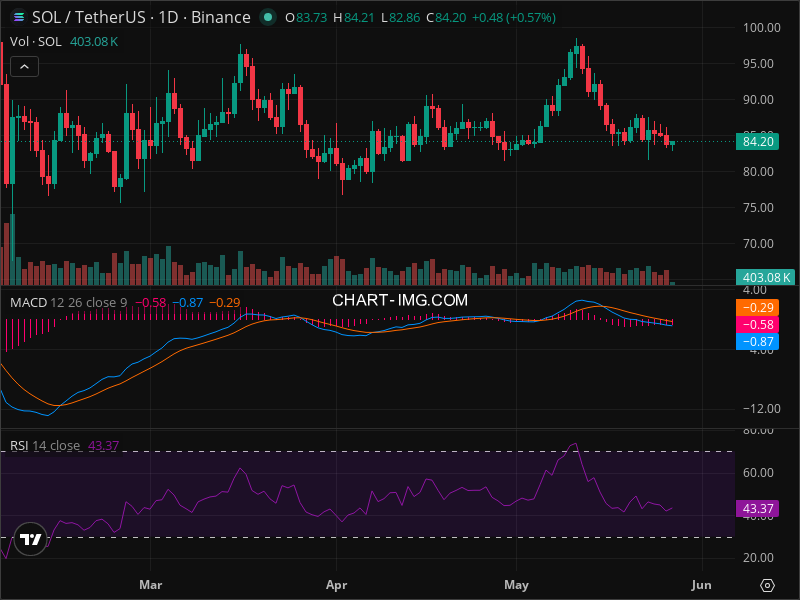
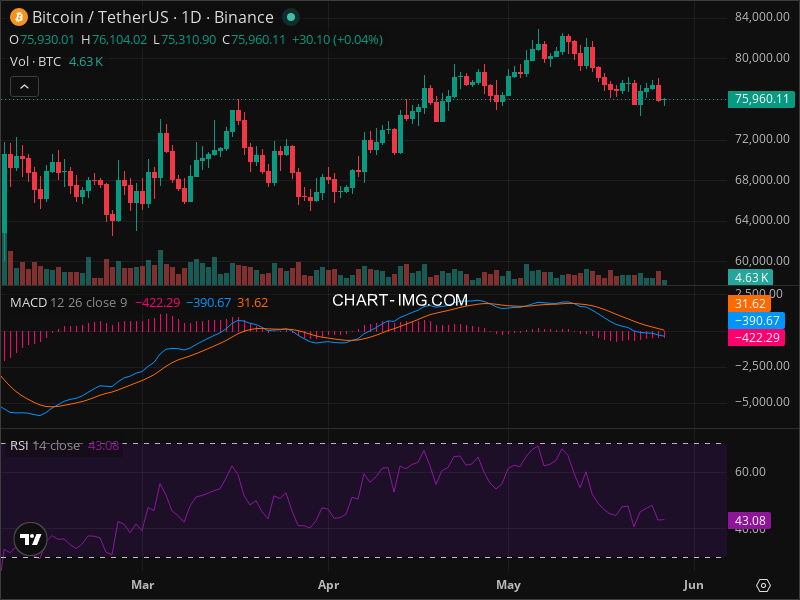
BTC Technical Analysis
May 27, 2026 | Joanna Newman

Soybeans Technical Analysis
May 27, 2026 | Joanna Newman
Live Cattle Technical Analysis
May 27, 2026 | Joanna Newman
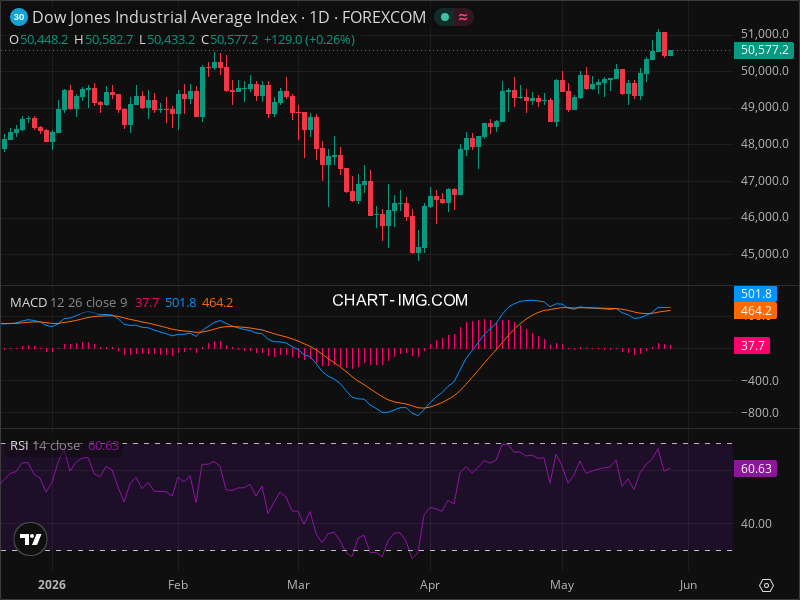
DJI Technical Analysis
May 27, 2026 | Joanna Newman
Tezos (XTZ) Review 2024: Everything You Need to Know Before Buying Tezos
.article-container { font-family: Arial, sans-serif; line-height: 1.6; color: #333; backgrou...
Chromia (CHR) Review 2024: Everything You Need to Know Before Buying Chromia
Illuvium (ILV) Review 2024: Everything You Need to Know Before Buying Illuvium
My Neighbor Alice (ALICE) Review 2024: Everything You Need to Know Before Buying My Neighbor Alice
Star Atlas (ATLAS) Review 2024: Everything You Need to Know Before Buying Star Atlas
TabTrade
What Is TabTrade? A Complete IntroductionTabTrade is a globally oriented multi-asset CFD and forex b...
Funded7
In the fast-moving world of proprietary trading, 2026 has marked a significant shift in what traders...
Bullwaves
Bullwaves Review 2026: A Premium MT5 Brokerage for Multi-Asset TradersBullwaves has quickly carved o...
BlackBull Markets
...
OQtima
Oqtima is an emerging online trading platform that offers a wide range of financial instruments, inc...
(adsbygoogle = window.adsbygoogle || []).push({}); Introduction In t...
(adsbygoogle = window.adsbygoogle || []).push({}); Einführung Wenn es um Er...
Mobi
Are you someone who makes international payments regularly using Bitcoin? Or do you travel a lot and...
Bitcoin.com
Bitcoin.com is a free downloadable Bitcoin wallet that allows users to trade and receive Bitcoins. T...
BTC.com
Created by Bitmain in 2016, BTC.com is a leading open-source Bitcoin and Bitcoin Cash storage platfo...
Bitcoin Price Analysis: Why the U.S. Government Won’t Buy BTC and What It Means for Investors
/* Modern SEO & AI-Optimized Article Styles */ /* Fonts loaded via link tags in head for b
Bitcoin Reportedly 11th Largest Money Supply in the World
Bitcoin ranks as the 11th largest money/monetary supply in the world, ahead of countries like South
XRP Price Technicals Point to a Year That Could Surprise Everyone
/* Modern SEO & AI-Optimized Article Styles */ /* Fonts loaded via link tags in head for b
Investing in Cryptocurrency Before the End of the Year
Investing in cryptocurrency remains one of the lucrative ventures. The sustained value increase in t
The Top 10 Crypto Assets with the Highest Potential in 2025
.article-container { font-family: Arial, sans-serif; line-height: 1.6; color: #333; background-color
The Ultimate Bitcoin Review 2024: Everything You Need to Know Today
.article-container { font-family: Arial, sans-serif; line-height: 1.6; color: #333; background-colo
The Everyday Fruit that's a Powerhouse of Nutrition and Your Weight Loss Ally
(adsbygoogle = window.adsbygoogle || []).push({}); IntroductionWhen it comes to nutrition a
The oldest and most powerful remedy to permanently get rid of insects and ants
(adsbygoogle = window.adsbygoogle || []).push({}); IntroductionEach year, as the hot season
Two Beds, One Dream: The Growing Trend of Sleeping Apart for Better Rest
(adsbygoogle = window.adsbygoogle || []).push({}); IntroductionIn an era where quality slee
(adsbygoogle = window.adsbygoogle || []).push({}); Introduction In t...
(adsbygoogle = window.adsbygoogle || []).push({}); Einführung Wenn es um Er...
Mobi
Are you someone who makes international payments regularly using Bitcoin? Or do you travel a lot and...
Bitcoin.com
Bitcoin.com is a free downloadable Bitcoin wallet that allows users to trade and receive Bitcoins. T...
BTC.com
Created by Bitmain in 2016, BTC.com is a leading open-source Bitcoin and Bitcoin Cash storage platfo...


 Français
 Spanish
 Deutsch
 Português
 Türkçe
 Italiano
 العربية
 Русский
 Chinese
 Korean
 Japanese
 Vietnamese
 Hebrew
 Hindi
Hindi
 Greek
Greek
 Polish
 Thai
Thai
 Dutch
Dutch
 Malay
Malay




.png)
.png)
.png)













COMMENTS (0)