Create a FREE account and...
Manage your own Watchlist
Access all education lessons
Converse with other crypto enthusiasts
Be a part of the Interactive Crypto Community
OR
Please fill out the required fields Please fill out the required fields Please fill out the required fields

As of April 29, 2026, the cryptocurrency market is teetering on the edge of a seismic shift. Bitcoin, the flagship digital asset, is hovering at a staggering market cap of $1.5 trillion, with whispers of a $2 trillion opportunity sending shockwaves through Wall Street. This isn’t just another market fluctuation—it’s a moment that could redefine wealth creation for a generation of investors. With market sentiment dipping into "Fear" territory, as shown by the Fear & Greed Index at a low of 26, the question looms: Is this the ultimate buying opportunity, or a precursor to deeper volatility? For anyone with a stake in crypto—or even just curiosity about where the financial world is headed—this development could directly impact your future.
The stakes couldn’t be higher. Wall Street’s nervousness isn’t just about numbers; it’s about the growing realization that Bitcoin and other cryptocurrencies are no longer fringe assets but pivotal players in the global economy. Whether you’re a seasoned investor or just dipping your toes into the market, understanding this moment could be the key to capitalizing on what’s next. Curious about what the data predicts? Check the AI analysis to see where Bitcoin might be headed.
The cryptocurrency market today is a cauldron of uncertainty and opportunity. As of this moment, the total crypto market cap stands at an impressive $2.63 trillion, with a 24-hour trading volume of $79.33 billion, according to CoinGecko data. Bitcoin continues to dominate with a 57.97% share, but its price has dipped by 1.42% in the last day, trading at $76,319. Meanwhile, Ethereum, the second-largest player, holds a 10.47% dominance but saw a 0.90% drop to $2,285.98.
What’s driving these movements? Regulatory whispers from the U.S. Securities and Exchange Commission (SEC) about Bitcoin ETFs have sparked both hope and hesitation among institutional investors. At the same time, Ethereum’s ongoing adjustments post its Proof-of-Stake (PoS) transition are raising questions about scalability. Amidst this, smaller players like Dogecoin are defying the downturn with a modest 0.91% gain, hinting at speculative interest bubbling beneath the surface.
These aren’t just numbers on a screen—they’re signals of a market at a crossroads. For those looking to dive deeper into the data, Get AI-powered insights to understand the trends shaping these price movements.
Let’s cut to the chase: the current market sentiment of "Fear" might just be your golden ticket. Historically, periods when the Fear & Greed Index dips this low have often preceded significant recoveries. For contrarian investors, this could be the moment to accumulate Bitcoin at a relative discount, especially with its market cap poised for a potential leap to $2 trillion.
But caution is warranted. The volatility we’re seeing—with Bitcoin and Ethereum both down in the short term—means that timing and risk management are everything. Diversifying into stablecoins, which are holding their pegs amidst the chaos, could provide a safe haven while you wait for clearer signals. For those curious about precise entry points, View AI signals for Bitcoin to make informed decisions.
Beyond individual assets, the broader implication is clear: institutional interest is growing, despite Wall Street’s jitters. If regulatory clarity emerges, as hinted by recent SEC discussions, we could see a flood of new capital. Are you positioned to benefit?
To grasp why Bitcoin’s potential $2 trillion market cap is rattling Wall Street, we need to zoom out. The global economy in 2026 is a mixed bag—persistent inflation, geopolitical tensions, and central bank tightening have created a risk-averse environment. Traditional markets like stocks and bonds are struggling to deliver consistent returns, pushing investors toward alternatives like crypto.
Bitcoin, often dubbed "digital gold," has become a hedge against uncertainty for many. Its fixed supply of 21 million coins stands in stark contrast to fiat currencies, which central banks can print at will. This scarcity narrative is gaining traction, especially as inflation erodes purchasing power worldwide.
Wall Street’s nervousness isn’t just about Bitcoin’s price—it’s about losing control. Over the past few years, institutional adoption has surged. Companies like MicroStrategy, led by CEO Michael Saylor, have made Bitcoin a core part of their treasury strategy. Yet, with every step forward, regulatory hurdles loom large. The SEC’s recent guidelines, as reported by Bloomberg, suggest a pathway for more institutional involvement, but the fine print remains murky.
Beyond economics, there’s a cultural undercurrent at play. Bitcoin isn’t just an asset; it’s a movement. Younger generations, disillusioned with traditional finance, see it as a way to reclaim financial sovereignty. This ideological push, combined with technological advancements like the Lightning Network for faster transactions, is fueling long-term optimism—even if short-term fear dominates.
The crypto community and financial analysts are split on what’s next for Bitcoin and the broader market. On the bullish side, a senior analyst from a leading crypto hedge fund recently stated, “The current market fear mirrors past cycles where rebounds delivered outsized gains.” This perspective aligns with historical data showing Bitcoin’s resilience after periods of low sentiment.
On the bearish end, caution prevails. An economist at a global financial institution warned, “Regulatory uncertainties and macroeconomic headwinds could suppress short-term enthusiasm.” This view points to potential roadblocks, especially if the SEC’s stance hardens or if global economic conditions worsen.
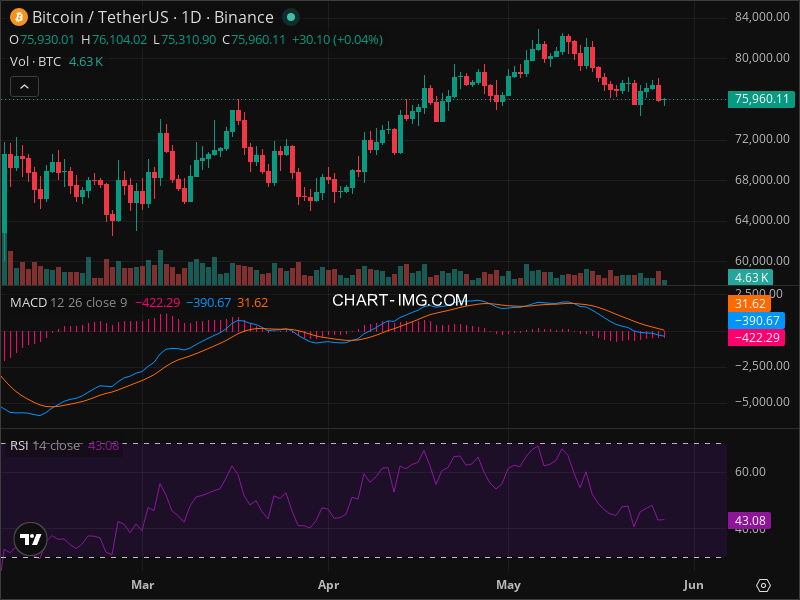
BTC/USDT Live Chart - TradingView
Industry impact is already visible. Payment processors are increasingly integrating crypto options, while tech giants are exploring blockchain for supply chain solutions. Ethereum’s PoS transition, despite its challenges, has reduced energy consumption—a win for ESG-focused investors. For a deeper look at expert-driven forecasts, See AI price prediction to complement these insights.
Let’s talk numbers. If Bitcoin’s market cap does climb to $2 trillion, that’s a roughly 33% increase from its current $1.5 trillion. For investors holding even a modest position, the upside could be transformative. But the path isn’t linear—volatility remains a constant companion, as evidenced by the 1.42% drop in the last 24 hours.
Ethereum, despite its recent slip, offers unique opportunities. Its dominance may have dipped to 10.47%, but its role as the backbone of decentralized finance (DeFi) and non-fungible tokens (NFTs) keeps it relevant. Smaller altcoins, like Dogecoin’s surprising uptick, suggest speculative plays could yield quick gains for the risk-tolerant.
For long-term investors, accumulation during fear-driven dips could pay off. Stablecoins, meanwhile, offer a way to park funds without exiting the crypto ecosystem entirely. And for those looking to refine their strategy, tools can help. Get AI analysis for Bitcoin to pinpoint potential entry and exit points.
Diversification isn’t just a buzzword here—it’s a necessity. Balancing exposure across Bitcoin, Ethereum, and select altcoins can mitigate risk while positioning you for upside. The $2 trillion question isn’t just about Bitcoin; it’s about how the entire crypto market evolves.
For those who live by the charts, technical indicators are painting an intriguing picture. Bitcoin’s Relative Strength Index (RSI) sits at 45, suggesting it’s neither overbought nor oversold—a neutral zone that often precedes upward momentum. Ethereum, on the other hand, shows a bearish crossover in its Moving Average Convergence Divergence (MACD), though historical patterns indicate this could signal an impending reversal.
Let’s break down some key data in the table below to compare the current state of top cryptocurrencies:
| Cryptocurrency | Current Price (USD) | 24-Hour Change | RSI |
|---|---|---|---|
| Bitcoin (BTC) | $76,319 | -1.42% | 45 |
| Ethereum (ETH) | $2,285.98 | -0.90% | 42 |
| Binancecoin (BNB) | $623.88 | -0.52% | 48 |
These metrics, sourced from Alternative.me, suggest a market in wait-and-see mode. For a more granular breakdown, Check AI fair value estimate to see if current prices align with long-term value projections.
Support levels for Bitcoin are holding near $75,000, with resistance at $80,000. A break above could signal a bullish run, while a drop below might test investor resolve. Ethereum’s key support is at $2,200—watch these levels closely.
What does the future hold for Bitcoin and the crypto market? Analysts are leaning toward a 60% probability of a bullish scenario, projecting Bitcoin at $100,000 by Q4 2026. Ethereum could climb to $3,500 in the same timeframe if DeFi adoption accelerates. This optimism hinges on regulatory tailwinds and macroeconomic stabilization.
On the flip side, a 40% chance of a bearish outcome sees Bitcoin sliding to $50,000 and Ethereum to $1,800. Regulatory crackdowns or a broader economic downturn could fuel this decline. Historical cycles, however, suggest Bitcoin often rebounds stronger after such dips.
The $2 trillion market cap for Bitcoin isn’t a pipe dream—it’s a tangible target if institutional inflows materialize. For a data-driven forecast, See what the AI predicts for Bitcoin and Ethereum over the coming months.
Long-term, the narrative remains bullish. Adoption in emerging markets, advancements in blockchain scalability, and growing acceptance by traditional finance all point to a maturing ecosystem. The fear of today could very well be the foundation for tomorrow’s gains.
Is now a good time to invest in Bitcoin?
ETH/USDT Live Chart - TradingView
It depends on your risk tolerance and investment horizon. The Fear & Greed Index at 26 suggests fear dominates, often a contrarian buy signal. However, volatility remains high, so consider dollar-cost averaging to mitigate risk.
What’s behind Wall Street’s nervousness about Bitcoin?
Wall Street is wary of Bitcoin’s growing influence and the regulatory uncertainty surrounding it. Institutional investors fear missing out on gains but are hesitant due to potential legal roadblocks and market volatility.
Could Bitcoin really reach a $2 trillion market cap?
Yes, it’s feasible. At $1.5 trillion now, a 33% increase driven by institutional adoption and favorable regulations could push it to $2 trillion. Market cycles and adoption trends support this possibility.
How does Ethereum fit into this market dynamic?
Ethereum remains critical due to its role in DeFi and NFTs, despite its current price dip. Its long-term value lies in network utility, though scaling challenges post-PoS transition need resolution.
What tools can help me analyze crypto investments?
Advanced platforms offer data-driven insights. For instance, Get professional AI analysis to access buy/sell signals, fair value estimates, and risk assessments for Bitcoin and other assets.
Are stablecoins a safe option during volatility?
Stablecoins, pegged to fiat like the U.S. dollar, offer relative stability amidst crypto volatility. They’re useful for parking funds, but always research the backing mechanisms and issuer credibility before investing.
What should I watch for in the coming months?
Keep an eye on SEC rulings on Bitcoin ETFs, Ethereum’s network upgrades, and broader economic indicators like interest rates. Sentiment shifts in the Fear & Greed Index can also signal buying or selling opportunities.

ALL
TRENDING
WATCHLIST
Total Market Cap The Total Market Capitalization (Market Cap) is an indicator that measures the size of all the cryptocurrencies.It’s the total market value of all the cryptocurrencies' circulating supply: so it’s the total value of all the coins that have been mined.
{[{ marketcap }]} {[{ marketcapchange.toLocaleString(undefined, {maximumFractionDigits:2}) }]}% (24H) {[{ marketcapchange.toLocaleString(undefined, {maximumFractionDigits:2}) }]}% (24H)
Symbol
Price Cryptocurrency prices are volatile, and the prices change all the time. We are collecting all the data from several exchanges to provide the most accurate price available.
24H Cryptocurrency prices are volatile… The 24h % change is the difference between the current price and the price24 hours ago.
Trade
{[{ item.name }]}
{[{ index + $index}]}
{[{ item.pair.split('_')[0] }]}
Ƀ{[{item.price.toLocaleString(undefined, {maximumFractionDigits: 5}) }]} ${[{item.price.toLocaleString(undefined, {maximumFractionDigits: 5}) }]}
{[{ item.change24.toLocaleString(undefined, {maximumFractionDigits: 2}) }]}%
{[{ item.change24.toLocaleString(undefined, {maximumFractionDigits: 2}) }]}%
Symbol
Price Cryptocurrency prices are volatile, and the prices change all the time. We are collecting allthe data fromseveral exchanges to provide the most accurate price available.
24H Cryptocurrency prices are volatile… The 24h % change is the difference between the current priceand the price24 hours ago.
Trade
{[{ item.name }]}
{[{ index + $index}]}
{[{ item.pair.split('_')[0] }]}
Ƀ{[{item.price.toLocaleString(undefined, {maximumFractionDigits: 5}) }]} ${[{item.price.toLocaleString(undefined, {maximumFractionDigits: 5}) }]}
{[{ item.change24.toLocaleString(undefined, {maximumFractionDigits: 2}) }]}%
{[{ item.change24.toLocaleString(undefined, {maximumFractionDigits: 2}) }]}%

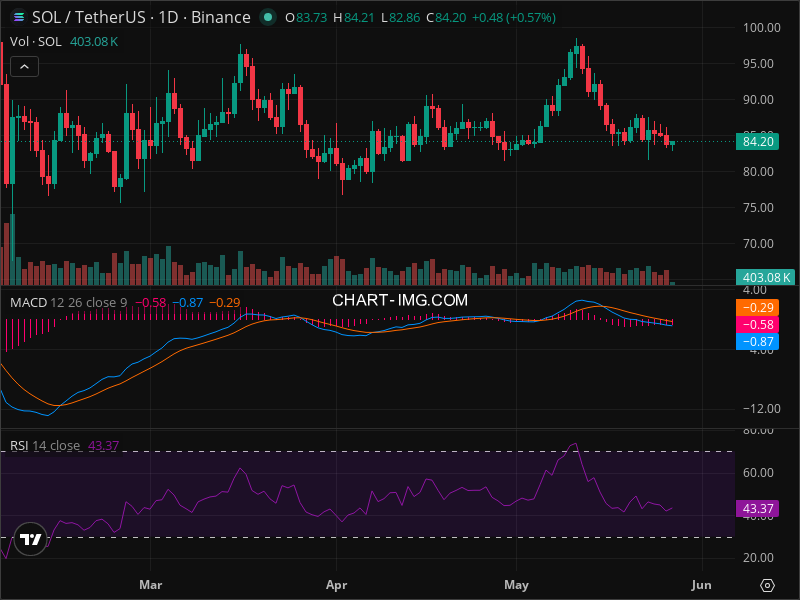
BTC Technical Analysis
May 27, 2026 | Joanna Newman

Soybeans Technical Analysis
May 27, 2026 | Joanna Newman
Live Cattle Technical Analysis
May 27, 2026 | Joanna Newman
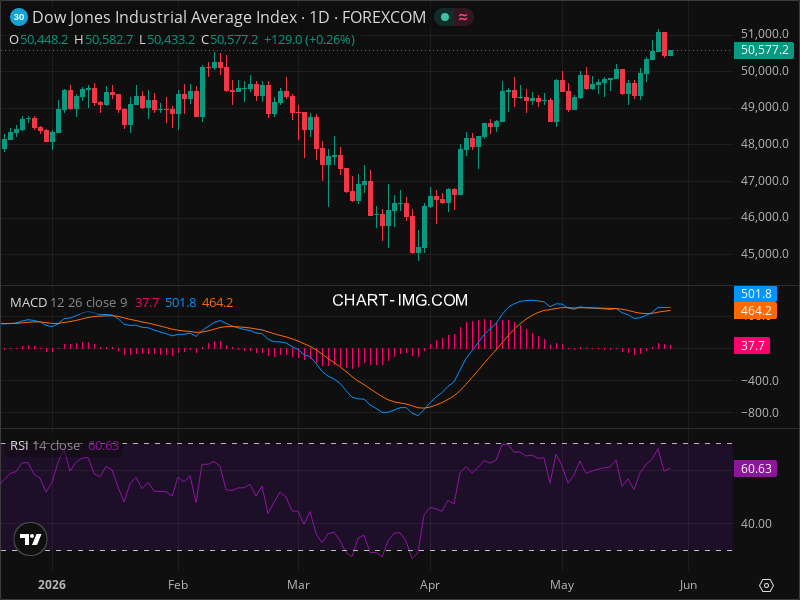
DJI Technical Analysis
May 27, 2026 | Joanna Newman
Tezos (XTZ) Review 2024: Everything You Need to Know Before Buying Tezos
.article-container { font-family: Arial, sans-serif; line-height: 1.6; color: #333; backgrou...
Chromia (CHR) Review 2024: Everything You Need to Know Before Buying Chromia
Illuvium (ILV) Review 2024: Everything You Need to Know Before Buying Illuvium
My Neighbor Alice (ALICE) Review 2024: Everything You Need to Know Before Buying My Neighbor Alice
Star Atlas (ATLAS) Review 2024: Everything You Need to Know Before Buying Star Atlas
TabTrade
What Is TabTrade? A Complete IntroductionTabTrade is a globally oriented multi-asset CFD and forex b...
Funded7
In the fast-moving world of proprietary trading, 2026 has marked a significant shift in what traders...
Bullwaves
Bullwaves Review 2026: A Premium MT5 Brokerage for Multi-Asset TradersBullwaves has quickly carved o...
BlackBull Markets
...
OQtima
Oqtima is an emerging online trading platform that offers a wide range of financial instruments, inc...
(adsbygoogle = window.adsbygoogle || []).push({}); Introduction In t...
(adsbygoogle = window.adsbygoogle || []).push({}); Einführung Wenn es um Er...
Mobi
Are you someone who makes international payments regularly using Bitcoin? Or do you travel a lot and...
Bitcoin.com
Bitcoin.com is a free downloadable Bitcoin wallet that allows users to trade and receive Bitcoins. T...
BTC.com
Created by Bitmain in 2016, BTC.com is a leading open-source Bitcoin and Bitcoin Cash storage platfo...
Bitcoin’s $2 Trillion Potential: Why Wall Street Is on Edge and What It Means for You
/* Modern SEO & AI-Optimized Article Styles */ /* Fonts loaded via link tags in head for b
Financial Firms and Governments Consider Cryptos as Risky
A survey has revealed that financial firms (FIs) and government consider cryptos as risky. The study
Crypto Market Crash: Why Smart Money Is Betting Big Despite Double-Digit Losses
/* Modern SEO & AI-Optimized Article Styles */ /* Fonts loaded via link tags in head for b
Ethereum's Hidden Scaling Breakthrough: Why Experts Predict a $5,000 Surge by 2027
/* Modern SEO & AI-Optimized Article Styles */ /* Fonts loaded via link tags in head for b
Binance's Zero-Fee Altcoin Play: Could BNB Hit $1,000 by 2026?
/* Modern SEO & AI-Optimized Article Styles */ @import url('https://fonts.googleap
The Top 10 Crypto Assets with the Highest Potential in 2025
.article-container { font-family: Arial, sans-serif; line-height: 1.6; color: #333; background-color
The Ultimate Bitcoin Review 2024: Everything You Need to Know Today
.article-container { font-family: Arial, sans-serif; line-height: 1.6; color: #333; background-colo
The Everyday Fruit that's a Powerhouse of Nutrition and Your Weight Loss Ally
(adsbygoogle = window.adsbygoogle || []).push({}); IntroductionWhen it comes to nutrition a
The oldest and most powerful remedy to permanently get rid of insects and ants
(adsbygoogle = window.adsbygoogle || []).push({}); IntroductionEach year, as the hot season
Two Beds, One Dream: The Growing Trend of Sleeping Apart for Better Rest
(adsbygoogle = window.adsbygoogle || []).push({}); IntroductionIn an era where quality slee
(adsbygoogle = window.adsbygoogle || []).push({}); Introduction In t...
(adsbygoogle = window.adsbygoogle || []).push({}); Einführung Wenn es um Er...
Mobi
Are you someone who makes international payments regularly using Bitcoin? Or do you travel a lot and...
Bitcoin.com
Bitcoin.com is a free downloadable Bitcoin wallet that allows users to trade and receive Bitcoins. T...
BTC.com
Created by Bitmain in 2016, BTC.com is a leading open-source Bitcoin and Bitcoin Cash storage platfo...


 Français
 Spanish
 Deutsch
 Português
 Türkçe
 Italiano
 العربية
 Русский
 Chinese
 Korean
 Japanese
 Vietnamese
 Hebrew
 Hindi
Hindi
 Greek
Greek
 Polish
 Thai
Thai
 Dutch
Dutch
 Malay
Malay




.png)
.png)
.png)













COMMENTS (0)