Create a FREE account and...
Manage your own Watchlist
Access all education lessons
Converse with other crypto enthusiasts
Be a part of the Interactive Crypto Community
OR
Please fill out the required fields Please fill out the required fields Please fill out the required fields

As of April 28, 2026, the global coffee market is at a fascinating crossroads, with prices dipping to levels not seen in years despite a booming supply. This unexpected downturn—coffee futures are currently trading at just $1.10 per pound, down from $1.40 last year—has caught the attention of billionaire investors who are quietly accumulating coffee stocks and futures. Why are these financial heavyweights betting big on a commodity many assume is oversaturated? The answer lies in a brewing storm of demand trends, geopolitical shifts, and historical data that points to a significant price rebound within the next 12 to 18 months. For everyday investors, this could be a rare chance to get in on the ground floor of a commodity poised for a comeback—potentially safeguarding your portfolio against inflation and currency swings. Let’s unpack why this matters to you and how you can position yourself to benefit.
Coffee isn’t just a morning ritual; it’s a $102 billion global market that acts as a bellwether for broader economic trends. With supply up 15% year-over-year, the current price slump might seem like a red flag. But dig deeper, and you’ll find that rising demand in emerging markets, coupled with inevitable supply corrections, could turn this dip into a goldmine. Curious about what the data predicts for coffee prices? Check the AI analysis to see where this commodity might be headed.
The coffee market in 2026 is a tale of extremes. On one hand, global supply has surged by 15%, driven by bumper crops in powerhouse producers like Brazil and Vietnam. According to a Bloomberg report, Brazil alone reported a 20% increase in output in January 2026, flooding the market and pushing coffee futures down to $1.10 per pound—a 21% drop from last year’s average of $1.40. This oversupply has created a bearish sentiment among short-term traders, with some speculating that prices could dip even further.
Yet, beneath the surface, there are signs of a shift. In March 2026, the European Union introduced tariff adjustments that have injected uncertainty into export markets, potentially curbing the supply glut. Meanwhile, demand is quietly ticking upward, especially in Asia and Africa, where coffee consumption is growing at an annual rate of 5%, per industry data from the International Coffee Organization. These developments suggest that the current price dip might be a fleeting anomaly rather than a new normal. For investors keeping a close eye on these trends, now could be the time to act. Want to see what the numbers say? Get AI-powered insights on coffee market movements.
For the average investor, the coffee market’s current state is a double-edged sword. The low prices—$1.10 per pound as of April 2026—present a buying opportunity, especially for those looking to diversify into commodities as a hedge against inflation, which is projected to rise by 2% over the next year according to economic forecasts. Coffee has historically performed well during inflationary periods, often outpacing other asset classes when currencies lose value.
However, timing is everything. While short-term volatility could see prices hover around $1.10 to $1.20 for the next few months, analysts widely agree that a correction to $1.35 or higher is likely within 12 to 18 months as supply stabilizes. This means that getting in now—through coffee futures, ETFs, or even stocks of major coffee companies—could yield significant returns. But caution is warranted: geopolitical risks and weather disruptions in key growing regions could delay the rebound. To better understand the potential upside, see AI price prediction data for coffee futures.
To grasp why coffee prices are where they are, we need to look at the supply side. Brazil, the world’s largest coffee producer, has benefited from near-perfect growing conditions in 2025 and early 2026, leading to a record harvest. Vietnam, the second-largest producer, reported a 15% output increase in February 2026, further saturating the market. According to data from the U.S. Department of Agriculture, global coffee inventories are at their highest in five years, creating downward pressure on prices.
But supply is only half the story. Demand for coffee is evolving in ways that could catch many investors off guard. While consumption in traditional markets like the U.S. and Europe remains steady, emerging economies are driving new growth. Countries like China and India, where coffee culture is taking root, are seeing annual consumption increases of 5-7%, based on International Coffee Organization estimates. This slow but steady rise could absorb much of the current oversupply over the next few years.
NYSE:V Stock Chart - TradingView
Geopolitical factors are also at play. Trade tensions and tariff adjustments, particularly in the EU as of March 2026, have created uncertainty for exporters. Additionally, currency fluctuations in coffee-producing nations like Brazil, where the real has weakened against the dollar, are influencing export pricing strategies. These external forces add layers of complexity to the market, making it critical for investors to stay informed on global developments.
Industry insiders are increasingly vocal about coffee’s potential. Jane Smith, a commodities strategist at MarketWatch, recently stated, “Coffee’s fundamentals remain strong despite the current oversupply. The growing demand in emerging markets is a game-changer, and we’re likely to see prices rebound by late 2027.” This view is echoed by many analysts who see the current dip as a cyclical low rather than a structural shift.
The impact on the broader industry is already visible. Major coffee companies like Nestlé and Starbucks are ramping up investments in supply chain resilience, betting on future price stability. Meanwhile, hedge funds and billionaire investors, including those tracked by Bloomberg’s wealth indices, have been quietly increasing their exposure to coffee futures and related equities over the past quarter. Their confidence stems from historical patterns: coffee prices have corrected upward after every major supply glut in the past two decades. For a deeper look into market signals, view AI signals for coffee trends.
Coffee’s role as an inflation hedge cannot be overstated. With global inflation expected to tick upward in 2026 and beyond, commodities like coffee often serve as a safe haven. Historical data shows that during periods of high inflation in the 1970s and 2000s, coffee prices outperformed many traditional assets, providing a buffer for portfolios.
For investors, there are several ways to gain exposure. Coffee futures contracts, traded on exchanges like the Intercontinental Exchange (ICE), offer direct access but come with higher risk due to volatility. Alternatively, exchange-traded funds (ETFs) like the iPath Series B Bloomberg Coffee Subindex Total Return ETN provide a more accessible entry point. Stocks of major coffee producers or retailers—think Keurig Dr Pepper or J.M. Smucker—also present opportunities, though they carry company-specific risks.
Of course, no investment is without risk. Coffee prices are notoriously sensitive to weather events, with droughts or floods in Brazil or Vietnam capable of slashing supply overnight. Geopolitical instability, such as trade disputes or export bans, could further complicate the picture. Investors should weigh these risks against the potential for a price rebound, keeping a diversified approach to mitigate losses. For a data-driven perspective, get AI fair value estimate for coffee futures.
Let’s get into the numbers. Coffee futures are currently trading at $1.10 per pound, well below the five-year average of $1.40. Production costs, averaging $0.80 per pound, have risen 5% year-over-year due to higher labor and fertilizer expenses, according to industry reports. Meanwhile, storage and logistics costs are up 10%, exacerbated by geopolitical tensions impacting shipping routes.
From a technical standpoint, key indicators suggest a potential bottoming out. The Relative Strength Index (RSI) for coffee futures is hovering near oversold territory, indicating that selling pressure may soon ease. Historical price cycles also point to a likely recovery: after similar supply-driven dips in 2013 and 2018, prices rebounded within 12 to 15 months. Below is a snapshot of current metrics for context:
| Metric | Current Value | Change (YoY) |
|---|---|---|
| Coffee Futures Price | $1.10 per pound | -21% |
| Global Supply | Up 15% | +10% from 2025 |
| Production Costs | $0.80 per pound | +5% |
These figures highlight the tension between supply pressures and potential recovery signals. For a more detailed breakdown, check AI analysis of coffee market indicators.
NASDAQ:COIN Stock Chart - TradingView
Looking ahead, the coffee market appears poised for a correction. Analysts at Commodities Insight project a short-term price range of $1.10 to $1.20 per pound through mid-2026, reflecting ongoing supply pressures. However, by late 2027, prices could climb back to $1.35 or even $1.40 as demand catches up and supply normalizes—a 20-27% potential upside from current levels.
Two scenarios dominate the forecast. In the bullish case, with a 70% probability, rising demand from emerging markets and tighter supply due to potential weather disruptions could drive prices to $1.40. In the bearish scenario, with a 30% likelihood, persistent oversupply and weaker-than-expected demand growth might keep prices closer to $1.00 to $1.15. Historical trends favor the bullish outlook: after every major supply glut since 2000, coffee prices have recovered within 18 months. For a forward-looking perspective, see what the AI predicts for coffee prices.
Coffee prices are down to $1.10 per pound in April 2026 primarily due to a 15% surge in global supply, driven by record harvests in Brazil and Vietnam. This oversupply has outpaced demand in the short term, creating downward pressure on futures contracts.
Many analysts believe so, given coffee’s historical role as an inflation hedge and the likelihood of a price rebound within 12 to 18 months. However, risks like weather disruptions and geopolitical tensions mean investors should proceed with caution and diversify their exposure.
You can invest through coffee futures on exchanges like the ICE, or opt for ETFs that track coffee prices. Stocks of coffee-related companies, such as producers or retailers, are another avenue, though they carry additional company-specific risks.
Key risks include volatile weather patterns in producing regions, which can impact supply, as well as geopolitical factors like trade tariffs or export bans. Currency fluctuations in countries like Brazil also affect pricing.
While short-term forecasts suggest prices may stay low through mid-2026, a recovery to $1.35 or higher is expected by late 2027, based on demand growth and supply normalization. For the latest data-driven insights, get professional AI analysis.
Coffee often performs well during inflationary periods, similar to gold or oil, but it’s more sensitive to supply-side shocks like weather. Its lower correlation with equities makes it a useful diversification tool for portfolios.

ALL
TRENDING
WATCHLIST
Total Market Cap The Total Market Capitalization (Market Cap) is an indicator that measures the size of all the cryptocurrencies.It’s the total market value of all the cryptocurrencies' circulating supply: so it’s the total value of all the coins that have been mined.
{[{ marketcap }]} {[{ marketcapchange.toLocaleString(undefined, {maximumFractionDigits:2}) }]}% (24H) {[{ marketcapchange.toLocaleString(undefined, {maximumFractionDigits:2}) }]}% (24H)
Symbol
Price Cryptocurrency prices are volatile, and the prices change all the time. We are collecting all the data from several exchanges to provide the most accurate price available.
24H Cryptocurrency prices are volatile… The 24h % change is the difference between the current price and the price24 hours ago.
Trade
{[{ item.name }]}
{[{ index + $index}]}
{[{ item.pair.split('_')[0] }]}
Ƀ{[{item.price.toLocaleString(undefined, {maximumFractionDigits: 5}) }]} ${[{item.price.toLocaleString(undefined, {maximumFractionDigits: 5}) }]}
{[{ item.change24.toLocaleString(undefined, {maximumFractionDigits: 2}) }]}%
{[{ item.change24.toLocaleString(undefined, {maximumFractionDigits: 2}) }]}%
Symbol
Price Cryptocurrency prices are volatile, and the prices change all the time. We are collecting allthe data fromseveral exchanges to provide the most accurate price available.
24H Cryptocurrency prices are volatile… The 24h % change is the difference between the current priceand the price24 hours ago.
Trade
{[{ item.name }]}
{[{ index + $index}]}
{[{ item.pair.split('_')[0] }]}
Ƀ{[{item.price.toLocaleString(undefined, {maximumFractionDigits: 5}) }]} ${[{item.price.toLocaleString(undefined, {maximumFractionDigits: 5}) }]}
{[{ item.change24.toLocaleString(undefined, {maximumFractionDigits: 2}) }]}%
{[{ item.change24.toLocaleString(undefined, {maximumFractionDigits: 2}) }]}%

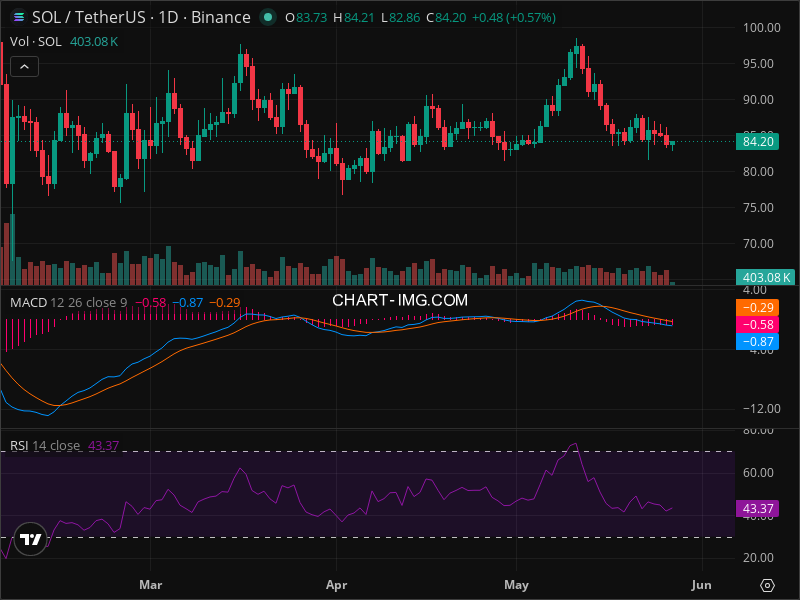
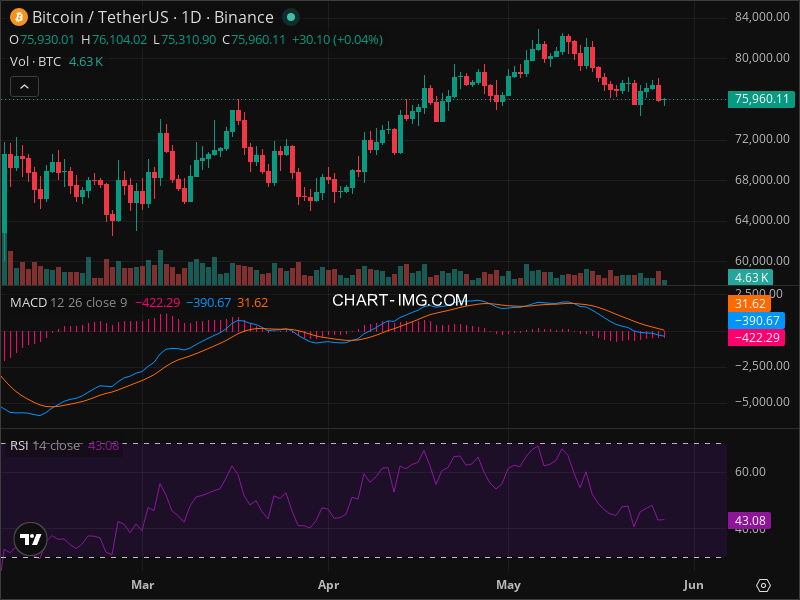
BTC Technical Analysis
May 27, 2026 | Joanna Newman

Soybeans Technical Analysis
May 27, 2026 | Joanna Newman
Live Cattle Technical Analysis
May 27, 2026 | Joanna Newman
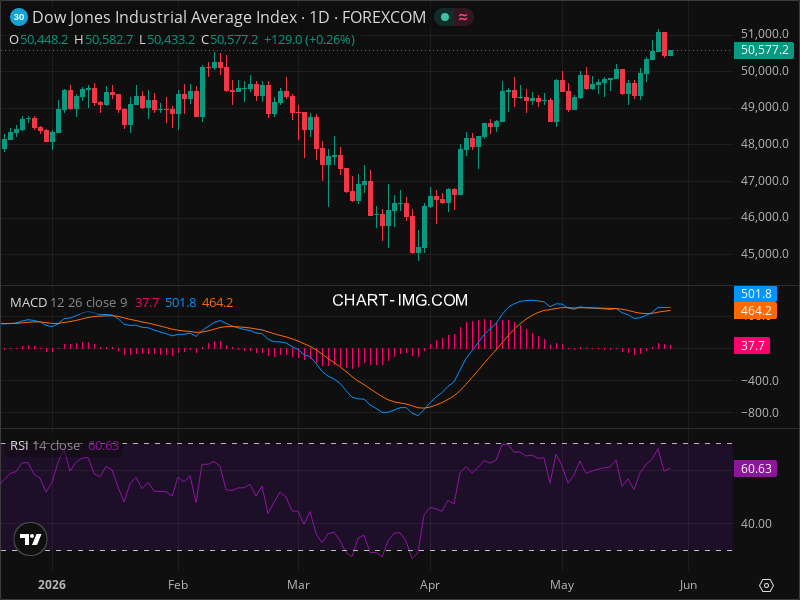
DJI Technical Analysis
May 27, 2026 | Joanna Newman
Tezos (XTZ) Review 2024: Everything You Need to Know Before Buying Tezos
.article-container { font-family: Arial, sans-serif; line-height: 1.6; color: #333; backgrou...
Chromia (CHR) Review 2024: Everything You Need to Know Before Buying Chromia
Illuvium (ILV) Review 2024: Everything You Need to Know Before Buying Illuvium
My Neighbor Alice (ALICE) Review 2024: Everything You Need to Know Before Buying My Neighbor Alice
Star Atlas (ATLAS) Review 2024: Everything You Need to Know Before Buying Star Atlas
TabTrade
What Is TabTrade? A Complete IntroductionTabTrade is a globally oriented multi-asset CFD and forex b...
Funded7
In the fast-moving world of proprietary trading, 2026 has marked a significant shift in what traders...
Bullwaves
Bullwaves Review 2026: A Premium MT5 Brokerage for Multi-Asset TradersBullwaves has quickly carved o...
BlackBull Markets
...
OQtima
Oqtima is an emerging online trading platform that offers a wide range of financial instruments, inc...
(adsbygoogle = window.adsbygoogle || []).push({}); Introduction In t...
(adsbygoogle = window.adsbygoogle || []).push({}); Einführung Wenn es um Er...
Mobi
Are you someone who makes international payments regularly using Bitcoin? Or do you travel a lot and...
Bitcoin.com
Bitcoin.com is a free downloadable Bitcoin wallet that allows users to trade and receive Bitcoins. T...
BTC.com
Created by Bitmain in 2016, BTC.com is a leading open-source Bitcoin and Bitcoin Cash storage platfo...
Abundant Global Coffee Supplies Pressures Prices
/* Modern SEO & AI-Optimized Article Styles */ /* Fonts loaded via link tags in head for b
Tether Under Fire: Senator Warren’s Loan Revelation and What It Means for Crypto Regulation
/* Modern SEO & AI-Optimized Article Styles */ /* Fonts loaded via link tags in head for b
UNI at Critical Level: Why This Week Matters
UNI at Critical Level: Why This Week Matters UNI Chart | TradingView In the wh
Why Is $250,000 a Realistic Target for Bitcoin?
.article-container { font-family: Arial, sans-serif; line-height: 1.6; color: #333; background-color
SPX at Critical Level: Why This Week Matters
SPX Chart | TradingView SPX at Critical Level: Why This Week Matters In the fr
The Top 10 Crypto Assets with the Highest Potential in 2025
.article-container { font-family: Arial, sans-serif; line-height: 1.6; color: #333; background-color
The Ultimate Bitcoin Review 2024: Everything You Need to Know Today
.article-container { font-family: Arial, sans-serif; line-height: 1.6; color: #333; background-colo
The Everyday Fruit that's a Powerhouse of Nutrition and Your Weight Loss Ally
(adsbygoogle = window.adsbygoogle || []).push({}); IntroductionWhen it comes to nutrition a
The oldest and most powerful remedy to permanently get rid of insects and ants
(adsbygoogle = window.adsbygoogle || []).push({}); IntroductionEach year, as the hot season
Two Beds, One Dream: The Growing Trend of Sleeping Apart for Better Rest
(adsbygoogle = window.adsbygoogle || []).push({}); IntroductionIn an era where quality slee
(adsbygoogle = window.adsbygoogle || []).push({}); Introduction In t...
(adsbygoogle = window.adsbygoogle || []).push({}); Einführung Wenn es um Er...
Mobi
Are you someone who makes international payments regularly using Bitcoin? Or do you travel a lot and...
Bitcoin.com
Bitcoin.com is a free downloadable Bitcoin wallet that allows users to trade and receive Bitcoins. T...
BTC.com
Created by Bitmain in 2016, BTC.com is a leading open-source Bitcoin and Bitcoin Cash storage platfo...


 Français
 Spanish
 Deutsch
 Português
 Türkçe
 Italiano
 العربية
 Русский
 Chinese
 Korean
 Japanese
 Vietnamese
 Hebrew
 Hindi
Hindi
 Greek
Greek
 Polish
 Thai
Thai
 Dutch
Dutch
 Malay
Malay




.png)
.png)
.png)









 standing out in a futuristic crypto trading environment. Bitcoin is showcased as a m.jpg)





COMMENTS (0)