Create a FREE account and...
Manage your own Watchlist
Access all education lessons
Converse with other crypto enthusiasts
Be a part of the Interactive Crypto Community
OR
Please fill out the required fields Please fill out the required fields Please fill out the required fields

Imagine a world where the U.S. dollar no longer reigns supreme, where emerging powers like the BRICS nations carve out a new financial order with the Chinese Yuan at its core. This isn’t a distant dream—it’s unfolding right now. As of April 6, 2026, the BRICS New Development Bank’s bold initiative to prioritize the Yuan in funding projects across the Global South is sending shockwaves through traditional markets, with Bitcoin trading at $69,093, up 2.93% in the last 24 hours according to CoinGecko data. This geopolitical pivot could undermine the dollar’s dominance, drive de-dollarization, and position cryptocurrencies as the ultimate hedge—potentially pushing Bitcoin to unprecedented heights like $150,000. For investors, this isn’t just a news headline; it’s a call to rethink portfolios in a rapidly changing world. Curious about what this means for your investments? Check the AI analysis to uncover deeper insights into this seismic shift.
The financial world is abuzz with the BRICS New Development Bank’s (NDB) strategic move to elevate the Chinese Yuan as a primary funding currency for projects in developing nations. Announced in early 2026, this initiative aims to reduce reliance on the U.S. dollar, a currency that has long dominated global trade and finance. According to a Reuters report, the NDB’s focus on Yuan-denominated loans is a calculated step to enhance China’s economic influence while challenging the existing monetary order.
Meanwhile, the cryptocurrency market is showing signs of resilience amid this geopolitical upheaval. Bitcoin’s recent 2.93% gain to $69,093 and Ethereum’s 3.62% rise to $2,130.77, as reported by CoinGecko, suggest that investors may be turning to digital assets as safe havens. The total crypto market cap now stands at a robust $2.45 trillion, reflecting sustained interest despite the Fear & Greed Index hovering at a chilling 13, signaling “Extreme Fear” per Alternative.me data.
This intersection of traditional finance and crypto is no coincidence. As the Yuan gains traction, cryptocurrencies are emerging as decentralized alternatives to fiat currencies caught in geopolitical crosshairs. The implications are profound, and the market is reacting in real time.
For investors, the BRICS’ Yuan push is a double-edged sword. On one hand, it introduces uncertainty into traditional markets, as a stronger Yuan could disrupt dollar-based trade and investment flows. If you hold significant assets in dollar-denominated instruments, this shift might prompt a reevaluation of risk exposure.
On the other hand, this development could be a golden opportunity for crypto investors. Bitcoin and Ethereum, with their decentralized nature, are increasingly seen as hedges against fiat currency instability. As the dollar’s dominance wanes, digital assets could see a surge in adoption, especially in regions affected by BRICS policies. Want to explore this potential further? Get AI-powered insights to see how these trends might impact your portfolio.
The key takeaway? Diversification is more critical than ever. While traditional markets grapple with this new reality, allocating a portion of your portfolio to cryptocurrencies could provide a buffer against geopolitical shocks.
The BRICS coalition—comprising Brazil, Russia, India, China, and South Africa—has long sought to challenge Western financial hegemony. Formed in 2009, the group established the New Development Bank in 2014 as an alternative to institutions like the World Bank and IMF, which are often perceived as U.S.-centric. The NDB’s latest move to prioritize the Yuan is a natural extension of this mission.
According to a Financial Times report from April 2026, the Yuan’s role in NDB funding is designed to boost its liquidity and acceptance in international markets. This aligns with China’s broader strategy of Yuan internationalization, a process that began over a decade ago with initiatives like the Belt and Road program. By using the Yuan for loans and trade settlements, BRICS nations aim to insulate themselves from U.S. monetary policies, such as interest rate hikes or sanctions.
The U.S. dollar’s status as the world’s reserve currency has been unshakable for decades, with over 60% of global trade and foreign exchange reserves denominated in dollars, per Bloomberg data. However, cracks are beginning to show. Rising U.S. debt levels, geopolitical tensions, and sanctions on countries like Russia have fueled calls for de-dollarization. The BRICS initiative is a direct response, and it’s gaining traction in the Global South, where nations are eager for alternatives.

BTC Crypto Chart
Enter cryptocurrencies. Unlike fiat currencies, Bitcoin and its peers operate outside the control of any single government or central bank. This makes them appealing in a world where currency wars and sanctions are becoming more common. As the Yuan rises, crypto could serve as a neutral ground for investors and nations alike, offering a way to bypass traditional financial systems altogether.
Financial experts are divided on the long-term implications of the Yuan’s new role. According to a Bloomberg analysis, while the transition to a Yuan-centric system will be gradual, it could lead to a significant uptick in Yuan-denominated trade agreements within the next decade. “This is a slow burn, but the direction is clear,” noted a senior economist at JPMorgan in a recent interview. “The dollar’s unchallenged status is no longer guaranteed.”
In the crypto space, industry leaders see opportunity. Michael Saylor, CEO of MicroStrategy, has long argued that Bitcoin is “digital gold” and a hedge against fiat devaluation. In a recent statement, he suggested that geopolitical shifts like the BRICS initiative could accelerate Bitcoin adoption, particularly in emerging markets. “When trust in fiat eroding, people turn to immutable assets,” Saylor remarked.
The impact on industries could be transformative. For tech and fintech firms, a stronger Yuan might mean new markets for digital payment solutions, while crypto exchanges could see increased volume as investors seek alternatives. Curious about Bitcoin’s potential in this scenario? See AI price prediction for data-driven forecasts.
The rise of the Yuan could have cascading effects on traditional financial markets. A weaker dollar might lead to higher inflation in the U.S. as import costs rise, while countries holding large dollar reserves could face losses if the currency depreciates. For investors in bonds or equities tied to the dollar, this introduces a layer of uncertainty that can’t be ignored.
Conversely, cryptocurrencies offer a compelling alternative. Bitcoin’s fixed supply of 21 million coins makes it immune to inflationary pressures that plague fiat currencies. Ethereum, with its smart contract capabilities, could see increased use in cross-border transactions if traditional systems become less reliable. According to CoinGecko data, Ethereum’s market cap has already climbed to $255.77 billion, reflecting growing confidence in its utility.
So, how should investors position themselves? Analysts suggest a balanced approach: maintain exposure to traditional assets while gradually increasing allocations to crypto. A 5-10% portfolio allocation to Bitcoin and Ethereum could serve as a hedge against fiat volatility. For a deeper dive into potential returns, Get AI analysis for Bitcoin to explore fair value estimates and risk assessments.
The BRICS initiative also opens doors for thematic investing. Funds focused on emerging markets or blockchain technology could outperform as de-dollarization gains momentum. The key is to stay agile—markets are evolving faster than ever.
Let’s break down the data driving the crypto market’s response to these geopolitical shifts. Bitcoin’s current price of $69,093 reflects a 2.93% uptick over the past 24 hours, with its Relative Strength Index (RSI) sitting at 58, per CoinGecko metrics. This suggests a neutral zone with room for upward momentum if buying pressure continues.
Ethereum, trading at $2,130.77, shows even stronger bullish signals. Its Moving Average Convergence Divergence (MACD) line has crossed above the signal line, a classic indicator of potential price increases. Additionally, Ethereum’s transition to Proof of Stake has bolstered its scalability, making it a favorite among institutional investors.
Here’s a snapshot of key metrics for major cryptocurrencies as of April 6, 2026:

ETH Crypto Chart
| Cryptocurrency | Price (USD) | 24h Change (%) | Market Cap (USD Billion) |
|---|---|---|---|
| Bitcoin (BTC) | $69,093 | +2.93% | 1,298.67 |
| Ethereum (ETH) | $2,130.77 | +3.62% | 255.77 |
| Cardano (ADA) | $0.256865 | +4.02% | 8.58 |
| Binance Coin (BNB) | $600.75 | +1.26% | 101.12 |
These indicators suggest that despite market fear, there’s underlying strength in crypto. For a more detailed breakdown, View AI signals for Ethereum to assess technical trends and risk scores.
Looking ahead, the BRICS’ Yuan initiative could reshape global finance in profound ways. If successful, it might accelerate de-dollarization, with Bloomberg analysts projecting that up to 20% of global trade could be conducted in non-dollar currencies by 2035. This would create fertile ground for cryptocurrencies to thrive as alternative stores of value.
Bitcoin, in particular, stands to benefit. Some analysts, including those at Standard Chartered, have speculated that Bitcoin could reach $150,000 by the end of 2027 if geopolitical tensions and fiat instability persist. Ethereum’s ongoing network upgrades could also drive its price toward $5,000 in the same timeframe, fueled by demand for decentralized applications.
Of course, risks remain. Regulatory crackdowns, technological hiccups, or resistance to the Yuan’s rise could temper crypto’s ascent. Still, the trajectory points to a future where digital assets play a central role. Want to see what the numbers say? See what the AI predicts for Bitcoin and Ethereum over the next few years.
The BRICS New Development Bank (NDB) is promoting the use of the Chinese Yuan for funding projects in the Global South. Announced in 2026, this initiative aims to reduce reliance on the U.S. dollar and enhance China’s economic influence. It’s a key step toward de-dollarization, as reported by Reuters.
A stronger Yuan could challenge the dollar’s status as the world’s reserve currency. If more trade and reserves shift to the Yuan, the dollar might lose value, leading to potential inflation in the U.S. and losses for dollar-heavy portfolios, per Bloomberg analysis.
Cryptocurrencies offer a decentralized alternative to fiat currencies, making them attractive during geopolitical shifts. As trust in traditional systems wanes, Bitcoin and Ethereum could see increased adoption as hedges against fiat instability, according to industry leaders like Michael Saylor of MicroStrategy.
While crypto offers potential as a hedge, it’s not without risks. Market volatility, regulatory changes, and technological challenges are factors to consider. A balanced approach—allocating a small portion of your portfolio to digital assets—might be prudent. For tailored insights, Get professional AI analysis to guide your decisions.
De-dollarization could lead to volatility in currency and equity markets, especially for dollar-denominated assets. Emerging market investments might also face uncertainty as new financial systems take shape. Diversification across asset classes, including crypto, can help mitigate these risks.
Staying informed is key. Monitor geopolitical developments, track crypto market trends, and use data-driven tools to inform your strategy. Platforms that provide real-time analysis can be invaluable—Check AI fair value estimate for Bitcoin to stay ahead of the curve.

ALL
TRENDING
WATCHLIST
Total Market Cap The Total Market Capitalization (Market Cap) is an indicator that measures the size of all the cryptocurrencies.It’s the total market value of all the cryptocurrencies' circulating supply: so it’s the total value of all the coins that have been mined.
{[{ marketcap }]} {[{ marketcapchange.toLocaleString(undefined, {maximumFractionDigits:2}) }]}% (24H) {[{ marketcapchange.toLocaleString(undefined, {maximumFractionDigits:2}) }]}% (24H)
Symbol
Price Cryptocurrency prices are volatile, and the prices change all the time. We are collecting all the data from several exchanges to provide the most accurate price available.
24H Cryptocurrency prices are volatile… The 24h % change is the difference between the current price and the price24 hours ago.
Trade
{[{ item.name }]}
{[{ index + $index}]}
{[{ item.pair.split('_')[0] }]}
Ƀ{[{item.price.toLocaleString(undefined, {maximumFractionDigits: 5}) }]} ${[{item.price.toLocaleString(undefined, {maximumFractionDigits: 5}) }]}
{[{ item.change24.toLocaleString(undefined, {maximumFractionDigits: 2}) }]}%
{[{ item.change24.toLocaleString(undefined, {maximumFractionDigits: 2}) }]}%
Symbol
Price Cryptocurrency prices are volatile, and the prices change all the time. We are collecting allthe data fromseveral exchanges to provide the most accurate price available.
24H Cryptocurrency prices are volatile… The 24h % change is the difference between the current priceand the price24 hours ago.
Trade
{[{ item.name }]}
{[{ index + $index}]}
{[{ item.pair.split('_')[0] }]}
Ƀ{[{item.price.toLocaleString(undefined, {maximumFractionDigits: 5}) }]} ${[{item.price.toLocaleString(undefined, {maximumFractionDigits: 5}) }]}
{[{ item.change24.toLocaleString(undefined, {maximumFractionDigits: 2}) }]}%
{[{ item.change24.toLocaleString(undefined, {maximumFractionDigits: 2}) }]}%

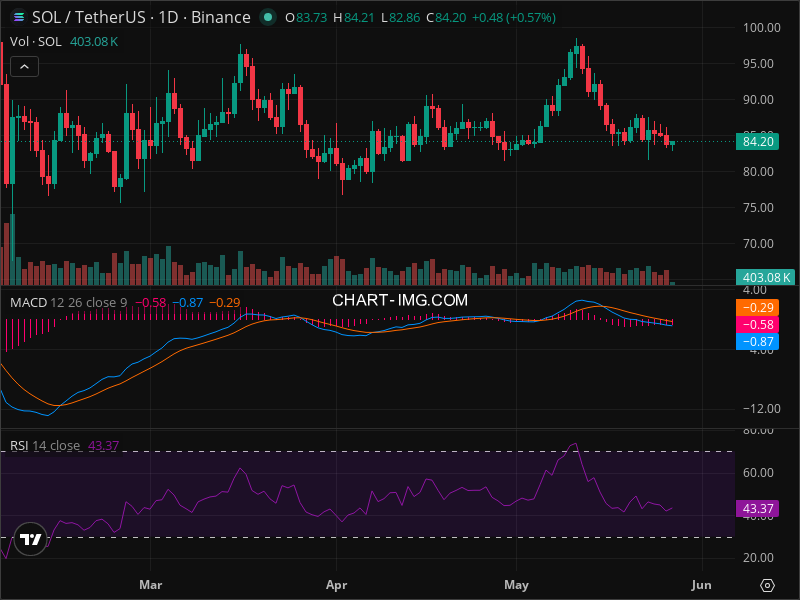
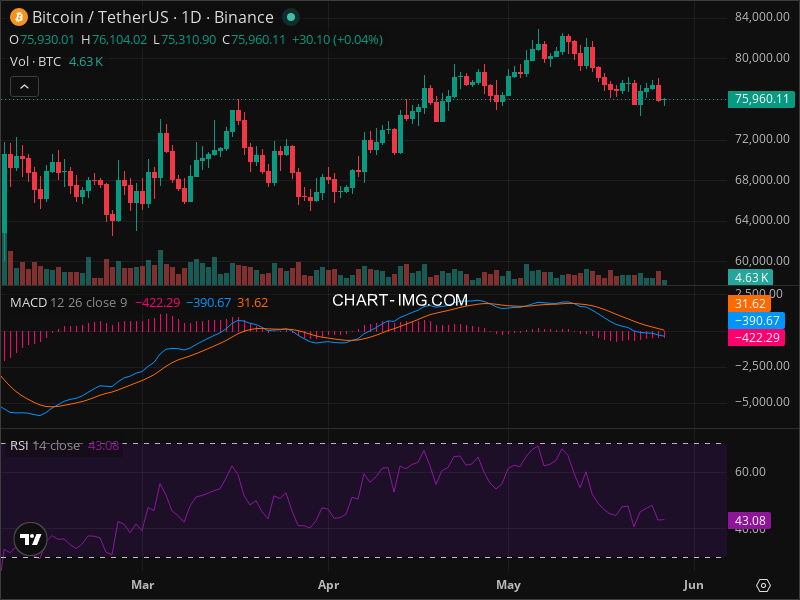
BTC Technical Analysis
May 27, 2026 | Joanna Newman

Soybeans Technical Analysis
May 27, 2026 | Joanna Newman
Live Cattle Technical Analysis
May 27, 2026 | Joanna Newman
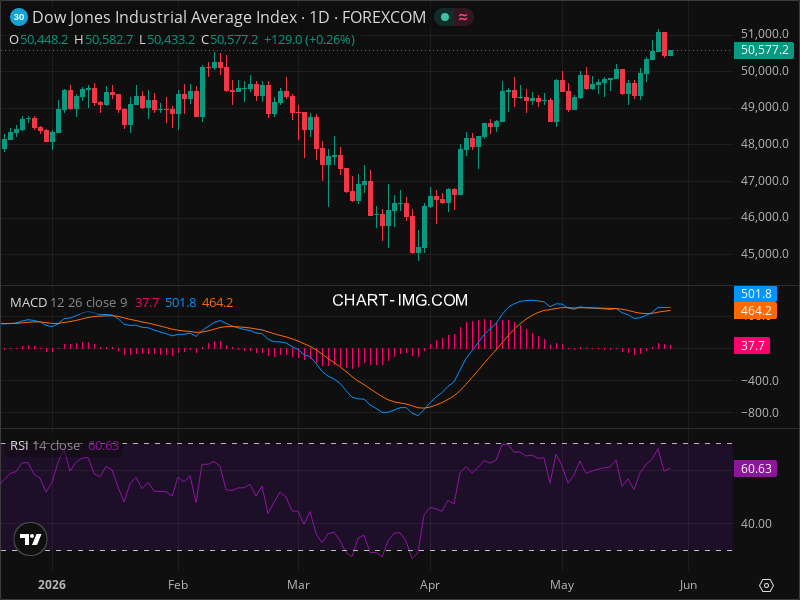
DJI Technical Analysis
May 27, 2026 | Joanna Newman
Tezos (XTZ) Review 2024: Everything You Need to Know Before Buying Tezos
.article-container { font-family: Arial, sans-serif; line-height: 1.6; color: #333; backgrou...
Chromia (CHR) Review 2024: Everything You Need to Know Before Buying Chromia
Illuvium (ILV) Review 2024: Everything You Need to Know Before Buying Illuvium
My Neighbor Alice (ALICE) Review 2024: Everything You Need to Know Before Buying My Neighbor Alice
Star Atlas (ATLAS) Review 2024: Everything You Need to Know Before Buying Star Atlas
TabTrade
What Is TabTrade? A Complete IntroductionTabTrade is a globally oriented multi-asset CFD and forex b...
Funded7
In the fast-moving world of proprietary trading, 2026 has marked a significant shift in what traders...
Bullwaves
Bullwaves Review 2026: A Premium MT5 Brokerage for Multi-Asset TradersBullwaves has quickly carved o...
BlackBull Markets
...
OQtima
Oqtima is an emerging online trading platform that offers a wide range of financial instruments, inc...
(adsbygoogle = window.adsbygoogle || []).push({}); Introduction In t...
(adsbygoogle = window.adsbygoogle || []).push({}); Einführung Wenn es um Er...
Mobi
Are you someone who makes international payments regularly using Bitcoin? Or do you travel a lot and...
Bitcoin.com
Bitcoin.com is a free downloadable Bitcoin wallet that allows users to trade and receive Bitcoins. T...
BTC.com
Created by Bitmain in 2016, BTC.com is a leading open-source Bitcoin and Bitcoin Cash storage platfo...
BRICS New Development Bank Touts Chinese Yuan For Global South Funding
/* Modern SEO & AI-Optimized Article Styles */ /* Fonts loaded via link tags in head for b
Tesla (TSLA) Stock Forecast: JPMorgan Warns of 60% Crash
/* Modern SEO & AI-Optimized Article Styles */ /* Fonts loaded via link tags in head for b
Bitcoin Birthday This Month
It's unimaginable what a decade can mean to humankind. A decade ago, the fiat currency was the u
Insider Alert: Could This $0.003 Token Skyrocket to Transform Your Portfolio by 2026?
/* Modern SEO & AI-Optimized Article Styles */ /* Fonts loaded via link tags in head for b
Why Owning a Crypto Wallet Could Be the Ultimate Power Move by 2026: EY’s Game-Changing Prediction
/* Modern SEO & AI-Optimized Article Styles */ /* Fonts loaded via link tags in head for b
The Top 10 Crypto Assets with the Highest Potential in 2025
.article-container { font-family: Arial, sans-serif; line-height: 1.6; color: #333; background-color
The Ultimate Bitcoin Review 2024: Everything You Need to Know Today
.article-container { font-family: Arial, sans-serif; line-height: 1.6; color: #333; background-colo
The Everyday Fruit that's a Powerhouse of Nutrition and Your Weight Loss Ally
(adsbygoogle = window.adsbygoogle || []).push({}); IntroductionWhen it comes to nutrition a
The oldest and most powerful remedy to permanently get rid of insects and ants
(adsbygoogle = window.adsbygoogle || []).push({}); IntroductionEach year, as the hot season
Two Beds, One Dream: The Growing Trend of Sleeping Apart for Better Rest
(adsbygoogle = window.adsbygoogle || []).push({}); IntroductionIn an era where quality slee
(adsbygoogle = window.adsbygoogle || []).push({}); Introduction In t...
(adsbygoogle = window.adsbygoogle || []).push({}); Einführung Wenn es um Er...
Mobi
Are you someone who makes international payments regularly using Bitcoin? Or do you travel a lot and...
Bitcoin.com
Bitcoin.com is a free downloadable Bitcoin wallet that allows users to trade and receive Bitcoins. T...
BTC.com
Created by Bitmain in 2016, BTC.com is a leading open-source Bitcoin and Bitcoin Cash storage platfo...


 Français
 Spanish
 Deutsch
 Português
 Türkçe
 Italiano
 العربية
 Русский
 Chinese
 Korean
 Japanese
 Vietnamese
 Hebrew
 Hindi
Hindi
 Greek
Greek
 Polish
 Thai
Thai
 Dutch
Dutch
 Malay
Malay




.png)
.png)
.png)













COMMENTS (0)