Create a FREE account and...
Manage your own Watchlist
Access all education lessons
Converse with other crypto enthusiasts
Be a part of the Interactive Crypto Community
OR
Please fill out the required fields Please fill out the required fields Please fill out the required fields

As global stock markets stumble under the weight of economic uncertainty, a surprising refuge has emerged in the world of digital assets. Bitcoin, the flagship cryptocurrency, is experiencing a remarkable surge, capturing the attention of investors worldwide. As of March 5, 2026, Bitcoin is trading at an impressive $72,431, up 7.28% in just 24 hours, according to CoinGecko data. This spike comes at a time when traditional markets like the Kospi, Nikkei, and UAE indices are faltering, raising a critical question: could this be the moment Bitcoin cements itself as a true safe haven? For investors, this isn’t just a fleeting trend—it’s a potential turning point that could reshape portfolios and redefine risk in an increasingly volatile world. Let’s dive into what’s driving this momentum and why it matters to you—whether you’re a seasoned trader or just crypto-curious. And if you’re looking for deeper insights, check the AI analysis to stay ahead of the curve.
The financial landscape in early 2026 is a tale of two worlds. On one side, traditional stock markets are reeling from a toxic mix of geopolitical tensions, persistent inflation, and aggressive interest rate hikes by central banks. South Korea’s Kospi Index has dropped 3.5% year-to-date, Japan’s Nikkei 225 is down 4.7%, and even the Dubai Financial Market General Index in the UAE has slipped 2.9%. These declines signal a broader unease among investors, who are increasingly wary of equities as a store of value.
On the other side, cryptocurrencies are stepping into the spotlight. Bitcoin’s 7.28% surge to $72,431 in the past 24 hours is matched by Ethereum’s equally striking 7.99% climb to $2,111.91, per CoinGecko. The total crypto market cap stands at a robust $2.53 trillion, with trading volume hitting $172.32 billion—a clear sign of heightened activity. What’s more intriguing is the Fear and Greed Index, which sits at an “Extreme Fear” level of 22, yet accumulation of Bitcoin and Ethereum continues unabated. This paradox suggests a growing cohort of investors sees digital assets as a hedge against traditional market turmoil.
If you’re an investor watching these developments, the implications are both exciting and daunting. Bitcoin’s surge amid a stock market downturn signals a potential shift in how we perceive risk and value. For those with diversified portfolios, this could be an opportunity to rebalance toward assets that appear resilient in the face of macroeconomic headwinds. But caution is key—cryptocurrencies remain volatile, and their long-term role as a safe haven is still unproven.
The current environment might encourage you to allocate a portion of your portfolio to digital assets, especially if you’re looking to hedge against inflation or equity losses. However, timing and strategy matter. For data-driven decision-making, tools like AI-powered insights can provide clarity on whether now is the right moment to act. Ultimately, the question isn’t just about jumping on the Bitcoin bandwagon—it’s about understanding how much risk you’re willing to take in a world where traditional and digital assets are increasingly intertwined.
To grasp why Bitcoin is soaring, we first need to unpack the chaos in traditional markets. Global equities are under pressure from a perfect storm of challenges. Inflation remains stubbornly high in many economies, eroding purchasing power and forcing central banks to tighten monetary policy. At the same time, geopolitical risks—think ongoing tensions in Eastern Europe and trade frictions in Asia—are spooking investors. The result? A flight from riskier assets like stocks, with major indices like the Nikkei and Kospi reflecting the pain.
This isn’t the first time investors have turned to alternative assets during economic uncertainty. During the 2008 financial crisis, gold saw a dramatic uptick as a safe haven. Bitcoin, often dubbed “digital gold,” appears to be playing a similar role now. Data from past market cycles shows that when equity volatility spikes (as measured by the VIX index), uncorrelated assets like cryptocurrencies often see inflows. According to a Bloomberg report, this pattern is repeating in 2026, with institutional players quietly increasing their crypto exposure.
Unlike gold, Bitcoin offers something extra: decentralization. It’s not tied to any government or central bank, making it an attractive option for those disillusioned with traditional financial systems. Add to that the growing acceptance of crypto by mainstream finance—think Bitcoin ETFs and corporate treasuries holding BTC—and you have a compelling case for why digital assets are gaining traction right now.

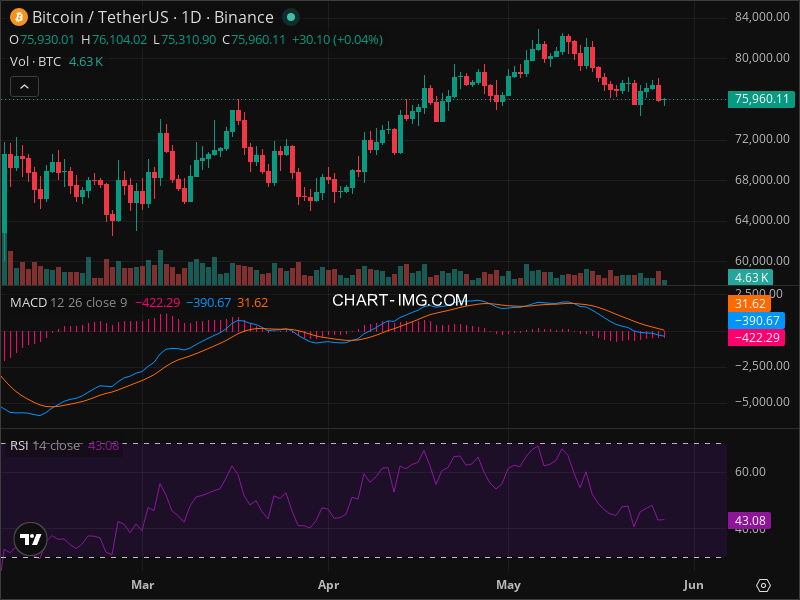
BTC Crypto Chart
The crypto surge isn’t happening in a vacuum—industry leaders and analysts are weighing in with insights that shed light on the broader implications. According to a recent Reuters article, several prominent hedge funds have boosted their Bitcoin holdings, viewing it as a hedge against inflation and market instability. This institutional adoption is a game-changer, signaling to retail investors that digital assets are no longer a fringe play.
Meanwhile, JPMorgan analyst Nikolaos Panigirtzoglou noted in a recent report that “the inverse correlation between equities and Bitcoin is becoming more pronounced, especially during periods of heightened fear.” This perspective aligns with data showing increased crypto trading volumes even as the Fear and Greed Index remains low. On the industry front, Ethereum’s upcoming Shanghai upgrade, which promises faster transactions and lower fees, is drawing attention as a catalyst for further growth. These developments suggest that the crypto space isn’t just reacting to stock market woes—it’s evolving into a mature asset class. Curious about Ethereum’s potential? Get AI analysis for Ethereum to see the latest predictions.
For investors, the financial implications of this shift are profound. Bitcoin and Ethereum’s performance suggests they could serve as effective diversifiers in a portfolio heavy on equities. Unlike traditional assets, cryptocurrencies often move independently of stock markets, offering a buffer during downturns. But the key is balance—overexposure to crypto’s volatility could backfire if regulatory or market shocks hit.
Beyond diversification, there are specific opportunities to explore. Bitcoin’s current price trajectory, if sustained, could see it test the $80,000 mark by year-end, especially if institutional inflows continue. Ethereum, meanwhile, benefits from its role in decentralized finance (DeFi) and non-fungible tokens (NFTs), sectors that are still growing despite broader market fears. For those looking to capitalize, staying informed with tools like AI signals for Bitcoin can help identify entry and exit points.
Of course, opportunities come with risks. Regulatory uncertainty remains a wildcard—while the U.S. SEC has warmed to Bitcoin futures ETFs, a sudden crackdown could spook markets. Macroeconomic factors, like further rate hikes or a deepening recession, could also dampen crypto enthusiasm. Investors must weigh these risks against potential rewards, keeping a close eye on both global news and market indicators.
For those who trade on data, the technical picture for Bitcoin and Ethereum is encouraging. Bitcoin’s Relative Strength Index (RSI) currently sits at 65, indicating bullish momentum without yet hitting overbought territory. The Moving Average Convergence Divergence (MACD) shows positive divergence, reinforcing the upward trend. Key support lies at $70,000, with resistance near $75,000—if BTC breaks through, the next target could be $80,000.
Ethereum paints a similar picture, with an RSI of 68 and positive MACD signals. Its support level holds at $2,000, while resistance looms at $2,200. A breakout here could signal further gains, especially with the Shanghai upgrade on the horizon. Below is a snapshot of the current metrics for both assets:
| Asset | Current Price | RSI | 24-Hour Change |
|---|---|---|---|
| Bitcoin | $72,431 | 65 (Bullish) | +7.28% |
| Ethereum | $2,111.91 | 68 (Bullish) | +7.99% |
These indicators suggest both assets are well-positioned for potential gains, though traders should remain vigilant for sudden reversals. For a deeper dive into the data, see AI price prediction for real-time updates.

ETH Crypto Chart
Looking ahead, the outlook for Bitcoin and Ethereum hinges on several factors. On the bullish side, continued institutional adoption could propel Bitcoin toward $80,000 by the end of 2026, especially if stock markets remain shaky. Ethereum, with its technological upgrades, might see even stronger relative gains, potentially hitting $2,500 if DeFi and NFT adoption accelerates. Analysts cited by CNBC suggest that the current “Extreme Fear” sentiment could morph into cautious optimism, further fueling price increases.
On the bearish side, regulatory headwinds or a worsening global economy could cap gains. A sudden policy shift—say, a major economy banning crypto transactions—might push Bitcoin back to $50,000. Similarly, if inflation cools and stocks rebound, the flight to digital assets could slow. The most likely scenario, however, seems to be a gradual upward trend for crypto, provided no major shocks occur. For a data-backed forecast, check AI fair value estimate to see where prices might head next.
Bitcoin’s surge is largely driven by investors seeking alternatives to traditional markets amid economic uncertainty. As stocks like the Kospi and Nikkei decline due to inflation and geopolitical risks, digital assets are seen as uncorrelated hedges. Additionally, institutional adoption and Bitcoin’s decentralized nature add to its appeal during turbulent times.
Timing the market is always tricky, and cryptocurrencies are inherently volatile. Current technical indicators like RSI and MACD suggest bullish momentum, but risks like regulatory changes or economic downturns persist. Before investing, consider your risk tolerance and use tools like AI signals for Ethereum to inform your strategy.
The Fear and Greed Index, currently at 22 (“Extreme Fear”), reflects market sentiment. While fear often leads to sell-offs, the current accumulation of Bitcoin and Ethereum suggests some investors are buying the dip, betting on a recovery. Sentiment can shift quickly, so it’s just one factor to watch.
Regulation is a double-edged sword. Positive developments, like the SEC’s approval of Bitcoin ETFs, boost confidence and attract institutional money. Conversely, harsh policies could dampen growth. Keeping up with regulatory news is crucial for any crypto investor.
It’s possible, but not guaranteed. If institutional inflows continue and stock markets remain volatile, Bitcoin could test $80,000. However, bearish factors like tighter regulations or a global recession could halt the rally. Staying informed with real-time data is essential.
Beyond following news and market sentiment, technical analysis tools like RSI, MACD, and support/resistance levels are invaluable. For a more comprehensive approach, platforms offering professional AI analysis can provide buy/sell signals, fair value estimates, and price predictions to guide your decisions.
ALL
TRENDING
WATCHLIST
Total Market Cap The Total Market Capitalization (Market Cap) is an indicator that measures the size of all the cryptocurrencies.It’s the total market value of all the cryptocurrencies' circulating supply: so it’s the total value of all the coins that have been mined.
{[{ marketcap }]} {[{ marketcapchange.toLocaleString(undefined, {maximumFractionDigits:2}) }]}% (24H) {[{ marketcapchange.toLocaleString(undefined, {maximumFractionDigits:2}) }]}% (24H)
Symbol
Price Cryptocurrency prices are volatile, and the prices change all the time. We are collecting all the data from several exchanges to provide the most accurate price available.
24H Cryptocurrency prices are volatile… The 24h % change is the difference between the current price and the price24 hours ago.
Trade
{[{ item.name }]}
{[{ index + $index}]}
{[{ item.pair.split('_')[0] }]}
Ƀ{[{item.price.toLocaleString(undefined, {maximumFractionDigits: 5}) }]} ${[{item.price.toLocaleString(undefined, {maximumFractionDigits: 5}) }]}
{[{ item.change24.toLocaleString(undefined, {maximumFractionDigits: 2}) }]}%
{[{ item.change24.toLocaleString(undefined, {maximumFractionDigits: 2}) }]}%
Symbol
Price Cryptocurrency prices are volatile, and the prices change all the time. We are collecting allthe data fromseveral exchanges to provide the most accurate price available.
24H Cryptocurrency prices are volatile… The 24h % change is the difference between the current priceand the price24 hours ago.
Trade
{[{ item.name }]}
{[{ index + $index}]}
{[{ item.pair.split('_')[0] }]}
Ƀ{[{item.price.toLocaleString(undefined, {maximumFractionDigits: 5}) }]} ${[{item.price.toLocaleString(undefined, {maximumFractionDigits: 5}) }]}
{[{ item.change24.toLocaleString(undefined, {maximumFractionDigits: 2}) }]}%
{[{ item.change24.toLocaleString(undefined, {maximumFractionDigits: 2}) }]}%

BTC Technical Analysis
May 27, 2026 | Joanna Newman

Soybeans Technical Analysis
May 27, 2026 | Joanna Newman
Live Cattle Technical Analysis
May 27, 2026 | Joanna Newman
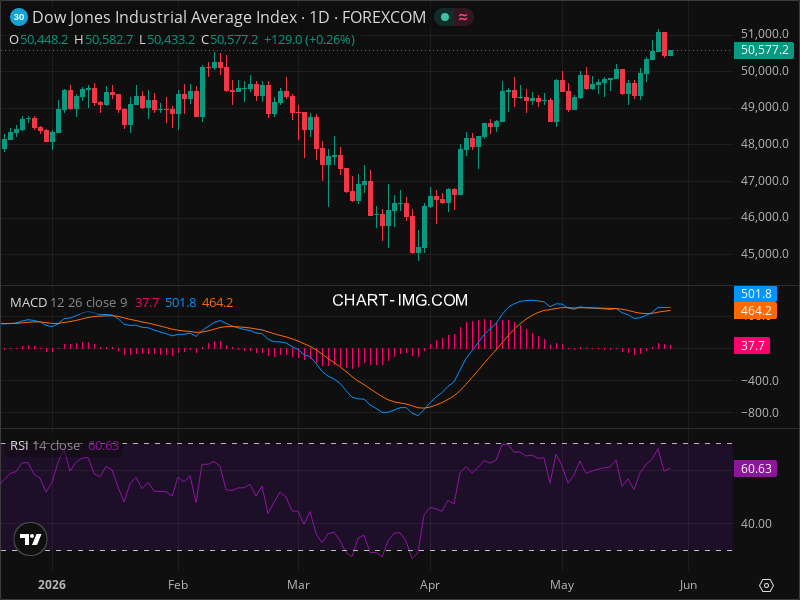
DJI Technical Analysis
May 27, 2026 | Joanna Newman
Tezos (XTZ) Review 2024: Everything You Need to Know Before Buying Tezos
.article-container { font-family: Arial, sans-serif; line-height: 1.6; color: #333; backgrou...
Chromia (CHR) Review 2024: Everything You Need to Know Before Buying Chromia
Illuvium (ILV) Review 2024: Everything You Need to Know Before Buying Illuvium
My Neighbor Alice (ALICE) Review 2024: Everything You Need to Know Before Buying My Neighbor Alice
Star Atlas (ATLAS) Review 2024: Everything You Need to Know Before Buying Star Atlas
TabTrade
What Is TabTrade? A Complete IntroductionTabTrade is a globally oriented multi-asset CFD and forex b...
Funded7
In the fast-moving world of proprietary trading, 2026 has marked a significant shift in what traders...
Bullwaves
Bullwaves Review 2026: A Premium MT5 Brokerage for Multi-Asset TradersBullwaves has quickly carved o...
BlackBull Markets
...
OQtima
Oqtima is an emerging online trading platform that offers a wide range of financial instruments, inc...
(adsbygoogle = window.adsbygoogle || []).push({}); Introduction In t...
(adsbygoogle = window.adsbygoogle || []).push({}); Einführung Wenn es um Er...
Mobi
Are you someone who makes international payments regularly using Bitcoin? Or do you travel a lot and...
Bitcoin.com
Bitcoin.com is a free downloadable Bitcoin wallet that allows users to trade and receive Bitcoins. T...
BTC.com
Created by Bitmain in 2016, BTC.com is a leading open-source Bitcoin and Bitcoin Cash storage platfo...
Bitcoin Price Analysis: Why a Global Stock Downturn Could Push BTC to $80K
/* Modern SEO & AI-Optimized Article Styles */ /* Fonts loaded via link tags in head for b
Bitcoin Price Analysis 2026: The Hidden Catalysts That Could Drive BTC to $150K
/* Modern SEO & AI-Optimized Article Styles */ @import url('https://fonts.googleapis.c
Crypto Market Update: Why Dollar Weakness Could Drive Bitcoin to $80K by 2026
/* Modern SEO & AI-Optimized Article Styles */ /* Fonts loaded via link tags in head for b
Soybeans Momentum Shift: The Signals Smart Money Is Watching
Soybeans Chart | TradingView Soybeans Momentum Shift: The Signals Smart Money Is W
Gemini Exchange Review 2024: Unveiling the Best in Crypto Trading
body { font-family: Arial, sans-serif; line-height: 1.6; padding: 20px; background-colo
The Top 10 Crypto Assets with the Highest Potential in 2025
.article-container { font-family: Arial, sans-serif; line-height: 1.6; color: #333; background-color
The Ultimate Bitcoin Review 2024: Everything You Need to Know Today
.article-container { font-family: Arial, sans-serif; line-height: 1.6; color: #333; background-colo
The Everyday Fruit that's a Powerhouse of Nutrition and Your Weight Loss Ally
(adsbygoogle = window.adsbygoogle || []).push({}); IntroductionWhen it comes to nutrition a
The oldest and most powerful remedy to permanently get rid of insects and ants
(adsbygoogle = window.adsbygoogle || []).push({}); IntroductionEach year, as the hot season
Two Beds, One Dream: The Growing Trend of Sleeping Apart for Better Rest
(adsbygoogle = window.adsbygoogle || []).push({}); IntroductionIn an era where quality slee
(adsbygoogle = window.adsbygoogle || []).push({}); Introduction In t...
(adsbygoogle = window.adsbygoogle || []).push({}); Einführung Wenn es um Er...
Mobi
Are you someone who makes international payments regularly using Bitcoin? Or do you travel a lot and...
Bitcoin.com
Bitcoin.com is a free downloadable Bitcoin wallet that allows users to trade and receive Bitcoins. T...
BTC.com
Created by Bitmain in 2016, BTC.com is a leading open-source Bitcoin and Bitcoin Cash storage platfo...


 Français
 Spanish
 Deutsch
 Português
 Türkçe
 Italiano
 العربية
 Русский
 Chinese
 Korean
 Japanese
 Vietnamese
 Hebrew
 Hindi
Hindi
 Greek
Greek
 Polish
 Thai
Thai
 Dutch
Dutch
 Malay
Malay




.png)
.png)
.png)













COMMENTS (0)