Create a FREE account and...
Manage your own Watchlist
Access all education lessons
Converse with other crypto enthusiasts
Be a part of the Interactive Crypto Community
OR
Please fill out the required fields Please fill out the required fields Please fill out the required fields

Imagine a world where owning a piece of a multimillion-dollar skyscraper is as easy as buying a stock or a cryptocurrency. That’s the vision driving Grant Cardone, a real estate titan, as he unveils a groundbreaking plan to tokenize his firm’s staggering $5 billion portfolio. As of February 27, 2026, the crypto market is gripped by “Extreme Fear,” with the Fear & Greed Index at a chilling 13, reflecting a risk-averse mood among investors. Yet, Cardone’s audacious move could be the spark that reignites confidence, blending traditional real estate with blockchain innovation. Why does this matter to you? Whether you’re a crypto enthusiast or a traditional investor, this shift could unlock unprecedented opportunities—or reveal new risks—reshaping how we think about wealth and ownership in the digital age.
This isn’t just another crypto headline. It’s a potential turning point for two massive industries. With the crypto market valued at $2.40 trillion and Bitcoin maintaining a commanding 56.11% dominance, the stage is set for a seismic shift. Could Cardone’s strategy pull institutional money into tokenized assets and diversify portfolios? Let’s dive into the details, explore the data, and uncover what this means for the future of investing. Curious about the deeper implications? Check the AI analysis to see what cutting-edge tools predict for this emerging trend.
The cryptocurrency market, as of late February 2026, is navigating choppy waters. With a total market capitalization of $2.40 trillion and a 24-hour trading volume of $110.56 billion, activity remains robust despite a pervasive sense of caution. Bitcoin, priced at $67,250, has dipped by 1.63% in the last day, while Ethereum, at $2,016.55, saw a slightly steeper decline of 2%. These numbers, sourced from CoinGecko data, paint a picture of a market on edge, with most major coins like Solana (-3.01%) and Dogecoin (-3.84%) trending downward.
Amidst this backdrop, Grant Cardone’s announcement to tokenize a $5 billion real estate portfolio stands out as a bold countercurrent. Tokenization—the process of converting physical assets into digital tokens on a blockchain—could inject fresh momentum into a wary market. His firm, Cardone Capital, aims to make high-value properties accessible to a broader audience through fractional ownership. This isn’t just a gimmick; it’s a calculated move to bridge the gap between real estate’s illiquidity and crypto’s dynamic trading environment.
What’s driving the market’s “Extreme Fear” sentiment? Macroeconomic pressures, regulatory uncertainty, and recent volatility spikes are key culprits. Yet, Cardone’s initiative might flip the narrative, positioning tokenized assets as a safe harbor for diversification. The question remains: will investors bite, or will skepticism prevail?
For the everyday investor, Cardone’s tokenization plan could be a game-changer—or a gamble. On one hand, it offers a chance to own a slice of premium real estate without the hefty upfront costs. Imagine investing in a luxury Miami condo or a New York office tower with just a few hundred dollars. Tokenized assets, tradable on blockchain platforms, promise liquidity that traditional real estate can’t match.
On the flip side, the risks are real. The crypto market’s volatility could spill over into tokenized real estate, impacting asset values unpredictably. Regulatory gray areas also loom large—without clear guidelines, investors might face legal or financial hiccups. If you’re considering dipping your toes, start small and stay informed about jurisdiction-specific rules.
Diversification is another angle to consider. Crypto portfolios, often heavily weighted toward Bitcoin or Ethereum, could benefit from exposure to real-world assets less tied to market swings. Want to see how this fits into your strategy? Get AI-powered insights to analyze potential returns and risks.
Tokenization isn’t new, but its application to real estate at this scale is unprecedented. By digitizing ownership rights on a blockchain, assets become divisible, transparent, and easily tradable. Cardone’s $5 billion portfolio—spanning multifamily properties, commercial spaces, and luxury developments—could set a benchmark for how traditional industries adopt blockchain tech.
The timing of Cardone’s move isn’t random. Real estate markets are grappling with liquidity challenges, especially post-pandemic, as interest rates and economic uncertainty dampen transactions. Meanwhile, crypto investors are hungry for stable, yield-generating assets amid market turbulence. Tokenization offers a middle ground, merging real-world value with digital efficiency.
Beyond Cardone’s initiative, institutional interest in blockchain is growing. Companies like BlackRock and Fidelity have explored crypto-adjacent investments, signaling a shift in sentiment. According to a Bloomberg report, over 60% of institutional investors surveyed in 2025 expressed interest in tokenized assets. Cardone, with his high-profile status and marketing prowess, could accelerate this trend.

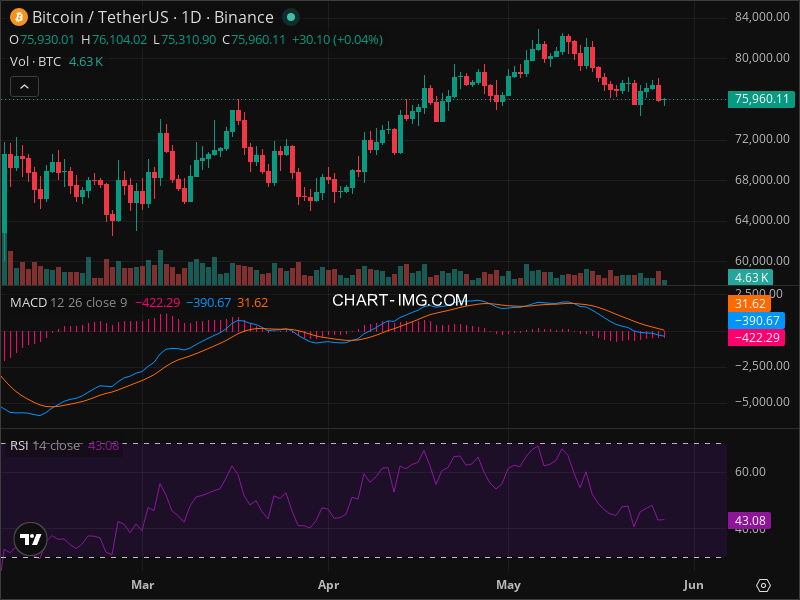
BTC Crypto Chart
Regulatory landscapes are also evolving, albeit unevenly. While the U.S. Securities and Exchange Commission (SEC) remains cautious, jurisdictions like Singapore and Switzerland are crafting token-friendly frameworks. Cardone’s success will likely hinge on navigating these complexities while ensuring investor trust.
Industry voices are split on Cardone’s ambitious plan. Real estate analyst Sarah Johnson from CBRE notes, “Tokenization could democratize access to high-value assets, but only if regulatory clarity emerges.” Her caution echoes a broader concern about legal roadblocks that could derail such projects.
On the crypto side, optimism runs higher. Anthony Pompliano, a well-known Bitcoin advocate and founder of Pomp Investments, tweeted that “Cardone’s move could be the validation blockchain needs to penetrate traditional finance.” His perspective highlights the potential for cross-sector disruption, where real estate tokenization acts as a gateway for broader blockchain adoption.
The ripple effects could be profound. If successful, Cardone’s initiative might inspire other real estate moguls to follow suit, creating a new asset class. Conversely, a misstep—say, a security breach or regulatory crackdown—could tarnish the concept’s reputation. Either way, the industry is watching closely. Curious about expert forecasts? See what the AI predicts for tokenized asset trends.
Tokenized real estate could offer investors dual benefits: capital appreciation and passive income. Cardone’s portfolio, primarily composed of income-generating properties, might distribute rental yields to token holders via smart contracts. Early projections suggest annual yields could range from 4-7%, competitive with traditional Real Estate Investment Trusts (REITs).
One of tokenization’s biggest draws is its low entry barrier. Unlike REITs, which often require significant capital or brokerage accounts, tokenized assets could be accessible with minimal investment. This opens the door for retail investors, especially younger demographics already comfortable with crypto.
The influx of tokenized real estate could also reshape crypto market dynamics. By introducing assets with lower correlation to Bitcoin’s price swings, it offers a hedge against volatility. However, if crypto markets tank, tokenized assets might not be immune, especially if investor confidence wanes.
For long-term investors, this could be a cornerstone of wealth building. Fractional ownership means you’re not locked into a single property’s fate—you can diversify across Cardone’s portfolio. Want to explore the numbers? Check AI fair value estimates for potential tokenized assets.
While tokenized real estate isn’t directly tied to crypto price charts, the broader market’s health influences investor sentiment. Bitcoin’s current price of $67,250 sits below its 50-day moving average of $68,500, signaling bearish momentum, per CoinGecko data. Ethereum’s Relative Strength Index (RSI) hovers at 42, indicating neither overbought nor oversold conditions but a cautious outlook.
For tokenized assets, key indicators will differ. Liquidity—measured by trading volume on blockchain platforms—will be critical. If Cardone’s tokens see robust activity, it could signal strong market acceptance. Additionally, the stability of the underlying blockchain (likely Ethereum or a layer-2 solution) will matter. Network congestion or high gas fees could deter adoption.
Investors should also watch token-specific metrics, such as total supply and burn mechanisms, which Cardone’s team has yet to fully disclose. These factors will impact scarcity and value over time. For a deeper dive into market signals, View AI signals for Bitcoin and related assets.
What does the future hold for Cardone’s $5 billion bet? In the short term, market sentiment might remain tepid, given the “Extreme Fear” reading of 13 on the Fear & Greed Index, as reported by Alternative.me. However, a successful rollout—complete with secure infrastructure and regulatory nods—could shift perceptions by mid-2026.

ETH Crypto Chart
Analysts at JPMorgan predict that tokenized assets could capture 5% of institutional portfolios by 2030 if barriers like regulation are addressed. Cardone’s initiative, if it gains traction, might catalyze this trend, drawing billions into the space. Conversely, a failure could set the concept back years, reinforcing skepticism about blockchain’s practical applications.
Longer term, the fusion of real estate and crypto could redefine asset ownership. Imagine a future where tokenized properties trade as fluidly as stocks, with blockchain ensuring transparency. While speculative, this vision hinges on pioneers like Cardone executing flawlessly. For data-driven forecasts, See AI price predictions for emerging asset classes.
Tokenization involves converting ownership rights of a real estate asset into digital tokens on a blockchain. These tokens represent fractional ownership, allowing investors to buy, sell, or trade small portions of a property. Transactions are recorded on a secure, transparent ledger, ensuring trust and efficiency.
Cardone aims to increase liquidity and accessibility in real estate investments. By tokenizing his portfolio, he enables fractional ownership, lowers entry barriers for investors, and leverages blockchain technology to streamline transactions, potentially attracting a new wave of capital.
Key risks include regulatory uncertainty, as laws around tokenized assets are still evolving. Market volatility in crypto could also affect token values. Additionally, security vulnerabilities in blockchain platforms pose a threat, as hacks or fraud could erode investor confidence.
Tokenized real estate offers higher liquidity and accessibility due to fractional ownership and blockchain trading. However, REITs benefit from established regulations and lower volatility. Tokenized assets are riskier but potentially more innovative, while REITs remain a safer, conventional choice.
Yes, tokenized real estate can provide diversification by introducing an asset class less correlated with cryptocurrencies like Bitcoin or Ethereum. This could mitigate risk during crypto market downturns, offering stability through exposure to real-world, income-generating properties.
Start by researching the underlying portfolio—Cardone’s properties, in this case—and the blockchain platform used. Monitor token economics, such as supply and yield distribution. For deeper insights, Get professional AI analysis to evaluate risks and opportunities.
Potentially. If successful, it could draw institutional interest, boost market sentiment, and validate blockchain’s utility in traditional finance. A failure, however, might reinforce doubts about tokenized assets, slowing adoption across sectors.
| Metric | Tokenized Real Estate | Traditional REITs | Direct Real Estate |
|---|---|---|---|
| Liquidity | High (blockchain trading) | Moderate (stock market) | Low (long sales process) |
| Minimum Investment | Low (fractional ownership) | Moderate (share price) | High (full property cost) |
| Regulatory Clarity | Evolving (uncertain) | Established (clear rules) | Established (local laws) |
| Transparency | High (blockchain ledger) | Moderate (public filings) | Low (private deals) |
Grant Cardone’s decision to tokenize a $5 billion real estate portfolio is more than a business move—it’s a litmus test for the future of finance. If executed well, it could usher in a new era of accessible, liquid investments, blending the stability of real estate with the innovation of blockchain. Yet, the hurdles are steep: regulatory uncertainty, security risks, and market volatility could easily derail this vision.
As the crypto market wrestles with “Extreme Fear” in February 2026, Cardone’s gambit offers a glimmer of hope—or a cautionary tale. Investors should tread carefully, balancing the allure of innovation with the reality of risk. Whether you’re a seasoned trader or a curious newcomer, staying ahead of this trend is crucial. Ready to explore the potential? Get AI analysis for tokenized assets and uncover what lies ahead.
ALL
TRENDING
WATCHLIST
Total Market Cap The Total Market Capitalization (Market Cap) is an indicator that measures the size of all the cryptocurrencies.It’s the total market value of all the cryptocurrencies' circulating supply: so it’s the total value of all the coins that have been mined.
{[{ marketcap }]} {[{ marketcapchange.toLocaleString(undefined, {maximumFractionDigits:2}) }]}% (24H) {[{ marketcapchange.toLocaleString(undefined, {maximumFractionDigits:2}) }]}% (24H)
Symbol
Price Cryptocurrency prices are volatile, and the prices change all the time. We are collecting all the data from several exchanges to provide the most accurate price available.
24H Cryptocurrency prices are volatile… The 24h % change is the difference between the current price and the price24 hours ago.
Trade
{[{ item.name }]}
{[{ index + $index}]}
{[{ item.pair.split('_')[0] }]}
Ƀ{[{item.price.toLocaleString(undefined, {maximumFractionDigits: 5}) }]} ${[{item.price.toLocaleString(undefined, {maximumFractionDigits: 5}) }]}
{[{ item.change24.toLocaleString(undefined, {maximumFractionDigits: 2}) }]}%
{[{ item.change24.toLocaleString(undefined, {maximumFractionDigits: 2}) }]}%
Symbol
Price Cryptocurrency prices are volatile, and the prices change all the time. We are collecting allthe data fromseveral exchanges to provide the most accurate price available.
24H Cryptocurrency prices are volatile… The 24h % change is the difference between the current priceand the price24 hours ago.
Trade
{[{ item.name }]}
{[{ index + $index}]}
{[{ item.pair.split('_')[0] }]}
Ƀ{[{item.price.toLocaleString(undefined, {maximumFractionDigits: 5}) }]} ${[{item.price.toLocaleString(undefined, {maximumFractionDigits: 5}) }]}
{[{ item.change24.toLocaleString(undefined, {maximumFractionDigits: 2}) }]}%
{[{ item.change24.toLocaleString(undefined, {maximumFractionDigits: 2}) }]}%

BTC Technical Analysis
May 27, 2026 | Joanna Newman

Soybeans Technical Analysis
May 27, 2026 | Joanna Newman
Live Cattle Technical Analysis
May 27, 2026 | Joanna Newman
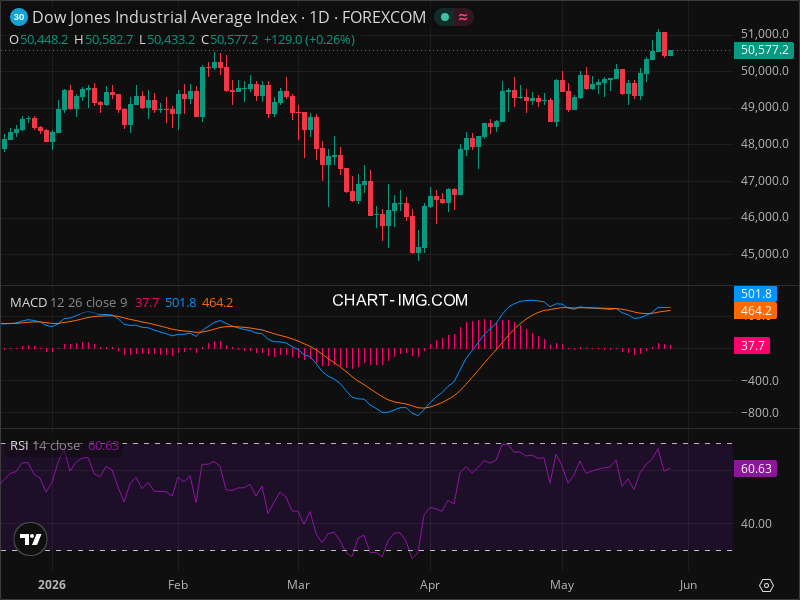
DJI Technical Analysis
May 27, 2026 | Joanna Newman
Tezos (XTZ) Review 2024: Everything You Need to Know Before Buying Tezos
.article-container { font-family: Arial, sans-serif; line-height: 1.6; color: #333; backgrou...
Chromia (CHR) Review 2024: Everything You Need to Know Before Buying Chromia
Illuvium (ILV) Review 2024: Everything You Need to Know Before Buying Illuvium
My Neighbor Alice (ALICE) Review 2024: Everything You Need to Know Before Buying My Neighbor Alice
Star Atlas (ATLAS) Review 2024: Everything You Need to Know Before Buying Star Atlas
TabTrade
What Is TabTrade? A Complete IntroductionTabTrade is a globally oriented multi-asset CFD and forex b...
Funded7
In the fast-moving world of proprietary trading, 2026 has marked a significant shift in what traders...
Bullwaves
Bullwaves Review 2026: A Premium MT5 Brokerage for Multi-Asset TradersBullwaves has quickly carved o...
BlackBull Markets
...
OQtima
Oqtima is an emerging online trading platform that offers a wide range of financial instruments, inc...
(adsbygoogle = window.adsbygoogle || []).push({}); Introduction In t...
(adsbygoogle = window.adsbygoogle || []).push({}); Einführung Wenn es um Er...
Mobi
Are you someone who makes international payments regularly using Bitcoin? Or do you travel a lot and...
Bitcoin.com
Bitcoin.com is a free downloadable Bitcoin wallet that allows users to trade and receive Bitcoins. T...
BTC.com
Created by Bitmain in 2016, BTC.com is a leading open-source Bitcoin and Bitcoin Cash storage platfo...
Grant Cardone’s $5 Billion Tokenization Bet: Will It Redefine Real Estate and Crypto Markets?
/* Modern SEO & AI-Optimized Article Styles */ /* Fonts loaded via link tags in head for b
JasmyCoin’s 300% Surge Could Spark Major Crypto Gains—Here’s Why
.article-container { font-family: Arial, sans-serif; line-height: 1.6; c
Investing in Cryptocurrency Before the End of the Year
Investing in cryptocurrency remains one of the lucrative ventures. The sustained value increase in t
10 Effective Strategies to Save Money Through Green Energy Investments
(adsbygoogle = window.adsbygoogle || []).push({}); Introduction: As we become increasingl
Bitcoin Price Analysis: Why a Global Stock Downturn Could Push BTC to $80K
/* Modern SEO & AI-Optimized Article Styles */ /* Fonts loaded via link tags in head for b
The Top 10 Crypto Assets with the Highest Potential in 2025
.article-container { font-family: Arial, sans-serif; line-height: 1.6; color: #333; background-color
The Ultimate Bitcoin Review 2024: Everything You Need to Know Today
.article-container { font-family: Arial, sans-serif; line-height: 1.6; color: #333; background-colo
The Everyday Fruit that's a Powerhouse of Nutrition and Your Weight Loss Ally
(adsbygoogle = window.adsbygoogle || []).push({}); IntroductionWhen it comes to nutrition a
The oldest and most powerful remedy to permanently get rid of insects and ants
(adsbygoogle = window.adsbygoogle || []).push({}); IntroductionEach year, as the hot season
Two Beds, One Dream: The Growing Trend of Sleeping Apart for Better Rest
(adsbygoogle = window.adsbygoogle || []).push({}); IntroductionIn an era where quality slee
(adsbygoogle = window.adsbygoogle || []).push({}); Introduction In t...
(adsbygoogle = window.adsbygoogle || []).push({}); Einführung Wenn es um Er...
Mobi
Are you someone who makes international payments regularly using Bitcoin? Or do you travel a lot and...
Bitcoin.com
Bitcoin.com is a free downloadable Bitcoin wallet that allows users to trade and receive Bitcoins. T...
BTC.com
Created by Bitmain in 2016, BTC.com is a leading open-source Bitcoin and Bitcoin Cash storage platfo...


 Français
 Spanish
 Deutsch
 Português
 Türkçe
 Italiano
 العربية
 Русский
 Chinese
 Korean
 Japanese
 Vietnamese
 Hebrew
 Hindi
Hindi
 Greek
Greek
 Polish
 Thai
Thai
 Dutch
Dutch
 Malay
Malay




.png)
.png)
.png)















COMMENTS (0)