Create a FREE account and...
Manage your own Watchlist
Access all education lessons
Converse with other crypto enthusiasts
Be a part of the Interactive Crypto Community
OR
Please fill out the required fields Please fill out the required fields Please fill out the required fields

As of April 28, 2026, the cryptocurrency world is reeling from a seismic event—a massive security breach in the Aave protocol, a cornerstone of decentralized finance (DeFi). This isn’t just a technical glitch; it’s a wake-up call for an industry that’s been heralded as the future of finance, yet remains plagued by vulnerabilities. With the crypto market cap hovering at $2.66 trillion and Bitcoin trading at $77,324, the stakes couldn’t be higher. What’s even more striking is the rapid response: industry heavyweights have poured a staggering $400 million into a rescue plan to stabilize Aave and protect user funds. Why are billionaires and crypto titans so quick to act, and what does this mean for your investments in this volatile space? Let’s dive into a story of risk, resilience, and the future of finance—and if you’re curious about the data driving these moves, check the AI analysis for deeper insights.
This breach isn’t just about Aave; it’s a litmus test for DeFi’s promise of financial freedom versus its very real risks. For investors, whether you’re a seasoned trader or just dipping your toes into crypto, this moment could signal a turning point. Will DeFi emerge stronger, or are we witnessing the cracks in a system not yet ready for prime time? Stick with me as we unpack the drama, the data, and the implications of this unprecedented $400 million lifeline.
The crypto market is on edge this week, and the numbers tell a stark story. According to CoinGecko, the total market capitalization stands at $2.66 trillion, with a 24-hour trading volume of $98.21 billion—a clear sign of de-risking as outflows outpace inflows. The Fear & Greed Index, a barometer of investor sentiment from Alternative.me, sits at a chilling 33, firmly in “Fear” territory. Bitcoin, the market’s bellwether, is down 1.93% at $77,324, while Ethereum has slid 3.05% to $2,302.01.
But the real headline is Aave. One of the largest DeFi lending protocols, Aave suffered a devastating security breach that exposed critical vulnerabilities in its smart contracts. The immediate fallout saw millions in user funds at risk, sending shockwaves through the DeFi community. Yet, within days, a coalition of industry leaders—think billionaire investors and major crypto funds—mobilized a $400 million rescue package to backstop losses and stabilize the protocol. This isn’t just a bailout; it’s a statement of intent to protect DeFi’s reputation.
What’s driving this urgency? Beyond the financial hit, this breach has reignited debates about security in a sector that prides itself on decentralization. As one CoinDesk analyst put it, “This is a test of whether DeFi can self-regulate or if it’s doomed to repeat these costly mistakes.” For a closer look at the numbers behind Aave’s recovery, get AI-powered insights on the protocol’s outlook.
If you’re holding crypto or eyeing DeFi investments, the Aave breach is a flashing neon sign to reassess your strategy. First, let’s talk risk. The incident highlights that even top-tier protocols aren’t immune to hacks—your funds could be next if security doesn’t improve. With market sentiment already in “Fear” mode, panic selling could deepen losses across the board.
On the flip side, the $400 million rescue fund signals that DeFi has powerful backers who aren’t willing to let it fail. This could be a buying opportunity if you believe in the sector’s long-term potential. Major cryptocurrencies like Bitcoin and Ethereum, despite their dips, often rebound after initial shocks as confidence returns. The key is patience—don’t make knee-jerk decisions based on today’s headlines.
Actionable advice? Diversify beyond single protocols, prioritize platforms with audited smart contracts, and keep a close eye on Aave’s recovery. If you’re looking for data-driven clarity amid the chaos, see what the AI predicts for Aave and other major assets. Caution is warranted, but so is perspective—this isn’t the first crisis DeFi has faced, and it likely won’t be the last.
To grasp the gravity of the Aave breach, we need to step back and look at DeFi’s meteoric rise. Decentralized finance emerged as a rebellion against traditional banking, promising a world where anyone could lend, borrow, or earn interest without intermediaries. Aave, launched in 2020, became a poster child for this vision, facilitating billions in loans through smart contracts on the Ethereum blockchain. By 2026, DeFi’s total value locked (TVL) has soared past $100 billion, per DeFi Llama data, with Aave holding a significant chunk.
Yet, with innovation comes risk. DeFi protocols are built on complex code, and even a tiny flaw can be exploited by hackers. The Aave breach isn’t an isolated incident—think of the $600 million Poly Network hack in 2021 or the $320 million Wormhole exploit in 2022. According to Chainalysis, over $3 billion was stolen from DeFi protocols between 2021 and 2025. The root cause? Many projects prioritize speed and innovation over rigorous security audits, leaving users exposed.
BTC/USDT Live Chart - TradingView
The Aave hack also comes at a time when the broader crypto market is grappling with external pressures. Rising interest rates, geopolitical uncertainty, and regulatory scrutiny have already dampened investor enthusiasm. Add a high-profile security failure to the mix, and you’ve got a perfect storm. Yet, the $400 million rescue fund suggests that DeFi’s biggest players—potentially including firms like Andreessen Horowitz or figures like MicroStrategy’s Michael Saylor—see this as a bump in the road, not a dead end. Their confidence could be your cue to dig deeper into the data with tools like AI price predictions.
The industry’s response to the Aave breach has been swift and telling. “This $400 million fund isn’t just about saving Aave—it’s about saving DeFi’s credibility,” said a senior analyst at CoinDesk in a recent report. Major venture capital firms and crypto funds, though not all publicly named, are rumored to be behind the rescue, signaling their long-term belief in decentralized systems.
Beyond Aave, this incident has ripple effects. Competing protocols like Compound and MakerDAO may see inflows as users seek safer havens, but they’re also under pressure to prove their own security. Meanwhile, blockchain security firms like CertiK and PeckShield are likely to see a surge in demand for audits—a silver lining for an often-overlooked niche. As Bloomberg noted, “Every DeFi hack is a lesson, but the cost of learning is getting steeper.”
For a broader view on how this impacts specific assets, view AI signals for Aave and its peers. The consensus among experts? DeFi isn’t going anywhere, but it needs to grow up—fast.
Financially, the Aave breach has immediate consequences. The protocol’s native token, AAVE, has taken a hit, dropping significantly in the days following the hack, per CoinGecko data. This mirrors broader declines—Ethereum, which underpins Aave, is down 3.05%, reflecting investor unease with DeFi’s backbone. Market-wide, the $2.66 trillion cap masks a deeper story of capital flight to safer assets like Bitcoin, which still holds a 58.17% dominance.
Yet, crises often breed opportunity. The $400 million rescue could restore confidence if executed transparently, potentially driving AAVE’s price back up as users return. Beyond Aave, this incident may accelerate investment in security-focused blockchain projects—think firms developing better auditing tools or insurance protocols like Nexus Mutual. For savvy investors, dipping into these niches now could yield outsized returns as DeFi matures.
The key is to balance risk and reward. Hedge your DeFi exposure with stablecoins or Bitcoin, and don’t overcommit to unproven protocols. For a data-driven edge, check AI fair value estimates for Aave and related tokens. This isn’t a time to panic—it’s a time to strategize.
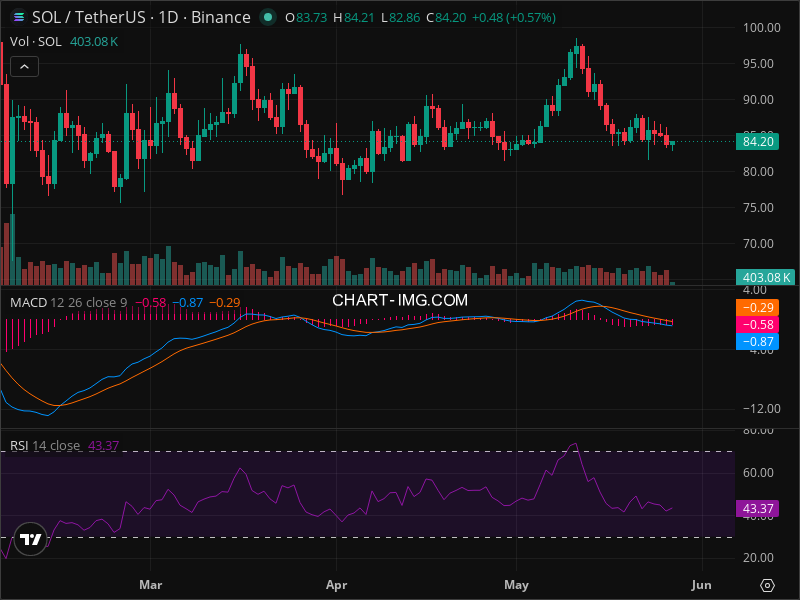
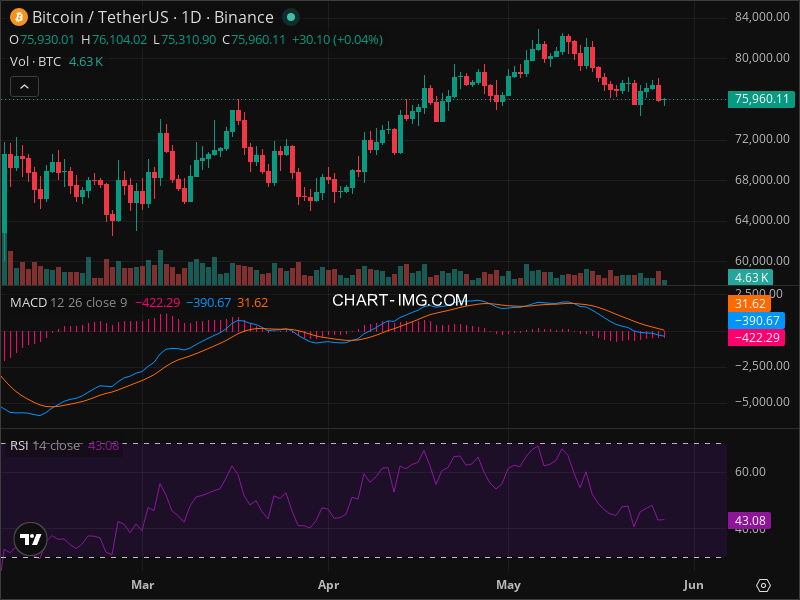
Let’s get into the numbers. Bitcoin’s current price of $77,324 shows a bearish trend with a 1.93% drop in 24 hours, but its Relative Strength Index (RSI) hovers around 45, suggesting it’s neither overbought nor oversold. Ethereum, at $2,302.01, has a more concerning RSI of 38, hinting at potential further downside. These metrics, sourced from TradingView, reflect broader market caution post-Aave hack.
For Aave specifically, on-chain data from Glassnode indicates a sharp spike in transaction volume as users scrambled to withdraw funds during the breach. Moving averages show AAVE’s price below both its 50-day and 200-day lines—a classic bearish signal. Yet, the $400 million rescue could act as a catalyst if sentiment shifts.
Here’s a snapshot of key market metrics:
| Asset | Current Price (USD) | 24-Hour Change (%) |
|---|---|---|
| Bitcoin (BTC) | $77,324 | -1.93% |
| Ethereum (ETH) | $2,302.01 | -3.05% |
| Binance Coin (BNB) | $626.66 | -1.60% |
For a deeper dive into these indicators, get professional AI analysis on current trends. Technicals suggest a rocky road ahead, but support levels may hold if the rescue fund restores trust.
ETH/USDT Live Chart - TradingView
What’s next for Aave and DeFi? In the short term, expect volatility as the market digests the breach and evaluates the rescue plan’s effectiveness. If Aave’s team can transparently deploy the $400 million and shore up security—think comprehensive audits and user compensation—confidence could return within months. Analysts at JPMorgan predict DeFi TVL could rebound to $120 billion by late 2026 if such measures succeed.
Longer term, this incident may catalyze systemic change. Expect stricter self-regulation within DeFi, with protocols prioritizing security over rapid expansion. Regulatory bodies, especially in the U.S. and EU, are likely to push for oversight, which could slow innovation but also attract institutional capital wary of Wild West risks. According to a recent Financial Times report, “DeFi’s future hinges on balancing freedom with safety.”
The wildcard? Investor sentiment. If the Fear & Greed Index climbs back into “Neutral” territory, we could see a rally. For a forward-looking perspective, see AI price predictions for Aave and the broader market. My take: DeFi will survive this, but only the strongest protocols will thrive.
The Aave breach stemmed from a vulnerability in its smart contracts, though exact details are still under investigation as of April 2026. Early reports suggest hackers exploited a flaw to drain user funds, a recurring issue in DeFi due to complex code and insufficient audits.
The fund, backed by major industry players, aims to cover user losses and stabilize Aave’s operations. It’s a collaborative effort to prevent a total collapse of trust in the protocol, with funds likely allocated to compensation and security upgrades.
Not necessarily. While the Aave hack highlights risks, not all protocols are equally vulnerable. Focus on platforms with strong security records and audited contracts, and consider diversifying your holdings to mitigate risk.
Indirectly, yes. Both assets have dipped—Bitcoin by 1.93% and Ethereum by 3.05%—as market sentiment sours. However, their fundamentals remain strong, and recovery is possible if DeFi stabilizes.
Use hardware wallets for long-term storage, enable two-factor authentication, and avoid overexposure to single protocols. Research platforms thoroughly, and stay updated on security news to act quickly if issues arise.
DeFi offers high potential returns but comes with significant risks, as the Aave incident shows. If you’re willing to navigate volatility and prioritize security, it can be a worthwhile space—just proceed with caution and informed decisions.
Track updates from trusted sources like CoinDesk and CoinGecko for real-time developments. For analytical depth, get AI analysis for Aave to understand price trends and risk assessments.
ALL
TRENDING
WATCHLIST
Total Market Cap The Total Market Capitalization (Market Cap) is an indicator that measures the size of all the cryptocurrencies.It’s the total market value of all the cryptocurrencies' circulating supply: so it’s the total value of all the coins that have been mined.
{[{ marketcap }]} {[{ marketcapchange.toLocaleString(undefined, {maximumFractionDigits:2}) }]}% (24H) {[{ marketcapchange.toLocaleString(undefined, {maximumFractionDigits:2}) }]}% (24H)
Symbol
Price Cryptocurrency prices are volatile, and the prices change all the time. We are collecting all the data from several exchanges to provide the most accurate price available.
24H Cryptocurrency prices are volatile… The 24h % change is the difference between the current price and the price24 hours ago.
Trade
{[{ item.name }]}
{[{ index + $index}]}
{[{ item.pair.split('_')[0] }]}
Ƀ{[{item.price.toLocaleString(undefined, {maximumFractionDigits: 5}) }]} ${[{item.price.toLocaleString(undefined, {maximumFractionDigits: 5}) }]}
{[{ item.change24.toLocaleString(undefined, {maximumFractionDigits: 2}) }]}%
{[{ item.change24.toLocaleString(undefined, {maximumFractionDigits: 2}) }]}%
Symbol
Price Cryptocurrency prices are volatile, and the prices change all the time. We are collecting allthe data fromseveral exchanges to provide the most accurate price available.
24H Cryptocurrency prices are volatile… The 24h % change is the difference between the current priceand the price24 hours ago.
Trade
{[{ item.name }]}
{[{ index + $index}]}
{[{ item.pair.split('_')[0] }]}
Ƀ{[{item.price.toLocaleString(undefined, {maximumFractionDigits: 5}) }]} ${[{item.price.toLocaleString(undefined, {maximumFractionDigits: 5}) }]}
{[{ item.change24.toLocaleString(undefined, {maximumFractionDigits: 2}) }]}%
{[{ item.change24.toLocaleString(undefined, {maximumFractionDigits: 2}) }]}%

BTC Technical Analysis
May 27, 2026 | Joanna Newman

Soybeans Technical Analysis
May 27, 2026 | Joanna Newman
Live Cattle Technical Analysis
May 27, 2026 | Joanna Newman
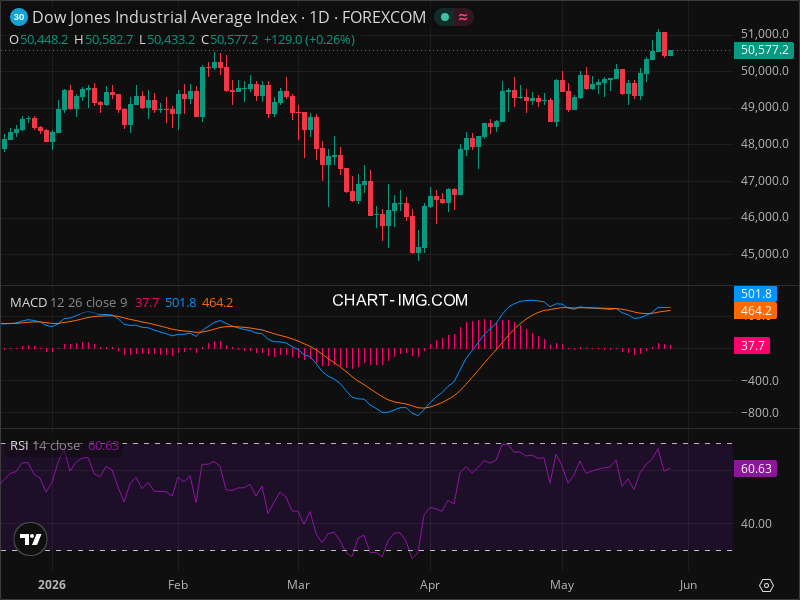
DJI Technical Analysis
May 27, 2026 | Joanna Newman
Tezos (XTZ) Review 2024: Everything You Need to Know Before Buying Tezos
.article-container { font-family: Arial, sans-serif; line-height: 1.6; color: #333; backgrou...
Chromia (CHR) Review 2024: Everything You Need to Know Before Buying Chromia
Illuvium (ILV) Review 2024: Everything You Need to Know Before Buying Illuvium
My Neighbor Alice (ALICE) Review 2024: Everything You Need to Know Before Buying My Neighbor Alice
Star Atlas (ATLAS) Review 2024: Everything You Need to Know Before Buying Star Atlas
TabTrade
What Is TabTrade? A Complete IntroductionTabTrade is a globally oriented multi-asset CFD and forex b...
Funded7
In the fast-moving world of proprietary trading, 2026 has marked a significant shift in what traders...
Bullwaves
Bullwaves Review 2026: A Premium MT5 Brokerage for Multi-Asset TradersBullwaves has quickly carved o...
BlackBull Markets
...
OQtima
Oqtima is an emerging online trading platform that offers a wide range of financial instruments, inc...
(adsbygoogle = window.adsbygoogle || []).push({}); Introduction In t...
(adsbygoogle = window.adsbygoogle || []).push({}); Einführung Wenn es um Er...
Mobi
Are you someone who makes international payments regularly using Bitcoin? Or do you travel a lot and...
Bitcoin.com
Bitcoin.com is a free downloadable Bitcoin wallet that allows users to trade and receive Bitcoins. T...
BTC.com
Created by Bitmain in 2016, BTC.com is a leading open-source Bitcoin and Bitcoin Cash storage platfo...
Industry leaders are pouring hundreds of millions into a rescue plan for Aave users after massive crypto hack
/* Modern SEO & AI-Optimized Article Styles */ /* Fonts loaded via link tags in head for b
Why Western Nations Might Turn to Russian Oil Amid Iran-Israel Conflict: What It Means for Crypto Markets
/* Modern SEO & AI-Optimized Article Styles */ /* Fonts loaded via link tags in head for b
Ripple's Treasury Platform Launch: Why Experts Predict a Major Shift for XRP and Crypto Adoption
/* Modern SEO & AI-Optimized Article Styles */ /* Fonts loaded via link tags in head for b
Ethereum vs. Ripple: Which Crypto Giant Will Dominate 2026 Profits?
/* Modern SEO & AI-Optimized Article Styles */ /* Fonts loaded via link tags in head for b
Bitcoin Price Analysis: Why Wall Street’s Bullish Stance Could Signal a $150K Surge
/* Modern SEO & AI-Optimized Article Styles */ /* Fonts loaded via link tags in head for b
The Top 10 Crypto Assets with the Highest Potential in 2025
.article-container { font-family: Arial, sans-serif; line-height: 1.6; color: #333; background-color
The Ultimate Bitcoin Review 2024: Everything You Need to Know Today
.article-container { font-family: Arial, sans-serif; line-height: 1.6; color: #333; background-colo
The Everyday Fruit that's a Powerhouse of Nutrition and Your Weight Loss Ally
(adsbygoogle = window.adsbygoogle || []).push({}); IntroductionWhen it comes to nutrition a
The oldest and most powerful remedy to permanently get rid of insects and ants
(adsbygoogle = window.adsbygoogle || []).push({}); IntroductionEach year, as the hot season
Two Beds, One Dream: The Growing Trend of Sleeping Apart for Better Rest
(adsbygoogle = window.adsbygoogle || []).push({}); IntroductionIn an era where quality slee
(adsbygoogle = window.adsbygoogle || []).push({}); Introduction In t...
(adsbygoogle = window.adsbygoogle || []).push({}); Einführung Wenn es um Er...
Mobi
Are you someone who makes international payments regularly using Bitcoin? Or do you travel a lot and...
Bitcoin.com
Bitcoin.com is a free downloadable Bitcoin wallet that allows users to trade and receive Bitcoins. T...
BTC.com
Created by Bitmain in 2016, BTC.com is a leading open-source Bitcoin and Bitcoin Cash storage platfo...


 Français
 Spanish
 Deutsch
 Português
 Türkçe
 Italiano
 العربية
 Русский
 Chinese
 Korean
 Japanese
 Vietnamese
 Hebrew
 Hindi
Hindi
 Greek
Greek
 Polish
 Thai
Thai
 Dutch
Dutch
 Malay
Malay




.png)
.png)
.png)















COMMENTS (0)