Create a FREE account and...
Manage your own Watchlist
Access all education lessons
Converse with other crypto enthusiasts
Be a part of the Interactive Crypto Community
OR
Please fill out the required fields Please fill out the required fields Please fill out the required fields

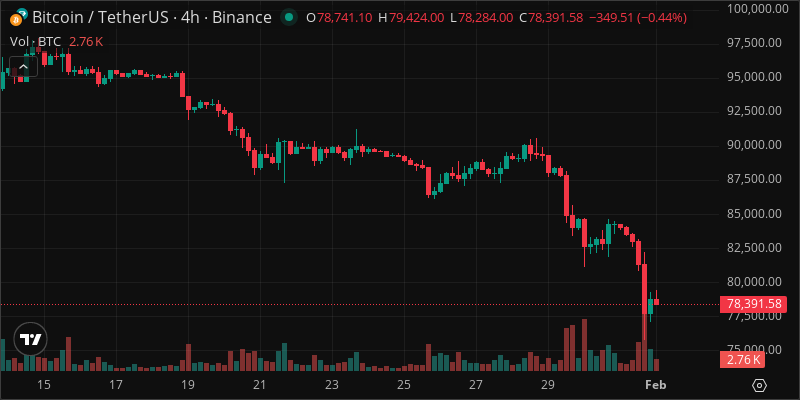
As of February 1, 2026, the cryptocurrency market is in the throes of a dramatic selloff, with Bitcoin tumbling to $78,276—a staggering 6.63% drop in just 24 hours. Retail investors are fleeing in droves, gripped by fear as the Fear & Greed Index plummets to a chilling 14, signaling extreme panic. Yet, amidst this chaos, a striking divergence emerges: Wall Street’s biggest players, the so-called “mega-whales,” are quietly accumulating Bitcoin at these discounted prices, betting on a monumental rebound. This split in sentiment raises a critical question: Are we on the cusp of a historic buying opportunity, or is this the prelude to a deeper crash? For everyday investors, understanding this dynamic could mean the difference between capitalizing on a market bottom or missing out on generational wealth.
The implications of this moment are profound. With a current market cap of $2.73 trillion and Bitcoin maintaining a dominant 57.24% share, the crypto space remains a powerhouse despite the turbulence. But why are institutional giants so confident while retail traders are hitting the sell button? This article dives deep into the data, expert insights, and market forces at play to uncover what this means for you—whether you’re a seasoned trader or just dipping your toes into crypto.
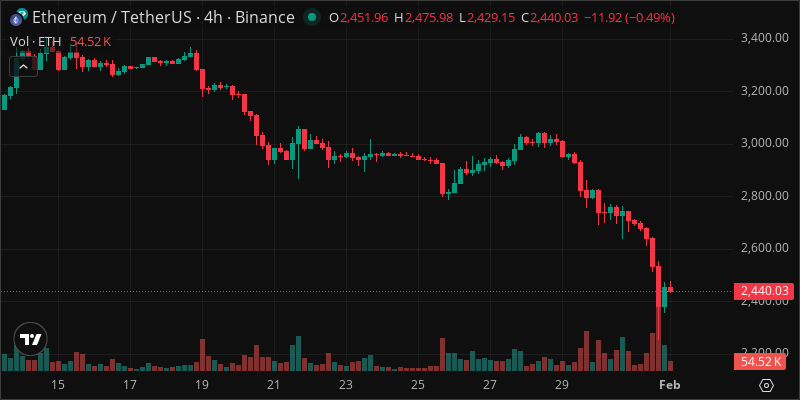
The cryptocurrency market has taken a brutal hit in recent days, with Bitcoin’s price sliding to $78,276 as of February 1, 2026, reflecting a sharp 6.63% decline in just 24 hours. Ethereum, the second-largest crypto by market cap, isn’t faring much better, trading at $2,435.53 after a 9.77% drop. Other major players like Solana and Binance Coin have seen even steeper losses, with declines of 11.57% and 8.51%, respectively, according to CoinGecko data. This widespread downturn has spooked retail investors, many of whom are liquidating positions out of fear of further losses.
Yet, beneath the surface of this selloff, a different story unfolds. Blockchain analytics platforms report a surge in large-scale transactions by institutional investors—often referred to as “mega-whales”—who are scooping up Bitcoin at these lower prices. This accumulation signals a stark contrast to the retail panic, suggesting that those with deep pockets see the current dip as a strategic entry point. For a clearer picture, check the AI analysis to see real-time signals and predictions on Bitcoin’s next move.
For individual investors, the current market dynamic presents both risk and opportunity. The Fear & Greed Index at 14—a historic low—indicates that retail sentiment is overwhelmingly bearish, often a contrarian signal that the market may be nearing a bottom. Historically, periods of extreme fear have preceded significant recoveries, as seen in Bitcoin’s rebounds after major corrections in 2018 and 2020.
On the flip side, the aggressive buying by institutional players suggests that now could be the time to act, especially for those with a long-term horizon. If you’re considering whether to buy the dip or wait for further declines, tools like AI-powered insights can provide data-driven guidance on fair value estimates and risk assessments. The key takeaway? While panic selling may feel instinctive, aligning with the strategic moves of Wall Street whales could position you for outsized gains when the market turns.
To grasp why the market is behaving this way, we need to look at the broader forces at play. Rising interest rates and persistent inflation have tightened financial conditions globally, prompting risk-averse behavior among retail investors. Cryptocurrencies, often viewed as high-risk assets, are typically the first to suffer in such environments, as investors flock to safer havens like bonds or cash.
Adding fuel to the fire are regulatory concerns. Recent statements from the U.S. Securities and Exchange Commission (SEC) about potential reclassifications of digital assets have introduced a layer of uncertainty. According to a Bloomberg report, this regulatory overhang could continue to weigh on market sentiment in the short term, particularly for altcoins with less established legal status.
Despite these headwinds, institutional confidence remains unshaken. Major players, including hedge funds and corporate treasuries, have been net buyers during this dip, as evidenced by on-chain data showing large wallet inflows. This behavior echoes past cycles where institutions capitalized on retail fear to build positions at discounted prices—a strategy that has often paid off handsomely.
The Fear & Greed Index, a widely followed gauge of investor sentiment, underscores the emotional divide. At 14, it’s in “extreme fear” territory, a level that has historically marked turning points. For a deeper look into what this could mean for Bitcoin’s price trajectory, see AI price prediction data to understand potential recovery timelines.
BTC Crypto Chart
Industry leaders and analysts are weighing in on this divergence between retail and institutional behavior. Michael Saylor, CEO of MicroStrategy—a company known for its massive Bitcoin holdings—recently reiterated his bullish stance, stating on social media that “volatility is the price of admission for outsized returns.” His firm has continued to accumulate Bitcoin, viewing current prices as a bargain.
Market analysts from firms like JPMorgan have also noted the trend. According to a recent CNBC report, institutional buying during periods of retail panic often signals a market bottom, as these players have access to sophisticated data and long-term strategies that retail investors lack. This perspective suggests that the current selloff could be a fleeting opportunity for those willing to act decisively.
Beyond individual investors, the broader industry stands to benefit from institutional involvement. As more Wall Street giants enter the crypto space, mainstream adoption accelerates, potentially stabilizing prices over time. This dynamic could reshape the market, making it less prone to the wild swings driven by retail sentiment.
Let’s not sugarcoat it: the short-term outlook remains uncertain. Macroeconomic pressures, including potential rate hikes by the Federal Reserve, could continue to suppress risk assets like cryptocurrencies. Additionally, if regulatory crackdowns materialize, we could see further downside, particularly for smaller altcoins.
However, the long-term case for Bitcoin and other major cryptocurrencies remains compelling. Institutional accumulation suggests a belief in Bitcoin’s value as a store of wealth and a hedge against inflation—narratives that have driven its adoption over the past decade. For investors with a multi-year horizon, buying at these levels could yield significant returns if history repeats itself.
So, what should you do? Diversifying across assets, setting clear entry and exit points, and leveraging data-driven tools are critical steps. For instance, get AI analysis for Bitcoin to assess whether current prices align with fair value calculations based on multiple models. Knowledge is power, and in a market this volatile, staying informed could be your edge.
From a technical perspective, Bitcoin’s drop to $78,276 has pushed it into oversold territory on several key indicators. The Relative Strength Index (RSI), a measure of momentum, sits below 30—a threshold often associated with potential reversals. However, the Moving Average Convergence Divergence (MACD) line remains bearish, indicating that downward pressure could persist in the near term.
Key support levels to watch are around $75,000, a psychological barrier that has held during past corrections. If Bitcoin breaks below this, we could see a test of $70,000. On the upside, resistance looms at $82,000—a level that could signal a return to bullish momentum if breached.
Below is a snapshot of recent performance across major cryptocurrencies, highlighting the scale of the current downturn:
| Cryptocurrency | Current Price (USD) | 24h Change (%) |
|---|---|---|
| Bitcoin | $78,276 | -6.63% |
| Ethereum | $2,435.53 | -9.77% |
| Solana | $104.30 | -11.57% |
| Binance Coin | $781.02 | -8.51% |
| Cardano | $0.293386 | -8.57% |
For a more detailed breakdown of technical signals, view AI signals for Bitcoin to see how indicators like RSI and MACD are trending in real time.
ETH Crypto Chart
Looking ahead, the next few weeks will be critical. If institutional buying continues to outpace retail selling, we could see Bitcoin stabilize around $75,000-$78,000 before attempting a recovery. However, a failure to hold these levels might push prices toward $70,000, especially if negative macroeconomic data emerges.
Over the longer term, many analysts remain bullish. According to a recent Reuters report, growing institutional adoption and advancements in blockchain technology could propel Bitcoin past its previous all-time highs within the next 12-18 months. Some even speculate a target of $150,000 by late 2026 if adoption trends hold.
Investors should keep an eye on several catalysts: Federal Reserve policy updates, SEC regulatory decisions, and on-chain metrics indicating whale activity. For a data-driven perspective on where Bitcoin might head next, see what the AI predicts based on historical patterns and current market conditions.
Institutional investors, or “mega-whales,” often have access to sophisticated research and long-term strategies that allow them to see beyond short-term volatility. They view current price dips as buying opportunities, betting on Bitcoin’s future value as a store of wealth and a hedge against inflation. On-chain data supports this, showing large wallet inflows during periods of retail panic.
While no one can predict the market with certainty, periods of extreme fear—such as the current Fear & Greed Index reading of 14—have historically been followed by recoveries. That said, investors should assess their risk tolerance and consider tools like AI fair value estimates to make informed decisions.
The risks are significant, including macroeconomic pressures like rising interest rates, regulatory uncertainty, and potential further selloffs. Investors should be prepared for volatility and avoid over-leveraging. Diversification and thorough research are key to mitigating these risks.
Blockchain analytics platforms like Glassnode and Whale Alert provide real-time data on large transactions by institutional players. Additionally, following corporate announcements from firms like MicroStrategy can offer insights into institutional sentiment.
Many experts remain optimistic, citing growing adoption, limited supply, and increasing institutional interest as bullish factors. Price targets as high as $150,000 by late 2026 have been floated by some analysts, though much depends on regulatory clarity and global economic conditions.
Staying informed requires a combination of news updates, technical analysis, and data tools. Platforms that offer professional AI analysis can help by providing buy/sell signals, price predictions, and risk assessments based on real-time data.

ALL
TRENDING
WATCHLIST
Total Market Cap The Total Market Capitalization (Market Cap) is an indicator that measures the size of all the cryptocurrencies.It’s the total market value of all the cryptocurrencies' circulating supply: so it’s the total value of all the coins that have been mined.
{[{ marketcap }]} {[{ marketcapchange.toLocaleString(undefined, {maximumFractionDigits:2}) }]}% (24H) {[{ marketcapchange.toLocaleString(undefined, {maximumFractionDigits:2}) }]}% (24H)
Symbol
Price Cryptocurrency prices are volatile, and the prices change all the time. We are collecting all the data from several exchanges to provide the most accurate price available.
24H Cryptocurrency prices are volatile… The 24h % change is the difference between the current price and the price24 hours ago.
Trade
{[{ item.name }]}
{[{ index + $index}]}
{[{ item.pair.split('_')[0] }]}
Ƀ{[{item.price.toLocaleString(undefined, {maximumFractionDigits: 5}) }]} ${[{item.price.toLocaleString(undefined, {maximumFractionDigits: 5}) }]}
{[{ item.change24.toLocaleString(undefined, {maximumFractionDigits: 2}) }]}%
{[{ item.change24.toLocaleString(undefined, {maximumFractionDigits: 2}) }]}%
Symbol
Price Cryptocurrency prices are volatile, and the prices change all the time. We are collecting allthe data fromseveral exchanges to provide the most accurate price available.
24H Cryptocurrency prices are volatile… The 24h % change is the difference between the current priceand the price24 hours ago.
Trade
{[{ item.name }]}
{[{ index + $index}]}
{[{ item.pair.split('_')[0] }]}
Ƀ{[{item.price.toLocaleString(undefined, {maximumFractionDigits: 5}) }]} ${[{item.price.toLocaleString(undefined, {maximumFractionDigits: 5}) }]}
{[{ item.change24.toLocaleString(undefined, {maximumFractionDigits: 2}) }]}%
{[{ item.change24.toLocaleString(undefined, {maximumFractionDigits: 2}) }]}%

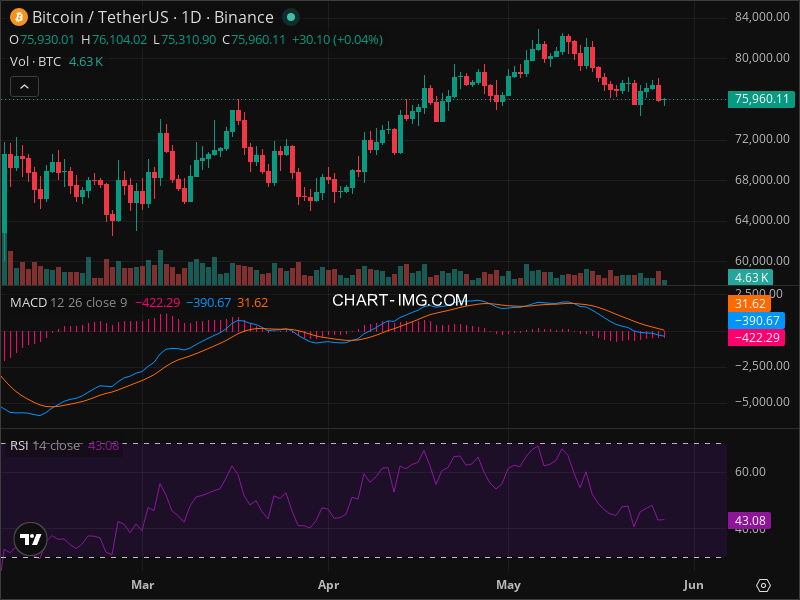
BTC Technical Analysis
May 27, 2026 | Joanna Newman

Soybeans Technical Analysis
May 27, 2026 | Joanna Newman
Live Cattle Technical Analysis
May 27, 2026 | Joanna Newman
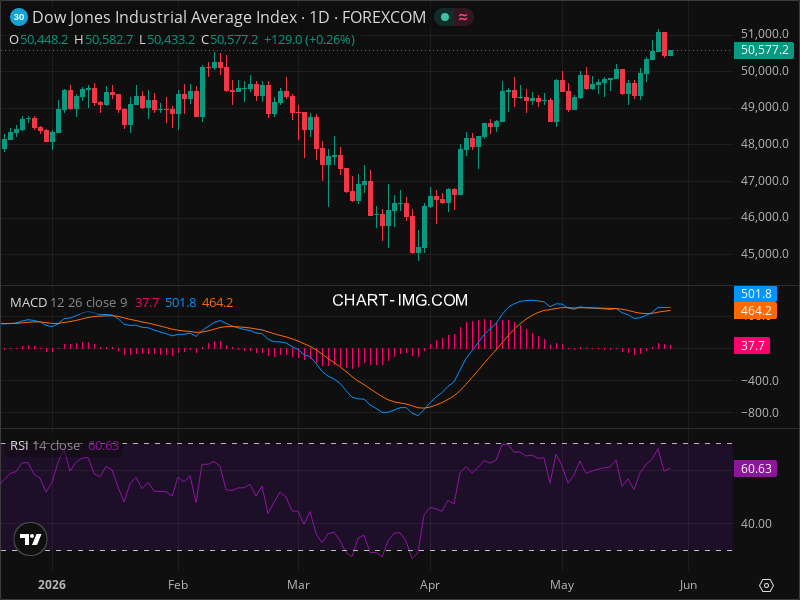
DJI Technical Analysis
May 27, 2026 | Joanna Newman
Tezos (XTZ) Review 2024: Everything You Need to Know Before Buying Tezos
.article-container { font-family: Arial, sans-serif; line-height: 1.6; color: #333; backgrou...
Chromia (CHR) Review 2024: Everything You Need to Know Before Buying Chromia
Illuvium (ILV) Review 2024: Everything You Need to Know Before Buying Illuvium
My Neighbor Alice (ALICE) Review 2024: Everything You Need to Know Before Buying My Neighbor Alice
Star Atlas (ATLAS) Review 2024: Everything You Need to Know Before Buying Star Atlas
TabTrade
What Is TabTrade? A Complete IntroductionTabTrade is a globally oriented multi-asset CFD and forex b...
Funded7
In the fast-moving world of proprietary trading, 2026 has marked a significant shift in what traders...
Bullwaves
Bullwaves Review 2026: A Premium MT5 Brokerage for Multi-Asset TradersBullwaves has quickly carved o...
BlackBull Markets
...
OQtima
Oqtima is an emerging online trading platform that offers a wide range of financial instruments, inc...
(adsbygoogle = window.adsbygoogle || []).push({}); Introduction In t...
(adsbygoogle = window.adsbygoogle || []).push({}); Einführung Wenn es um Er...
Mobi
Are you someone who makes international payments regularly using Bitcoin? Or do you travel a lot and...
Bitcoin.com
Bitcoin.com is a free downloadable Bitcoin wallet that allows users to trade and receive Bitcoins. T...
BTC.com
Created by Bitmain in 2016, BTC.com is a leading open-source Bitcoin and Bitcoin Cash storage platfo...
Bitcoin Price Analysis: Why Wall Street Whales Are Buying While Retail Investors Panic
/* Modern SEO & AI-Optimized Article Styles */ /* Fonts loaded via link tags in head for b
Is Coffee About to Break Out? The Chart Pattern Nobody's Discussing
Is Coffee About to Break Out? The Chart Pattern Nobody's Discussing Coffee Chart | T
Crude Prices Surge on Reports the US is Preparing Troop Deployment in Iran
/* Modern SEO & AI-Optimized Article Styles */ /* Fonts loaded via link tags in head for b
Crude Oil Prices Drop 5% on US-Iran Talks Hopes: Why This Could Reshape the Energy Market
/* Modern SEO & AI-Optimized Article Styles */ /* Fonts loaded via link tags in head for b
CoinsBank
What functions do CoinsBank Bitcoin have? The functions of the application are varied and protected
The Top 10 Crypto Assets with the Highest Potential in 2025
.article-container { font-family: Arial, sans-serif; line-height: 1.6; color: #333; background-color
The Ultimate Bitcoin Review 2024: Everything You Need to Know Today
.article-container { font-family: Arial, sans-serif; line-height: 1.6; color: #333; background-colo
The Everyday Fruit that's a Powerhouse of Nutrition and Your Weight Loss Ally
(adsbygoogle = window.adsbygoogle || []).push({}); IntroductionWhen it comes to nutrition a
The oldest and most powerful remedy to permanently get rid of insects and ants
(adsbygoogle = window.adsbygoogle || []).push({}); IntroductionEach year, as the hot season
Two Beds, One Dream: The Growing Trend of Sleeping Apart for Better Rest
(adsbygoogle = window.adsbygoogle || []).push({}); IntroductionIn an era where quality slee
(adsbygoogle = window.adsbygoogle || []).push({}); Introduction In t...
(adsbygoogle = window.adsbygoogle || []).push({}); Einführung Wenn es um Er...
Mobi
Are you someone who makes international payments regularly using Bitcoin? Or do you travel a lot and...
Bitcoin.com
Bitcoin.com is a free downloadable Bitcoin wallet that allows users to trade and receive Bitcoins. T...
BTC.com
Created by Bitmain in 2016, BTC.com is a leading open-source Bitcoin and Bitcoin Cash storage platfo...


 Français
 Spanish
 Deutsch
 Português
 Türkçe
 Italiano
 العربية
 Русский
 Chinese
 Korean
 Japanese
 Vietnamese
 Hebrew
 Hindi
Hindi
 Greek
Greek
 Polish
 Thai
Thai
 Dutch
Dutch
 Malay
Malay




.png)
.png)
.png)
















COMMENTS (0)