Create a FREE account and...
Manage your own Watchlist
Access all education lessons
Converse with other crypto enthusiasts
Be a part of the Interactive Crypto Community
OR
Please fill out the required fields Please fill out the required fields Please fill out the required fields

As the cryptocurrency market grapples with a wave of uncertainty, a unique window of opportunity might just be opening for savvy investors. As of February 10, 2026, the total crypto market capitalization stands at an impressive $2.42 trillion, yet the Fear & Greed Index—a key sentiment indicator—plunges to a chilling 9, reflecting extreme fear among participants. This stark contrast between market size and sentiment raises a critical question: could this pervasive dread be the precursor to a monumental rally, potentially driving Bitcoin to $150,000? For anyone with a stake in digital assets—or considering one—this moment matters, as history often shows that fear can precede the most significant gains.
The implications of this environment are profound. Whether you’re a seasoned trader or a curious newcomer, understanding these dynamics could shape your financial future. With Bitcoin holding a commanding 56.94% market share and trading at $69,076, the stage is set for either a dramatic rebound or further turbulence. Stick with us as we unpack the data, expert insights, and technical indicators to reveal why this climate of fear might just be your golden ticket. Curious about what the numbers predict? Check the AI analysis for deeper insights into Bitcoin’s next move.
The crypto market is a battlefield of emotions right now, and the numbers tell a gripping story. Bitcoin, priced at $69,076 as of today, has dipped by 1.09% in the last 24 hours, according to CoinGecko data. Ethereum, trading at $2,013.73, mirrors this downward trend with a 1.74% decline. Yet, amidst this gloom, pockets of resilience shine through—Ripple (XRP) is up 1.54% at $1.43, and Solana (SOL) edges higher by 0.08% to $84.57.
What’s driving this pervasive fear? Regulatory uncertainty looms large, with ongoing discussions in the U.S. and Europe about stricter oversight of digital assets. Add to that the macroeconomic pressures—rising global interest rates and inflationary concerns—and it’s no surprise that investor confidence is shaken. However, the sheer size of the market, at $2.42 trillion, suggests there’s still significant liquidity waiting to be unleashed.
Recent developments paint a mixed picture. The SEC’s latest statements hint at forthcoming regulations aimed at transparency, which could either stabilize or further unsettle the market. Meanwhile, technological advancements like Ethereum’s ongoing upgrades continue to attract attention. For a data-driven perspective on these trends, see AI price prediction tools that break down potential outcomes.
For investors, the current climate of extreme fear is a double-edged sword. On one hand, the low sentiment—reflected by the Fear & Greed Index at 9—can signal a buying opportunity. Historical patterns, as noted in Bloomberg analyses, often show that periods of intense fear precede substantial rallies. Bitcoin’s price corrections in 2021, for instance, were followed by surges when sentiment shifted.
On the other hand, the risks are undeniable. Regulatory crackdowns could dampen market growth, and macroeconomic headwinds might push risk-averse capital away from crypto. So, what’s the play? Diversification remains key—balancing exposure to market leaders like Bitcoin and Ethereum with promising altcoins showing strength, such as Ripple or Solana.
Actionable steps include setting strict stop-loss limits to manage volatility and focusing on long-term fundamentals over short-term noise. Want to refine your strategy with cutting-edge tools? Get AI-powered insights to navigate these choppy waters with confidence.
To grasp why fear dominates the crypto market today, we need to rewind a bit. The past year has seen a flurry of regulatory activity, with major economies like the U.S. and China taking divergent paths. While El Salvador made headlines by adopting Bitcoin as legal tender, China’s stringent bans on crypto mining and trading sent shockwaves through the industry. These contrasting approaches create a fragmented landscape that keeps investors on edge.
Beyond regulation, broader economic forces are at play. Rising interest rates, as central banks combat inflation, have squeezed risk assets across the board—crypto included. According to a recent Reuters report, the correlation between Bitcoin and traditional markets like the S&P 500 has grown, meaning global economic uncertainty directly impacts digital assets.
Yet, it’s not all doom and gloom. Blockchain technology continues to evolve, with innovations like layer-2 scaling solutions for Ethereum promising lower costs and faster transactions. These advancements remind us that the fundamental value proposition of crypto—decentralization and efficiency—remains intact. The question is whether these positives can outweigh the current negatives in investors’ minds.

NASDAQ:COIN Daily Stock Chart
History offers some perspective. During the 2018 bear market, Bitcoin plummeted over 80%, and sentiment was similarly bleak. Yet, those who bought at the bottom reaped massive rewards during the 2020-2021 bull run. Could we be at a similar inflection point now? The data suggests it’s possible, but timing is everything.
Industry leaders and analysts are split on the current market outlook, but their insights provide valuable guidance. MicroStrategy CEO Michael Saylor, a vocal Bitcoin advocate, recently argued on Twitter that “Bitcoin is digital gold, and fear-driven sell-offs are buying opportunities for long-term holders.” His firm’s continued accumulation of BTC reinforces this bullish stance.
Conversely, some Wall Street analysts remain cautious. A recent JPMorgan report warned that without regulatory clarity, institutional adoption could stall, potentially dragging Bitcoin down to $50,000 in the near term. This bearish outlook underscores the importance of monitoring policy developments closely.
The broader industry impact is already visible. DeFi protocols, despite Ethereum’s price dip, continue to attract capital, with total value locked (TVL) in DeFi surpassing $100 billion, per DeFi Llama data. This resilience suggests that even in fearful times, innovation doesn’t stop. For a deeper look at Ethereum’s potential, view AI signals for ETH to see what the data reveals.
From a financial perspective, the current market offers both peril and promise. Short-term volatility could lead to losses for those unprepared for sudden drops. However, for investors with a longer horizon, the depressed prices of major cryptocurrencies like Bitcoin and Ethereum might represent a rare chance to buy low.
How should you position yourself? Dollar-cost averaging (DCA) into Bitcoin and Ethereum can mitigate the impact of volatility. Additionally, allocating a small portion of your portfolio to high-growth altcoins like Solana, which shows relative strength, could yield outsized returns if the market turns bullish.
Institutional interest hasn’t vanished despite the fear. Major firms like Fidelity and BlackRock continue to explore crypto offerings, signaling confidence in the sector’s future. If regulatory hurdles are cleared, this could trigger a wave of fresh capital, potentially pushing Bitcoin toward the $150,000 mark some analysts predict.
Navigating these opportunities requires precision. Advanced analysis tools can help identify entry and exit points. Curious about Bitcoin’s fair value? Check AI fair value estimate to align your investments with data-driven insights.
Let’s get into the nitty-gritty of the charts. Bitcoin’s Relative Strength Index (RSI) currently hovers near 30, a level often associated with oversold conditions, per TradingView data. This could indicate that a reversal is imminent if buying pressure returns. Similarly, the Moving Average Convergence Divergence (MACD) shows signs of a potential bullish crossover, though it’s not confirmed yet.
Ethereum’s technicals tell a similar story. Its RSI is slightly higher at 35, but a key support level around $1,900 is holding—for now. If this level breaks, we could see further downside; if it holds, a bounce might be on the horizon.
Here’s a snapshot of the current metrics for major cryptocurrencies:
| Cryptocurrency | Current Price | 24h Change | RSI |
|---|---|---|---|
| Bitcoin (BTC) | $69,076 | -1.09% | 30 |
| Ethereum (ETH) | $2,013.73 | -1.74% | 35 |
| Ripple (XRP) | $1.43 | +1.54% | 42 |
| Solana (SOL) | $84.57 | +0.08% | 40 |
These indicators suggest caution but also opportunity. For a more detailed breakdown, get AI analysis for Bitcoin to see what the algorithms predict.
Looking ahead, the crypto market’s trajectory hinges on several key factors. If regulatory clarity emerges in major markets like the U.S., we could see a surge in institutional investment, potentially driving Bitcoin to $150,000 by the end of 2026, as some optimistic analysts forecast. This bullish scenario assumes that macroeconomic conditions stabilize and interest in digital assets continues to grow.
On the flip side, persistent regulatory uncertainty or a global economic downturn could push Bitcoin down to $50,000 or lower, as bearish projections warn. Ethereum’s future is equally tied to its ability to overcome scalability challenges and maintain its dominance in DeFi.
Emerging trends, such as the rise of central bank digital currencies (CBDCs), could also reshape the landscape. While CBDCs might compete with decentralized cryptocurrencies, they could also validate the underlying blockchain technology, indirectly boosting adoption.
What’s the most likely outcome? It’s hard to say definitively, but the oversold technical indicators and historical patterns lean toward a potential rebound. For a forward-looking perspective, see what the AI predicts for Bitcoin and beyond.
The Fear & Greed Index, developed by Alternative.me, measures market sentiment using factors like volatility, market momentum, and social media activity. A score of 9 indicates “extreme fear,” suggesting widespread panic among investors. This low reading often correlates with oversold conditions, which historically can precede price rebounds.
While no one can predict the market with certainty, periods of extreme fear have often been buying opportunities in the past. Bitcoin’s current RSI near 30 suggests it may be oversold. However, investors should consider their risk tolerance and conduct thorough research before making decisions.
Regulatory uncertainty creates fear of potential restrictions or bans, which can drive sell-offs and lower prices. Conversely, clear and favorable regulations can boost confidence and attract institutional capital, pushing prices higher. Staying updated on policy developments is crucial for any crypto investor.
Ethereum remains a cornerstone of the crypto ecosystem, powering decentralized finance (DeFi) and non-fungible tokens (NFTs). Despite its recent price decline to $2,013.73, its technological advancements make it a critical asset to watch. Its market dominance of 10.02% underscores its importance.
Leveraging advanced tools can provide deeper insights into market movements. Platforms that offer AI-driven analysis can help identify buy or sell signals, fair value estimates, and price predictions. For a head start, get professional AI analysis to refine your investment strategy.
Some analysts believe Bitcoin could hit $150,000 by the end of 2026 if institutional adoption accelerates and regulatory hurdles are cleared. However, this bullish prediction depends on favorable market conditions and sentiment shifts. Bearish scenarios, driven by economic or regulatory challenges, could see much lower prices.
ALL
TRENDING
WATCHLIST
Total Market Cap The Total Market Capitalization (Market Cap) is an indicator that measures the size of all the cryptocurrencies.It’s the total market value of all the cryptocurrencies' circulating supply: so it’s the total value of all the coins that have been mined.
{[{ marketcap }]} {[{ marketcapchange.toLocaleString(undefined, {maximumFractionDigits:2}) }]}% (24H) {[{ marketcapchange.toLocaleString(undefined, {maximumFractionDigits:2}) }]}% (24H)
Symbol
Price Cryptocurrency prices are volatile, and the prices change all the time. We are collecting all the data from several exchanges to provide the most accurate price available.
24H Cryptocurrency prices are volatile… The 24h % change is the difference between the current price and the price24 hours ago.
Trade
{[{ item.name }]}
{[{ index + $index}]}
{[{ item.pair.split('_')[0] }]}
Ƀ{[{item.price.toLocaleString(undefined, {maximumFractionDigits: 5}) }]} ${[{item.price.toLocaleString(undefined, {maximumFractionDigits: 5}) }]}
{[{ item.change24.toLocaleString(undefined, {maximumFractionDigits: 2}) }]}%
{[{ item.change24.toLocaleString(undefined, {maximumFractionDigits: 2}) }]}%
Symbol
Price Cryptocurrency prices are volatile, and the prices change all the time. We are collecting allthe data fromseveral exchanges to provide the most accurate price available.
24H Cryptocurrency prices are volatile… The 24h % change is the difference between the current priceand the price24 hours ago.
Trade
{[{ item.name }]}
{[{ index + $index}]}
{[{ item.pair.split('_')[0] }]}
Ƀ{[{item.price.toLocaleString(undefined, {maximumFractionDigits: 5}) }]} ${[{item.price.toLocaleString(undefined, {maximumFractionDigits: 5}) }]}
{[{ item.change24.toLocaleString(undefined, {maximumFractionDigits: 2}) }]}%
{[{ item.change24.toLocaleString(undefined, {maximumFractionDigits: 2}) }]}%

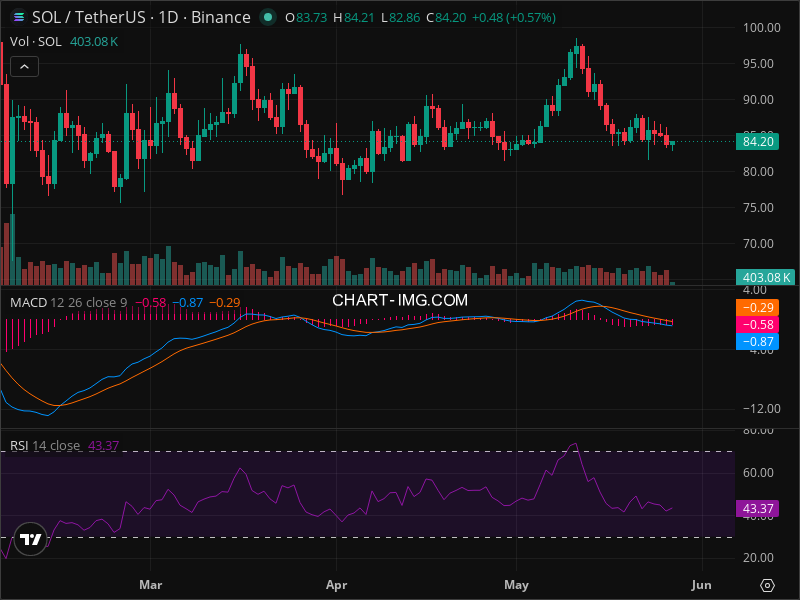
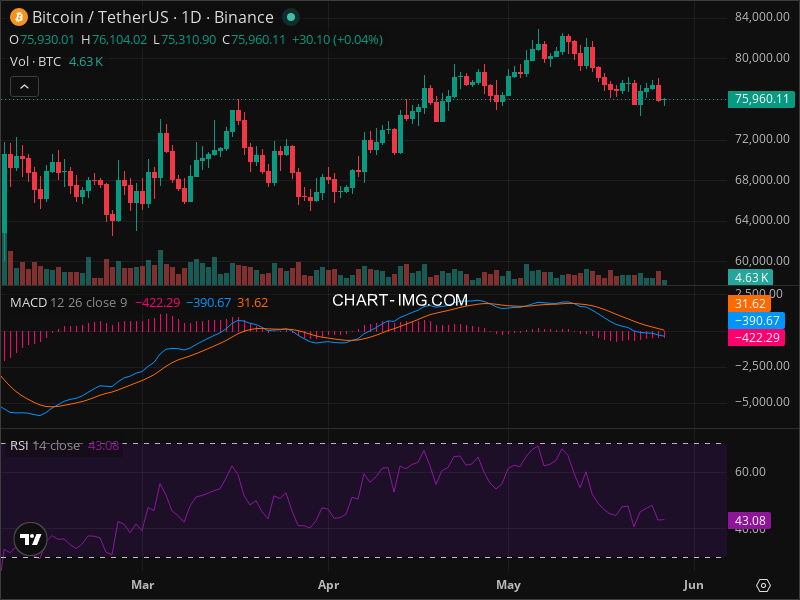
BTC Technical Analysis
May 27, 2026 | Joanna Newman

Soybeans Technical Analysis
May 27, 2026 | Joanna Newman
Live Cattle Technical Analysis
May 27, 2026 | Joanna Newman
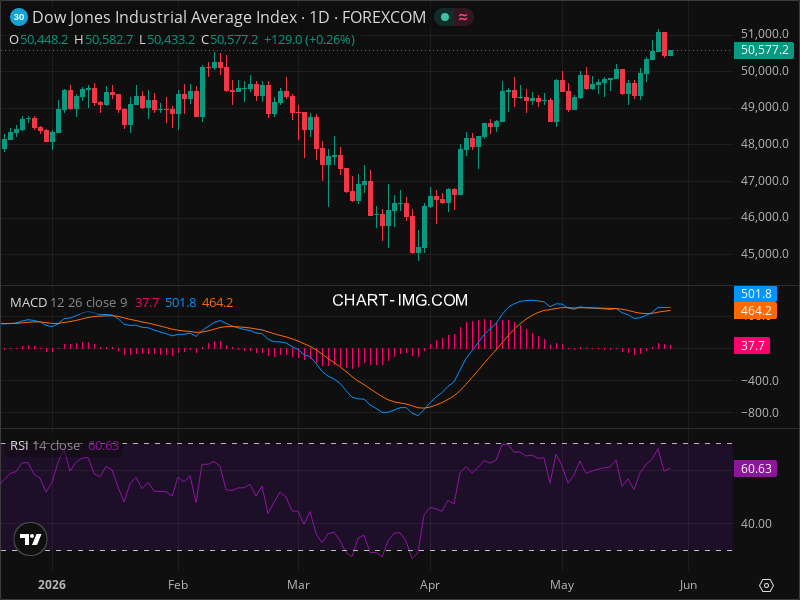
DJI Technical Analysis
May 27, 2026 | Joanna Newman
Tezos (XTZ) Review 2024: Everything You Need to Know Before Buying Tezos
.article-container { font-family: Arial, sans-serif; line-height: 1.6; color: #333; backgrou...
Chromia (CHR) Review 2024: Everything You Need to Know Before Buying Chromia
Illuvium (ILV) Review 2024: Everything You Need to Know Before Buying Illuvium
My Neighbor Alice (ALICE) Review 2024: Everything You Need to Know Before Buying My Neighbor Alice
Star Atlas (ATLAS) Review 2024: Everything You Need to Know Before Buying Star Atlas
TabTrade
What Is TabTrade? A Complete IntroductionTabTrade is a globally oriented multi-asset CFD and forex b...
Funded7
In the fast-moving world of proprietary trading, 2026 has marked a significant shift in what traders...
Bullwaves
Bullwaves Review 2026: A Premium MT5 Brokerage for Multi-Asset TradersBullwaves has quickly carved o...
BlackBull Markets
...
OQtima
Oqtima is an emerging online trading platform that offers a wide range of financial instruments, inc...
(adsbygoogle = window.adsbygoogle || []).push({}); Introduction In t...
(adsbygoogle = window.adsbygoogle || []).push({}); Einführung Wenn es um Er...
Mobi
Are you someone who makes international payments regularly using Bitcoin? Or do you travel a lot and...
Bitcoin.com
Bitcoin.com is a free downloadable Bitcoin wallet that allows users to trade and receive Bitcoins. T...
BTC.com
Created by Bitmain in 2016, BTC.com is a leading open-source Bitcoin and Bitcoin Cash storage platfo...
Bitcoin Price Analysis: Why Extreme Fear in the Crypto Market Could Signal a $150K Surge
/* Modern SEO & AI-Optimized Article Styles */ /* Fonts loaded via link tags in head for b
Bitcoin Price Analysis: Why Smart Money Is Pivoting to This Under-the-Radar Altcoin
/* Modern SEO & AI-Optimized Article Styles */ /* Fonts loaded via link tags in head for b
GOOGL Momentum Shift: The Signals Smart Money Is Watching
GOOGL Chart | TradingView GOOGL Momentum Shift: The Signals Smart Money Is Watchi
UNI at Critical Level: Why This Week Matters
UNI at Critical Level: Why This Week Matters UNI Chart | TradingView In the wh
XRP Price Surge: Why Billionaires Are Betting Big and What It Means for You
/* Modern SEO & AI-Optimized Article Styles */ /* Fonts loaded via link tags in head for b
The Top 10 Crypto Assets with the Highest Potential in 2025
.article-container { font-family: Arial, sans-serif; line-height: 1.6; color: #333; background-color
The Ultimate Bitcoin Review 2024: Everything You Need to Know Today
.article-container { font-family: Arial, sans-serif; line-height: 1.6; color: #333; background-colo
The Everyday Fruit that's a Powerhouse of Nutrition and Your Weight Loss Ally
(adsbygoogle = window.adsbygoogle || []).push({}); IntroductionWhen it comes to nutrition a
The oldest and most powerful remedy to permanently get rid of insects and ants
(adsbygoogle = window.adsbygoogle || []).push({}); IntroductionEach year, as the hot season
Two Beds, One Dream: The Growing Trend of Sleeping Apart for Better Rest
(adsbygoogle = window.adsbygoogle || []).push({}); IntroductionIn an era where quality slee
(adsbygoogle = window.adsbygoogle || []).push({}); Introduction In t...
(adsbygoogle = window.adsbygoogle || []).push({}); Einführung Wenn es um Er...
Mobi
Are you someone who makes international payments regularly using Bitcoin? Or do you travel a lot and...
Bitcoin.com
Bitcoin.com is a free downloadable Bitcoin wallet that allows users to trade and receive Bitcoins. T...
BTC.com
Created by Bitmain in 2016, BTC.com is a leading open-source Bitcoin and Bitcoin Cash storage platfo...


 Français
 Spanish
 Deutsch
 Português
 Türkçe
 Italiano
 العربية
 Русский
 Chinese
 Korean
 Japanese
 Vietnamese
 Hebrew
 Hindi
Hindi
 Greek
Greek
 Polish
 Thai
Thai
 Dutch
Dutch
 Malay
Malay




.png)
.png)
.png)














COMMENTS (0)