Create a FREE account and...
Manage your own Watchlist
Access all education lessons
Converse with other crypto enthusiasts
Be a part of the Interactive Crypto Community
OR
Please fill out the required fields Please fill out the required fields Please fill out the required fields

Imagine a world where Wall Street giants pour billions into cryptocurrency, transforming it from a speculative niche into a cornerstone of global finance. That world may be closer than you think. As of April 3, 2026, Coinbase, one of the largest crypto exchanges, has secured a groundbreaking trust charter approval from bank regulators—a move that could redefine the industry. With Bitcoin trading at $66,677 amidst a market gripped by "Extreme Fear," this regulatory win signals a potential turning point, promising to lure institutional investors and possibly drive Bitcoin prices toward $150,000. Why does this matter to you? Whether you're a seasoned trader or just dipping your toes into crypto, this development could shape your financial future.
The significance of Coinbase’s achievement cannot be overstated. It’s not just about one company; it’s about the maturation of an entire asset class. Institutional players, who’ve long hesitated due to regulatory uncertainty, now have a clearer path to enter the market. Curious about what this means for Bitcoin and beyond? Dive in with us as we explore every angle of this seismic shift—and don’t miss the chance to get AI-powered insights to navigate these turbulent waters.
The crypto market in April 2026 is a paradox of fear and opportunity. Bitcoin, the bellwether of digital assets, sits at $66,677, down slightly by 0.23% in the last 24 hours, according to CoinGecko data. The total market capitalization stands at a hefty $2.38 trillion, with a 24-hour trading volume of $93.49 billion. Yet, the Fear & Greed Index, a widely followed sentiment gauge, languishes at a dismal 9, reflecting "Extreme Fear" among retail investors.
Amidst this backdrop of unease, Coinbase’s trust charter approval emerges as a beacon of hope. This regulatory nod allows Coinbase to offer enhanced custody services under a framework akin to traditional financial institutions, addressing long-standing concerns about security and compliance. It’s a signal to hedge funds, pension funds, and asset managers that crypto is becoming a safer bet.
Interestingly, while major coins like Ethereum ($2,054.76, down 0.89%) and Binance Coin ($585.79, down 1.84%) mirror Bitcoin’s sluggishness, outliers like Polkadot ($1.24, up 0.93%) hint at selective optimism. Could this be the calm before a storm of institutional buying? For deeper insights, check the AI analysis to see where smart money might flow next.
For individual investors, Coinbase’s trust charter is a double-edged sword. On one hand, it’s a vote of confidence in crypto’s legitimacy. Institutional inflows could stabilize prices, reduce volatility, and push valuations higher—potentially taking Bitcoin to $150,000 by late 2026, as some analysts predict. If you’re holding or planning to buy, this could be the catalyst you’ve been waiting for.
On the other hand, the short-term picture remains murky. Retail sentiment is at rock bottom, and macroeconomic pressures like rising interest rates and inflation concerns could keep prices suppressed. The key takeaway? Timing matters. Positioning yourself ahead of institutional moves could yield outsized returns, but patience will be critical.
Consider diversifying into assets showing resilience, like Polkadot or Chainlink, which may benefit from strategic allocations. And for a data-driven edge, see AI price predictions to guide your next steps in this evolving landscape.
Cryptocurrency has long been the Wild West of finance—a space where innovation outpaced regulation. For years, institutional investors have watched from the sidelines, deterred by fears of regulatory crackdowns, security breaches, and counterparty risks. The collapse of platforms like FTX in 2022 only deepened these concerns, leaving a scar on the industry’s reputation.
Enter Coinbase’s trust charter—a game-changer in this narrative. By securing this approval, Coinbase can now operate under a regulated framework, offering custody services that meet the stringent standards of traditional finance. This isn’t just a win for Coinbase; it’s a blueprint for other exchanges and financial institutions looking to bridge the gap between crypto and mainstream markets.
Zoom out, and you’ll see a bigger picture. Bitcoin’s dominance at 56.11% reflects a flight to safety amid uncertainty, while Ethereum’s 10.44% share underscores its enduring appeal for decentralized applications. But beyond individual assets, the crypto market is grappling with global economic headwinds—central bank policies, geopolitical tensions, and inflation are all weighing on risk assets. Coinbase’s regulatory milestone offers a counterbalance, potentially unlocking a wave of capital that could dwarf retail-driven rallies of the past.

BTC Crypto Chart
The timing of this development is critical. As traditional markets face volatility, institutional players are hunting for alternative assets. Crypto, with its uncorrelated returns, fits the bill—but only if the infrastructure is in place. Coinbase’s trust charter might just be the key to opening that door.
Industry leaders are buzzing about Coinbase’s achievement. Brian Armstrong, CEO of Coinbase, hailed the trust charter as “a monumental step toward integrating digital assets into the global financial system,” according to a statement reported by Reuters. His optimism is echoed by analysts at firms like JPMorgan, where Nikolaos Panigirtzoglou noted, “This could accelerate institutional adoption by reducing perceived risks in crypto custody.”
The ripple effects are already visible. Competing exchanges may now push for similar regulatory approvals, creating a race to build institutional-grade infrastructure. Meanwhile, traditional financial giants—think BlackRock or Fidelity—could deepen their crypto offerings, spurred by Coinbase’s precedent. For the industry, this isn’t just growth; it’s maturation.
Yet, not everyone is convinced the impact will be immediate. A Bloomberg report cautions that while regulatory clarity is a positive, broader economic conditions could delay institutional inflows. Still, the consensus leans toward a bullish long-term outlook—one worth exploring with tools like AI signals for Bitcoin.
Let’s talk numbers. Institutional investors manage trillions in assets globally. If even a fraction of that capital flows into crypto—say, 1% or $100 billion—it could dramatically reshape market dynamics. Increased liquidity would likely dampen the wild price swings that have defined crypto, creating a more stable environment for both retail and institutional players.
For savvy investors, this opens up multiple plays. First, focus on platforms like Coinbase that stand to gain directly from institutional interest. Publicly traded crypto companies could see their valuations soar as adoption grows. Second, consider blue-chip cryptocurrencies—Bitcoin and Ethereum—that are most likely to attract conservative institutional portfolios.
Don’t overlook altcoins with strong fundamentals. Polkadot, for instance, with its interoperability focus, could appeal to institutions building diversified crypto strategies. Chainlink, a leader in decentralized oracles, might also benefit as DeFi (decentralized finance) gains traction. Curious about undervalued gems? Get AI fair value estimates to spot opportunities before the crowd.
Of course, it’s not all upside. Regulatory frameworks, while clarifying, could impose new costs or restrictions on market participants. Plus, if economic conditions worsen, even institutions might hold off on crypto allocations. Balancing risk and reward will be key as this story unfolds.
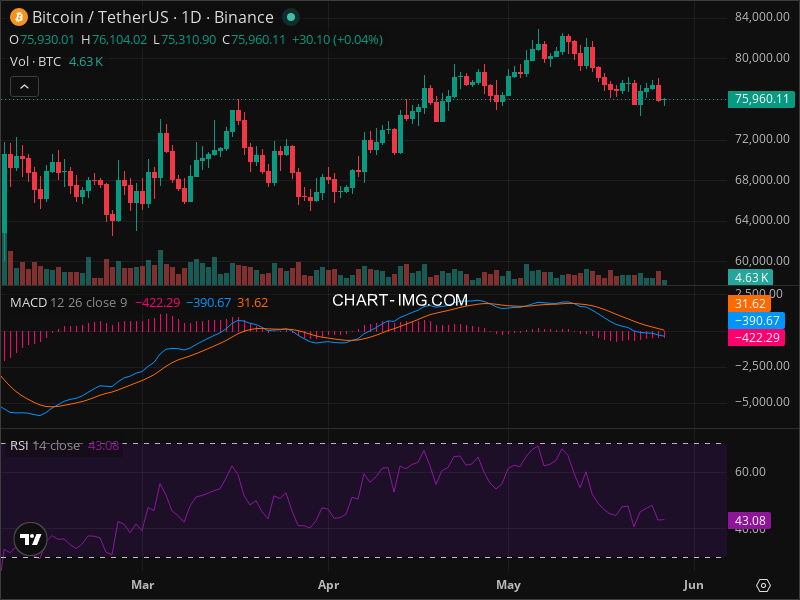
Let’s get into the charts. Bitcoin’s current price of $66,677 reflects a consolidation phase, with its Relative Strength Index (RSI) hovering at 40—a neutral to slightly oversold condition, per CoinGecko data. This suggests the market may be nearing a bottom, potentially setting the stage for a reversal if positive catalysts like institutional buying emerge.
Other indicators paint a mixed picture. The 50-day Moving Average for Bitcoin sits at $68,000, acting as short-term resistance. A break above this level could signal bullish momentum, while a drop below $65,000 might test lower support near $60,000. Volume, meanwhile, remains tepid, aligning with the market’s fearful sentiment.
Ethereum’s technicals mirror Bitcoin’s, with an RSI of 38 and key support at $2,000. For both assets, the next few weeks will be critical. Want a deeper dive into these metrics? View AI signals for Ethereum to refine your strategy.

ETH Crypto Chart
Here’s a snapshot of key metrics across major cryptocurrencies:
| Cryptocurrency | Current Price | 24h Change |
|---|---|---|
| Bitcoin (BTC) | $66,677 | -0.23% |
| Ethereum (ETH) | $2,054.76 | -0.89% |
| Polkadot (DOT) | $1.24 | +0.93% |
| Chainlink (LINK) | $10.85 | +0.47% |
What does the future hold? If Coinbase’s trust charter catalyzes institutional adoption as expected, Bitcoin could realistically target $150,000 by the end of 2026, driven by a combination of liquidity inflows and renewed confidence. This aligns with projections from firms like Fundstrat, which anticipate a “wall of money” entering crypto as regulatory barriers fall.
Ethereum, too, has upside potential, with some analysts eyeing $3,000 as a near-term target, bolstered by ongoing upgrades and DeFi growth. Altcoins like Polkadot and Chainlink could see disproportionate gains if institutions diversify beyond the top two coins.
Of course, risks remain. A worsening economic climate or unexpected regulatory hurdles could derail this bullish thesis. Still, the structural shift toward institutional involvement is undeniable. For evidence-based forecasts, see what the AI predicts for Bitcoin and beyond.
Coinbase’s trust charter is a regulatory approval that allows the exchange to offer custody services under a framework similar to traditional financial institutions. It matters because it reduces risks for institutional investors, potentially unlocking significant capital inflows into the crypto market.
Institutional adoption could drive Bitcoin’s price higher by increasing demand and liquidity. Some analysts predict a surge to $150,000 by late 2026 if adoption accelerates, though short-term volatility remains a factor.
Investing in crypto depends on your risk tolerance and financial goals. While Coinbase’s trust charter signals long-term growth, current market fear suggests caution. Tools like professional AI analysis can help you make informed decisions.
Bitcoin and Ethereum are likely to be the primary beneficiaries due to their established status. However, altcoins with strong fundamentals, like Polkadot and Chainlink, could also attract institutional interest.
While institutional involvement could stabilize markets, it may also introduce new regulations or compliance costs. Additionally, broader economic challenges could delay or limit capital inflows into crypto.
Staying informed with real-time data and expert analysis is crucial. Platforms offering AI-driven insights can provide forecasts, risk assessments, and technical indicators to guide your strategy.
ALL
TRENDING
WATCHLIST
Total Market Cap The Total Market Capitalization (Market Cap) is an indicator that measures the size of all the cryptocurrencies.It’s the total market value of all the cryptocurrencies' circulating supply: so it’s the total value of all the coins that have been mined.
{[{ marketcap }]} {[{ marketcapchange.toLocaleString(undefined, {maximumFractionDigits:2}) }]}% (24H) {[{ marketcapchange.toLocaleString(undefined, {maximumFractionDigits:2}) }]}% (24H)
Symbol
Price Cryptocurrency prices are volatile, and the prices change all the time. We are collecting all the data from several exchanges to provide the most accurate price available.
24H Cryptocurrency prices are volatile… The 24h % change is the difference between the current price and the price24 hours ago.
Trade
{[{ item.name }]}
{[{ index + $index}]}
{[{ item.pair.split('_')[0] }]}
Ƀ{[{item.price.toLocaleString(undefined, {maximumFractionDigits: 5}) }]} ${[{item.price.toLocaleString(undefined, {maximumFractionDigits: 5}) }]}
{[{ item.change24.toLocaleString(undefined, {maximumFractionDigits: 2}) }]}%
{[{ item.change24.toLocaleString(undefined, {maximumFractionDigits: 2}) }]}%
Symbol
Price Cryptocurrency prices are volatile, and the prices change all the time. We are collecting allthe data fromseveral exchanges to provide the most accurate price available.
24H Cryptocurrency prices are volatile… The 24h % change is the difference between the current priceand the price24 hours ago.
Trade
{[{ item.name }]}
{[{ index + $index}]}
{[{ item.pair.split('_')[0] }]}
Ƀ{[{item.price.toLocaleString(undefined, {maximumFractionDigits: 5}) }]} ${[{item.price.toLocaleString(undefined, {maximumFractionDigits: 5}) }]}
{[{ item.change24.toLocaleString(undefined, {maximumFractionDigits: 2}) }]}%
{[{ item.change24.toLocaleString(undefined, {maximumFractionDigits: 2}) }]}%

BTC Technical Analysis
May 27, 2026 | Joanna Newman

Soybeans Technical Analysis
May 27, 2026 | Joanna Newman
Live Cattle Technical Analysis
May 27, 2026 | Joanna Newman
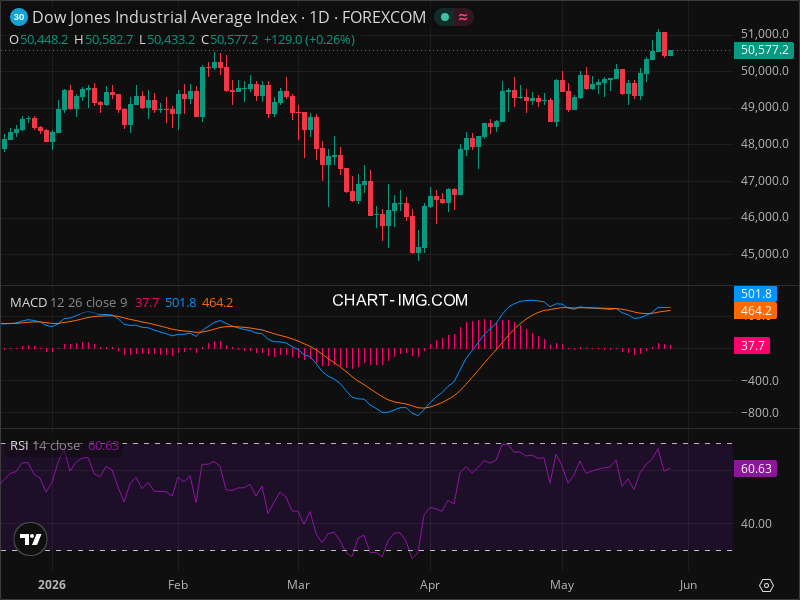
DJI Technical Analysis
May 27, 2026 | Joanna Newman
Tezos (XTZ) Review 2024: Everything You Need to Know Before Buying Tezos
.article-container { font-family: Arial, sans-serif; line-height: 1.6; color: #333; backgrou...
Chromia (CHR) Review 2024: Everything You Need to Know Before Buying Chromia
Illuvium (ILV) Review 2024: Everything You Need to Know Before Buying Illuvium
My Neighbor Alice (ALICE) Review 2024: Everything You Need to Know Before Buying My Neighbor Alice
Star Atlas (ATLAS) Review 2024: Everything You Need to Know Before Buying Star Atlas
TabTrade
What Is TabTrade? A Complete IntroductionTabTrade is a globally oriented multi-asset CFD and forex b...
Funded7
In the fast-moving world of proprietary trading, 2026 has marked a significant shift in what traders...
Bullwaves
Bullwaves Review 2026: A Premium MT5 Brokerage for Multi-Asset TradersBullwaves has quickly carved o...
BlackBull Markets
...
OQtima
Oqtima is an emerging online trading platform that offers a wide range of financial instruments, inc...
(adsbygoogle = window.adsbygoogle || []).push({}); Introduction In t...
(adsbygoogle = window.adsbygoogle || []).push({}); Einführung Wenn es um Er...
Mobi
Are you someone who makes international payments regularly using Bitcoin? Or do you travel a lot and...
Bitcoin.com
Bitcoin.com is a free downloadable Bitcoin wallet that allows users to trade and receive Bitcoins. T...
BTC.com
Created by Bitmain in 2016, BTC.com is a leading open-source Bitcoin and Bitcoin Cash storage platfo...
Coinbase's Trust Charter Triumph: Why This Could Spark a $150K Bitcoin Surge
/* Modern SEO & AI-Optimized Article Styles */ /* Fonts loaded via link tags in head for b
Bitcoin Price Analysis: Why a $2.3 Trillion Crypto Slip Signals a Major Shift for Investors
/* Modern SEO & AI-Optimized Article Styles */ /* Fonts loaded via link tags in head for b
Stablecoin Yields Uncovered: Why White House Talks Could Transform Crypto Markets
/* Modern SEO & AI-Optimized Article Styles */ /* Fonts loaded via link tags in head for b
OQtima
Oqtima is an emerging online trading platform that offers a wide range of financial instruments, inc
Crude Oil Prices Drop 5% on US-Iran Talks Hopes: Why This Could Reshape the Energy Market
/* Modern SEO & AI-Optimized Article Styles */ /* Fonts loaded via link tags in head for b
The Top 10 Crypto Assets with the Highest Potential in 2025
.article-container { font-family: Arial, sans-serif; line-height: 1.6; color: #333; background-color
The Ultimate Bitcoin Review 2024: Everything You Need to Know Today
.article-container { font-family: Arial, sans-serif; line-height: 1.6; color: #333; background-colo
The Everyday Fruit that's a Powerhouse of Nutrition and Your Weight Loss Ally
(adsbygoogle = window.adsbygoogle || []).push({}); IntroductionWhen it comes to nutrition a
The oldest and most powerful remedy to permanently get rid of insects and ants
(adsbygoogle = window.adsbygoogle || []).push({}); IntroductionEach year, as the hot season
Two Beds, One Dream: The Growing Trend of Sleeping Apart for Better Rest
(adsbygoogle = window.adsbygoogle || []).push({}); IntroductionIn an era where quality slee
(adsbygoogle = window.adsbygoogle || []).push({}); Introduction In t...
(adsbygoogle = window.adsbygoogle || []).push({}); Einführung Wenn es um Er...
Mobi
Are you someone who makes international payments regularly using Bitcoin? Or do you travel a lot and...
Bitcoin.com
Bitcoin.com is a free downloadable Bitcoin wallet that allows users to trade and receive Bitcoins. T...
BTC.com
Created by Bitmain in 2016, BTC.com is a leading open-source Bitcoin and Bitcoin Cash storage platfo...


 Français
 Spanish
 Deutsch
 Português
 Türkçe
 Italiano
 العربية
 Русский
 Chinese
 Korean
 Japanese
 Vietnamese
 Hebrew
 Hindi
Hindi
 Greek
Greek
 Polish
 Thai
Thai
 Dutch
Dutch
 Malay
Malay




.png)
.png)
.png)













COMMENTS (0)