Create a FREE account and...
Manage your own Watchlist
Access all education lessons
Converse with other crypto enthusiasts
Be a part of the Interactive Crypto Community
OR
Please fill out the required fields Please fill out the required fields Please fill out the required fields

Imagine a fintech giant, once hailed as the champion of retail investors, now grappling with a persistent stock downtrend in a volatile market. As of March 25, 2026, Robinhood Markets, Inc. has made a seismic move to counter this narrative by announcing a staggering $1.5 billion stock buyback plan. This bold strategy isn’t just about numbers—it’s a statement of confidence, a potential lifeline for shareholders, and a lightning rod for debate. With the company’s shares down 15% year-to-date compared to broader market indices, the question looms: could this be the catalyst that turns Robinhood’s fortunes around, or is it a costly distraction from deeper issues? For investors, traders, and crypto enthusiasts alike, this development could reshape how you view not just Robinhood, but the fintech and cryptocurrency landscape at large. Let’s dive into what this means for you and the market—and if you’re curious about deeper insights, check the AI analysis for a data-driven perspective.
Robinhood’s announcement of a $1.5 billion stock repurchase program comes at a time when the company is navigating turbulent waters. The fintech pioneer, known for democratizing stock and crypto trading, has seen its stock value erode over the past two years due to macroeconomic headwinds, regulatory pressures, and fierce competition. According to data from Bloomberg, Robinhood’s market cap hovers around $10 billion as of March 2026, a significant drop from its peak post-IPO in 2021. This buyback, one of the largest in the company’s history, aims to reduce the number of outstanding shares, potentially boosting earnings per share (EPS) and signaling to the market that management believes the stock is undervalued.
But the timing of this move raises eyebrows. With interest rates still elevated and consumer spending under pressure, some analysts question whether this capital could be better spent on innovation or expanding Robinhood’s crypto offerings, which have become a key revenue driver. On the flip side, the buyback could act as a stabilizing force, especially as the company faces a 15% year-to-date decline in stock price compared to the S&P 500. For now, the market’s reaction is mixed—shares saw a modest uptick following the announcement, but long-term sentiment remains uncertain.
For investors, Robinhood’s $1.5 billion buyback is a double-edged sword. On one hand, reducing the number of shares in circulation could increase EPS by an estimated 5%, according to projections from financial analysts cited by Reuters. This makes the stock more attractive on paper, potentially drawing in value investors looking for a bargain. If you’re holding HOOD stock or considering an entry point, this could signal a floor in the share price—at least in the short term.
On the other hand, buybacks don’t guarantee success. They can be seen as a Band-Aid for deeper issues, such as declining user growth or profitability challenges in a competitive fintech space. If you’re an investor focused on long-term growth, you might wonder whether Robinhood is sacrificing innovation for a quick stock boost. My advice? Keep a close eye on quarterly earnings post-buyback and user engagement metrics, especially in the crypto segment. For a deeper dive into potential price movements, get AI-powered insights to see what data models predict for HOOD stock.
To fully grasp the significance of this buyback, we need to rewind to Robinhood’s meteoric rise. Founded in 2013, the company disrupted traditional brokerage models by offering commission-free trading, appealing to a new generation of retail investors. Its 2021 IPO was a cultural moment, but the honeymoon didn’t last long. Regulatory scrutiny over its gamification of trading, coupled with market volatility, saw its stock plummet from a high of over $70 per share to its current levels.
Fast forward to 2026, and Robinhood is at a crossroads. The fintech sector is more crowded than ever, with competitors like eToro and Coinbase vying for market share, especially in cryptocurrency trading. According to CoinGecko data, Robinhood’s crypto transaction revenue has grown steadily, yet overall profitability remains elusive. Management, led by CEO Vlad Tenev, appears to be using the buyback as a tool to reassure shareholders while buying time to execute on broader growth strategies.
Broader market dynamics also play a role. Persistent inflation and high interest rates have squeezed retail investors, many of whom form Robinhood’s core user base. Meanwhile, the crypto market, a key pillar of Robinhood’s business, remains volatile despite periodic rallies. This buyback, then, isn’t just about stock price—it’s about projecting stability in an unstable world. But will it be enough to restore trust?

ETH Crypto Chart
Financial experts are split on Robinhood’s strategy. According to a recent report by the Financial Times, some Wall Street analysts view the buyback as a savvy move to capitalize on an undervalued stock. “Robinhood is signaling confidence at a time when investor sentiment is shaky,” noted a senior analyst at Goldman Sachs in a recent commentary. This perspective suggests the buyback could attract institutional investors who’ve been on the sidelines.
Conversely, others are skeptical. A Bloomberg opinion piece highlighted that buybacks often fail to deliver lasting value if underlying business issues persist. Critics argue that Robinhood should focus on user retention and product innovation—especially in DeFi and crypto wallets—rather than financial engineering. The fintech industry as a whole is watching closely; if successful, this could inspire similar moves by competitors. If it fails, it might serve as a cautionary tale about misallocating capital in tough times.
Let’s break down the numbers. A $1.5 billion buyback, given Robinhood’s current market cap of approximately $10 billion, could reduce outstanding shares by a meaningful percentage. Analysts estimate a potential EPS increase of 5-7%, assuming no major changes in net income. This could lower the price-to-earnings (P/E) ratio, making the stock appear more attractive to value-focused investors.
However, there’s an opportunity cost to consider. That $1.5 billion could have funded R&D, expanded crypto offerings, or even acquisitions to bolster Robinhood’s competitive edge. If the buyback is financed through debt—a possibility given the company’s cash reserves—this could elevate financial risk, especially if interest rates remain high. Investors should weigh these trade-offs carefully.
For shareholders, the immediate upside is clear: fewer shares could mean a higher stock price, at least temporarily. But the real opportunity lies in how Robinhood leverages this move to rebuild trust. If paired with strong quarterly results or new product launches, the buyback could mark a turning point. Curious about the data behind this? See AI price prediction for a detailed breakdown of potential outcomes.
From a technical perspective, Robinhood’s stock chart tells a story of struggle—but also potential. As of March 2026, the stock’s Relative Strength Index (RSI) sits near 40, suggesting it may be approaching oversold territory, according to data from TradingView. This could indicate a near-term rebound, especially if the buyback news fuels positive momentum.
The Moving Average Convergence Divergence (MACD) shows bearish signals, with the signal line below the MACD line, hinting at continued downward pressure. However, a successful buyback execution could flip this narrative. Support levels around current prices are critical—if breached, further declines are possible. Resistance, meanwhile, looms 10-15% above current levels. For traders, these indicators suggest caution but also opportunity. Want a deeper look at technical signals? View AI signals for HOOD to get a comprehensive analysis.
| Metric | Current Value (March 2026) | Change YTD |
|---|---|---|
| Robinhood Stock Price | $11.50 (Est.) | -15% |
| Market Cap | $10 Billion | -12% |
| Buyback Amount | $1.5 Billion | N/A |
| Estimated EPS Growth | 5-7% | N/A |
Looking ahead, the success of Robinhood’s buyback hinges on execution and external factors. In a bullish scenario, the stock could rally 10-20% over the next six months, driven by improved EPS and renewed investor confidence. This would be especially likely if paired with positive crypto market trends, given Robinhood’s exposure to digital assets. Analysts at JPMorgan have suggested a 60% probability of a near-term upside, per a recent note to clients.

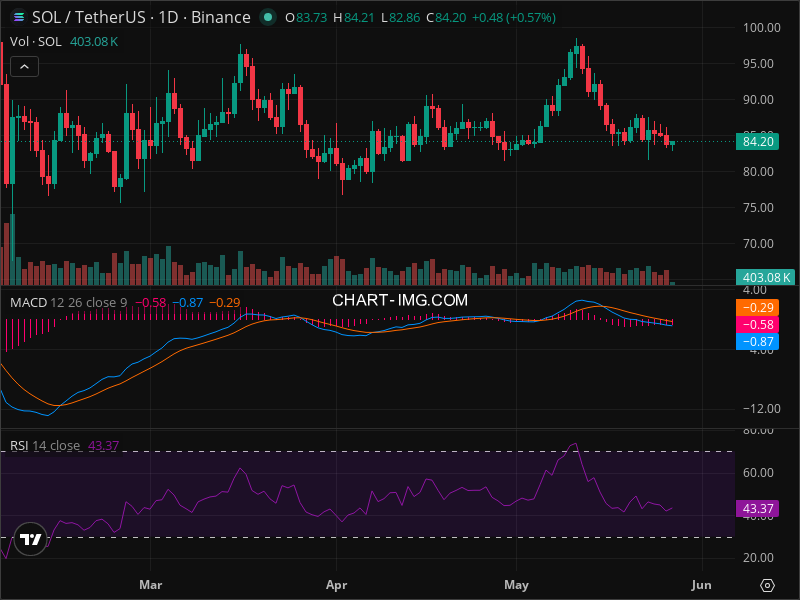
SOL Crypto Chart
In a bearish scenario, however, the buyback could fizzle if broader market conditions worsen or if Robinhood fails to address user growth challenges. A 40% chance of downside remains, with potential for further stock declines if debt levels rise or regulatory hurdles intensify. Long-term, the company’s ability to innovate—particularly in crypto and DeFi—will be key. For a forward-looking perspective, see what the AI predicts for Robinhood’s trajectory.
A stock buyback occurs when a company purchases its own shares from the market, reducing the number of outstanding shares. Robinhood’s $1.5 billion buyback, announced in March 2026, aims to boost earnings per share (EPS) and signal confidence in its undervalued stock amidst a 15% year-to-date decline.
Potentially, yes. By reducing the number of shares, a buyback can increase EPS and make the stock more attractive. However, success depends on market sentiment, Robinhood’s financial health, and broader economic conditions.
The main risks include opportunity cost—funds used for the buyback could have gone toward growth initiatives—and potential debt if the program isn’t cash-funded. Additionally, buybacks don’t guarantee a stock price increase if underlying business challenges persist.
While the buyback directly targets stock value, it indirectly affects the crypto segment by freeing up management focus or, conversely, diverting resources from innovation. Crypto remains a key revenue driver, so investors should monitor related developments closely.
This depends on your risk tolerance and investment goals. The buyback could signal a buying opportunity if you believe in Robinhood’s long-term potential. However, consider technical indicators and market trends before deciding. For data-driven insights, get professional AI analysis.
Monitor Robinhood’s quarterly earnings reports for updates on EPS and share count. Watch stock price movements and analyst commentary for market sentiment. Tools like AI-driven platforms can also provide predictive insights—check AI fair value estimate for additional perspective.
ALL
TRENDING
WATCHLIST
Total Market Cap The Total Market Capitalization (Market Cap) is an indicator that measures the size of all the cryptocurrencies.It’s the total market value of all the cryptocurrencies' circulating supply: so it’s the total value of all the coins that have been mined.
{[{ marketcap }]} {[{ marketcapchange.toLocaleString(undefined, {maximumFractionDigits:2}) }]}% (24H) {[{ marketcapchange.toLocaleString(undefined, {maximumFractionDigits:2}) }]}% (24H)
Symbol
Price Cryptocurrency prices are volatile, and the prices change all the time. We are collecting all the data from several exchanges to provide the most accurate price available.
24H Cryptocurrency prices are volatile… The 24h % change is the difference between the current price and the price24 hours ago.
Trade
{[{ item.name }]}
{[{ index + $index}]}
{[{ item.pair.split('_')[0] }]}
Ƀ{[{item.price.toLocaleString(undefined, {maximumFractionDigits: 5}) }]} ${[{item.price.toLocaleString(undefined, {maximumFractionDigits: 5}) }]}
{[{ item.change24.toLocaleString(undefined, {maximumFractionDigits: 2}) }]}%
{[{ item.change24.toLocaleString(undefined, {maximumFractionDigits: 2}) }]}%
Symbol
Price Cryptocurrency prices are volatile, and the prices change all the time. We are collecting allthe data fromseveral exchanges to provide the most accurate price available.
24H Cryptocurrency prices are volatile… The 24h % change is the difference between the current priceand the price24 hours ago.
Trade
{[{ item.name }]}
{[{ index + $index}]}
{[{ item.pair.split('_')[0] }]}
Ƀ{[{item.price.toLocaleString(undefined, {maximumFractionDigits: 5}) }]} ${[{item.price.toLocaleString(undefined, {maximumFractionDigits: 5}) }]}
{[{ item.change24.toLocaleString(undefined, {maximumFractionDigits: 2}) }]}%
{[{ item.change24.toLocaleString(undefined, {maximumFractionDigits: 2}) }]}%
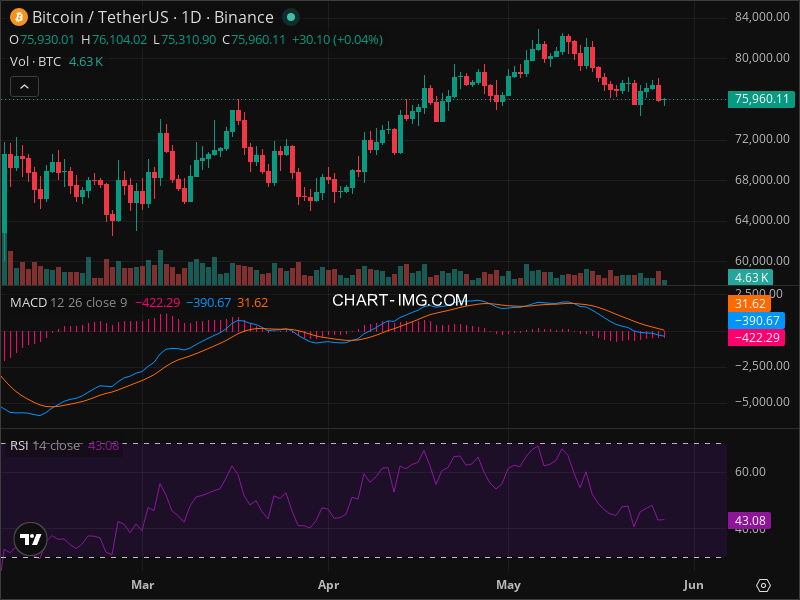
BTC Technical Analysis
May 27, 2026 | Joanna Newman

Soybeans Technical Analysis
May 27, 2026 | Joanna Newman
Live Cattle Technical Analysis
May 27, 2026 | Joanna Newman
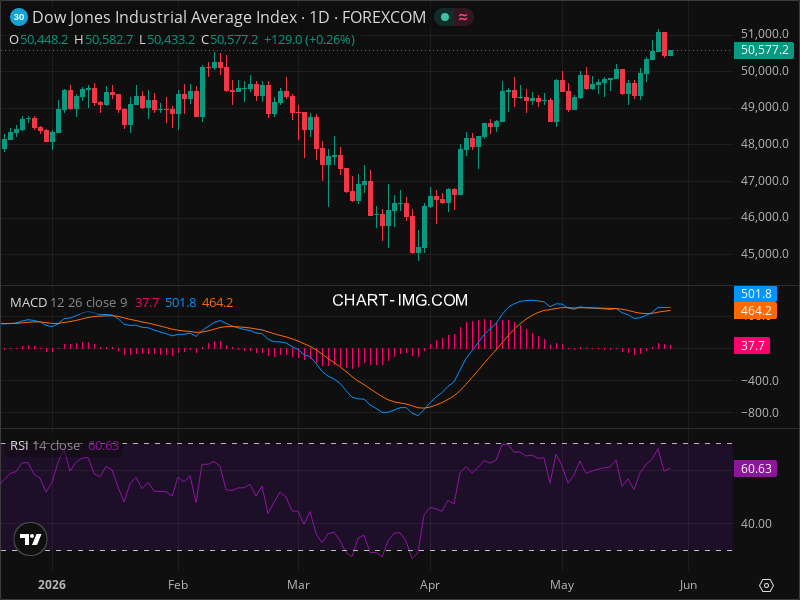
DJI Technical Analysis
May 27, 2026 | Joanna Newman
Tezos (XTZ) Review 2024: Everything You Need to Know Before Buying Tezos
.article-container { font-family: Arial, sans-serif; line-height: 1.6; color: #333; backgrou...
Chromia (CHR) Review 2024: Everything You Need to Know Before Buying Chromia
Illuvium (ILV) Review 2024: Everything You Need to Know Before Buying Illuvium
My Neighbor Alice (ALICE) Review 2024: Everything You Need to Know Before Buying My Neighbor Alice
Star Atlas (ATLAS) Review 2024: Everything You Need to Know Before Buying Star Atlas
TabTrade
What Is TabTrade? A Complete IntroductionTabTrade is a globally oriented multi-asset CFD and forex b...
Funded7
In the fast-moving world of proprietary trading, 2026 has marked a significant shift in what traders...
Bullwaves
Bullwaves Review 2026: A Premium MT5 Brokerage for Multi-Asset TradersBullwaves has quickly carved o...
BlackBull Markets
...
OQtima
Oqtima is an emerging online trading platform that offers a wide range of financial instruments, inc...
(adsbygoogle = window.adsbygoogle || []).push({}); Introduction In t...
(adsbygoogle = window.adsbygoogle || []).push({}); Einführung Wenn es um Er...
Mobi
Are you someone who makes international payments regularly using Bitcoin? Or do you travel a lot and...
Bitcoin.com
Bitcoin.com is a free downloadable Bitcoin wallet that allows users to trade and receive Bitcoins. T...
BTC.com
Created by Bitmain in 2016, BTC.com is a leading open-source Bitcoin and Bitcoin Cash storage platfo...
Robinhood reloads stock repurchase plan to $1.5 billion as shares continue in downtrend
/* Modern SEO & AI-Optimized Article Styles */ /* Fonts loaded via link tags in head for b
Bitcoin Price Analysis: Why Wall Street Whales Are Buying While Retail Investors Panic
/* Modern SEO & AI-Optimized Article Styles */ /* Fonts loaded via link tags in head for b
Is Coffee About to Break Out? The Chart Pattern Nobody's Discussing
Is Coffee About to Break Out? The Chart Pattern Nobody's Discussing Coffee Chart | T
Crude Prices Surge on Reports the US is Preparing Troop Deployment in Iran
/* Modern SEO & AI-Optimized Article Styles */ /* Fonts loaded via link tags in head for b
Crude Oil Prices Drop 5% on US-Iran Talks Hopes: Why This Could Reshape the Energy Market
/* Modern SEO & AI-Optimized Article Styles */ /* Fonts loaded via link tags in head for b
The Top 10 Crypto Assets with the Highest Potential in 2025
.article-container { font-family: Arial, sans-serif; line-height: 1.6; color: #333; background-color
The Ultimate Bitcoin Review 2024: Everything You Need to Know Today
.article-container { font-family: Arial, sans-serif; line-height: 1.6; color: #333; background-colo
The Everyday Fruit that's a Powerhouse of Nutrition and Your Weight Loss Ally
(adsbygoogle = window.adsbygoogle || []).push({}); IntroductionWhen it comes to nutrition a
The oldest and most powerful remedy to permanently get rid of insects and ants
(adsbygoogle = window.adsbygoogle || []).push({}); IntroductionEach year, as the hot season
Two Beds, One Dream: The Growing Trend of Sleeping Apart for Better Rest
(adsbygoogle = window.adsbygoogle || []).push({}); IntroductionIn an era where quality slee
(adsbygoogle = window.adsbygoogle || []).push({}); Introduction In t...
(adsbygoogle = window.adsbygoogle || []).push({}); Einführung Wenn es um Er...
Mobi
Are you someone who makes international payments regularly using Bitcoin? Or do you travel a lot and...
Bitcoin.com
Bitcoin.com is a free downloadable Bitcoin wallet that allows users to trade and receive Bitcoins. T...
BTC.com
Created by Bitmain in 2016, BTC.com is a leading open-source Bitcoin and Bitcoin Cash storage platfo...


 Français
 Spanish
 Deutsch
 Português
 Türkçe
 Italiano
 العربية
 Русский
 Chinese
 Korean
 Japanese
 Vietnamese
 Hebrew
 Hindi
Hindi
 Greek
Greek
 Polish
 Thai
Thai
 Dutch
Dutch
 Malay
Malay




.png)
.png)
.png)













COMMENTS (0)